


Blue Wooden Blanket Box
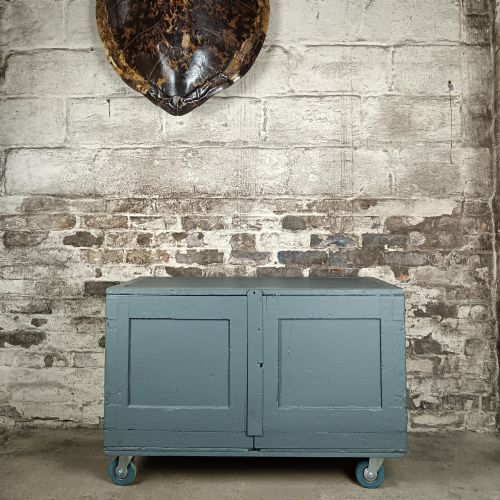
A blue wooden blanket box provides robust household storage while bringing rich folk art colour and regional character into a room.
Blue Wooden Blanket Box
A blue wooden blanket box spans several forms, including marriage chests, dome top coffers, mule chests, and simple storage trunks. These pieces emerge primarily from nineteenth-century Scandinavian country workshops, Hungarian folk art traditions, and Alpine regions, alongside occasional English and military examples.
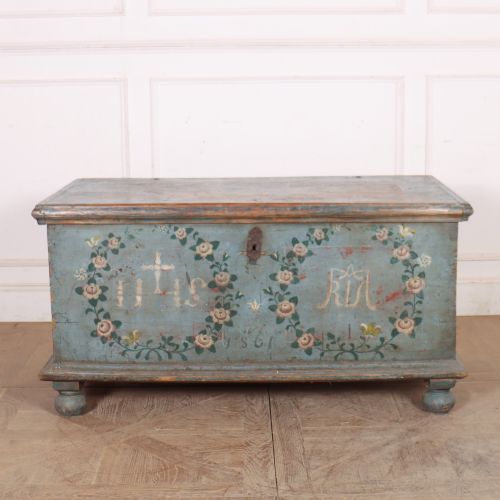
The version most commonly met on this page is the nineteenth-century Swedish hand-painted pine blanket box or coffer. These items typically feature hinged lids and painted surfaces that have developed considerable depth and patina over decades of domestic use.
How they were made
Construction relies heavily on solid pine and occasionally oak, assembled as sturdy storage boxes designed to withstand heavy transit and daily household demands. Joinery often incorporates traditional dovetails or pegged joints to secure the walls of the chest.
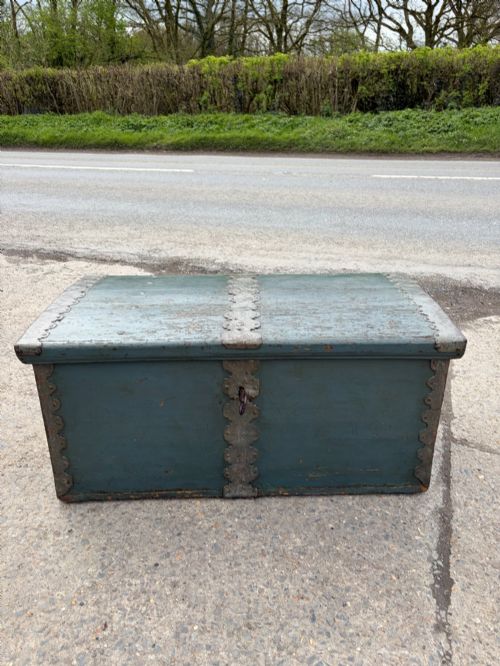
Surfaces are finished with pigment paint, often applied by hand in folk art motifs or solid teal and blue tones. Iron, wrought iron, and brass hardware such as hinges, handles, and lock plates reinforce the corners and lids.
The listings feature nineteenth-century pine, oak, and painted wood items spanning Scandinavian folk art, rustic country, and military campaign styles.
What varies in quality
Quality rests significantly on the integrity of the original painted surface and the survival of authentic regional decoration. Pieces retaining untouched hand-painted folk art or early pigment paint stand apart from examples with later overpainting or stripped timber.
Structural preservation of the original wood, hinges, and ironwork dictates the calibre of a box. Fine craftsmanship shows in the balance of proportions, tight corner joinery, and the weight of the timber used for the lid and base.
The Blue Wooden Blanket Box Glossary
- Coffer
- A heavy wooden box traditionally used for storing valuables, linen, or documents. These storage vessels frequently feature hinged flat or dome-shaped lids.
- Mule chest
- A storage chest featuring one or more drawers built into the base beneath the main compartment. This form bridges the gap between a traditional blanket box and a chest of drawers.
- Dome top
- A curved lid construction designed to shed water and dust while offering increased internal volume. This profile is particularly common on nineteenth-century Scandinavian coffers.
- Folk art
- Decorative design and craftsmanship produced within a traditional community culture, relying on local motifs and materials. In these listings, it describes hand-painted floral and geometric patterns on pine.
Blue Wooden Blanket Box: Frequently Asked Questions
How do I date a painted wooden box?
Dating relies on examining the construction methods, the type of hinges, and the composition of the paint layers. Hand-cut iron nails, dovetail joints, and worn pigment paint usually point towards the nineteenth century.
Changes in regional decoration styles and secondary woods also help narrow down the period. Comparing the wear patterns around the handles and keyholes confirms long-term domestic use.
Were these painted boxes used for marriage?
Many Scandinavian and Alpine examples function specifically as marriage chests commissioned to hold a bride's dowry. These pieces often display specific folk art motifs, initials, or dates related to the union.
Other boxes served general household storage duties for heavy woolen blankets, winter clothing, and household provisions.
How should I clean a painted finish?
Maintenance requires gentle dusting with a dry or slightly damp soft cloth to protect fragile historical paint layers. Avoid modern chemical solvents, harsh detergents, or abrasive polishes that can lift the pigment.
Applying microcrystalline wax can help nourish and protect exposed wood while preserving the matte or satin quality of old paint.
What is the difference between a coffer and a trunk?
A coffer typically denotes a heavier, stationary wooden chest with robust structural framing, often associated with domestic storage. A trunk frequently implies a lighter or reinforced container designed for travel and transport.
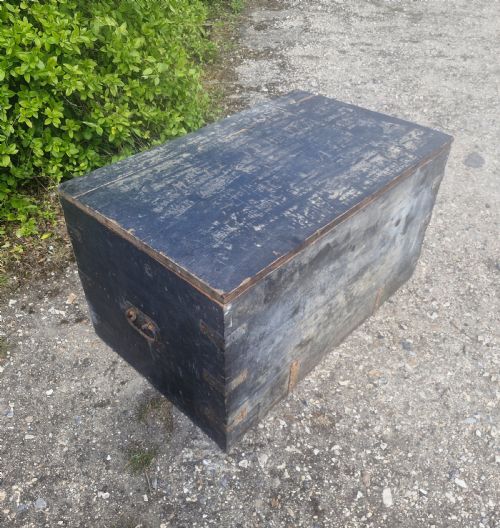
Military campaign cases and storage boxes incorporate iron or brass carrying handles built specifically for movement.