



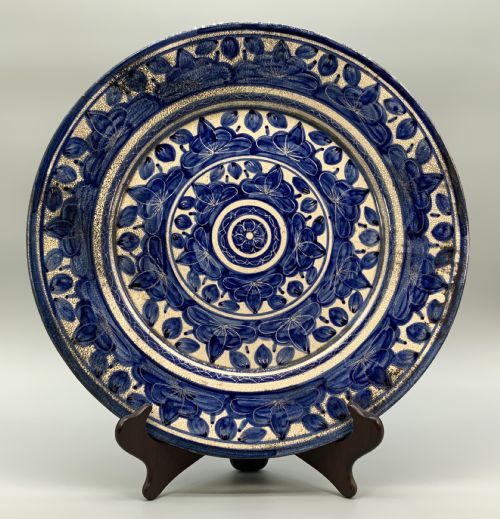
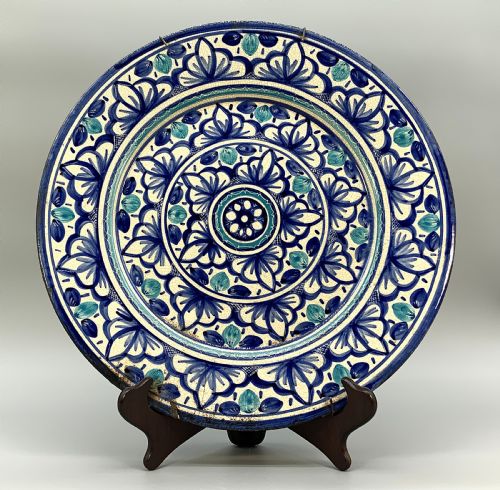
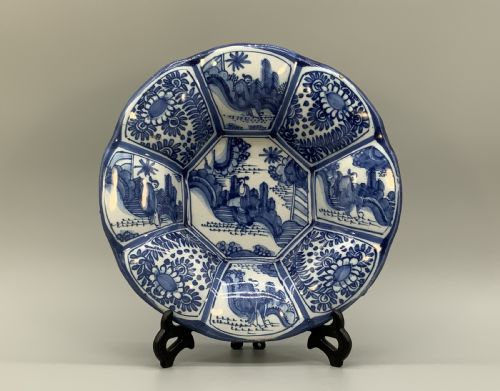
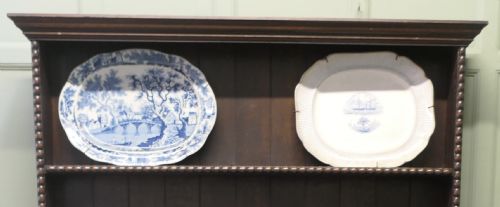
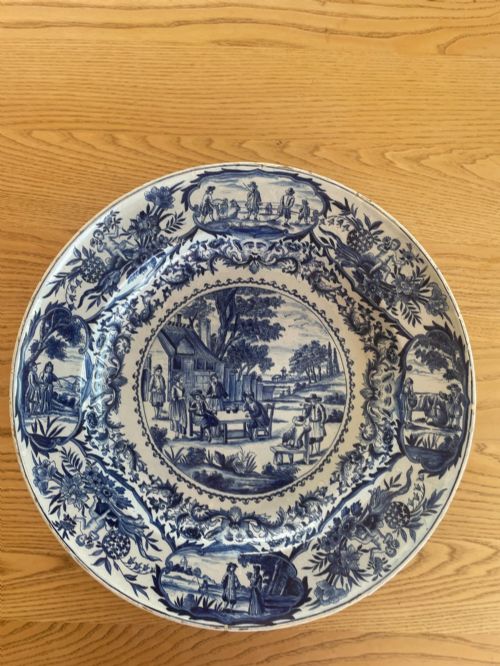
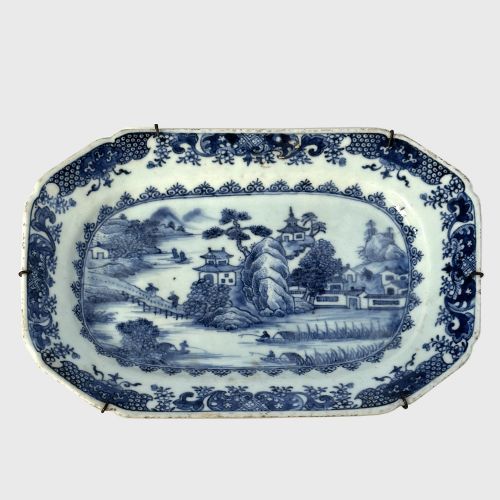
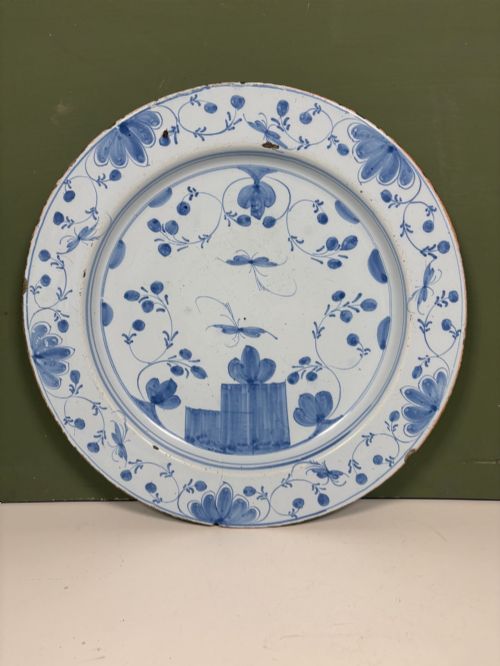
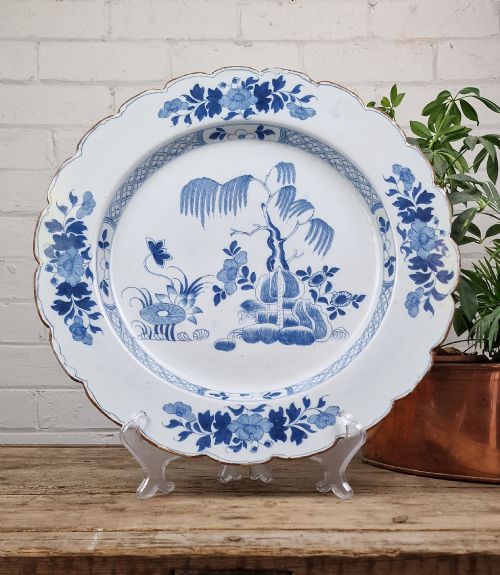
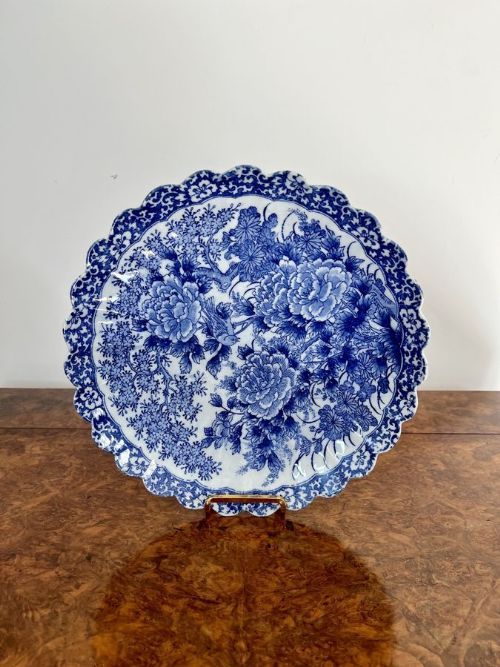
Blue White Wall Platter
These large blue white wall platter examples bring cobalt pigment and tin-glazed earthenware to vertical spaces with centuries of decorative momentum.
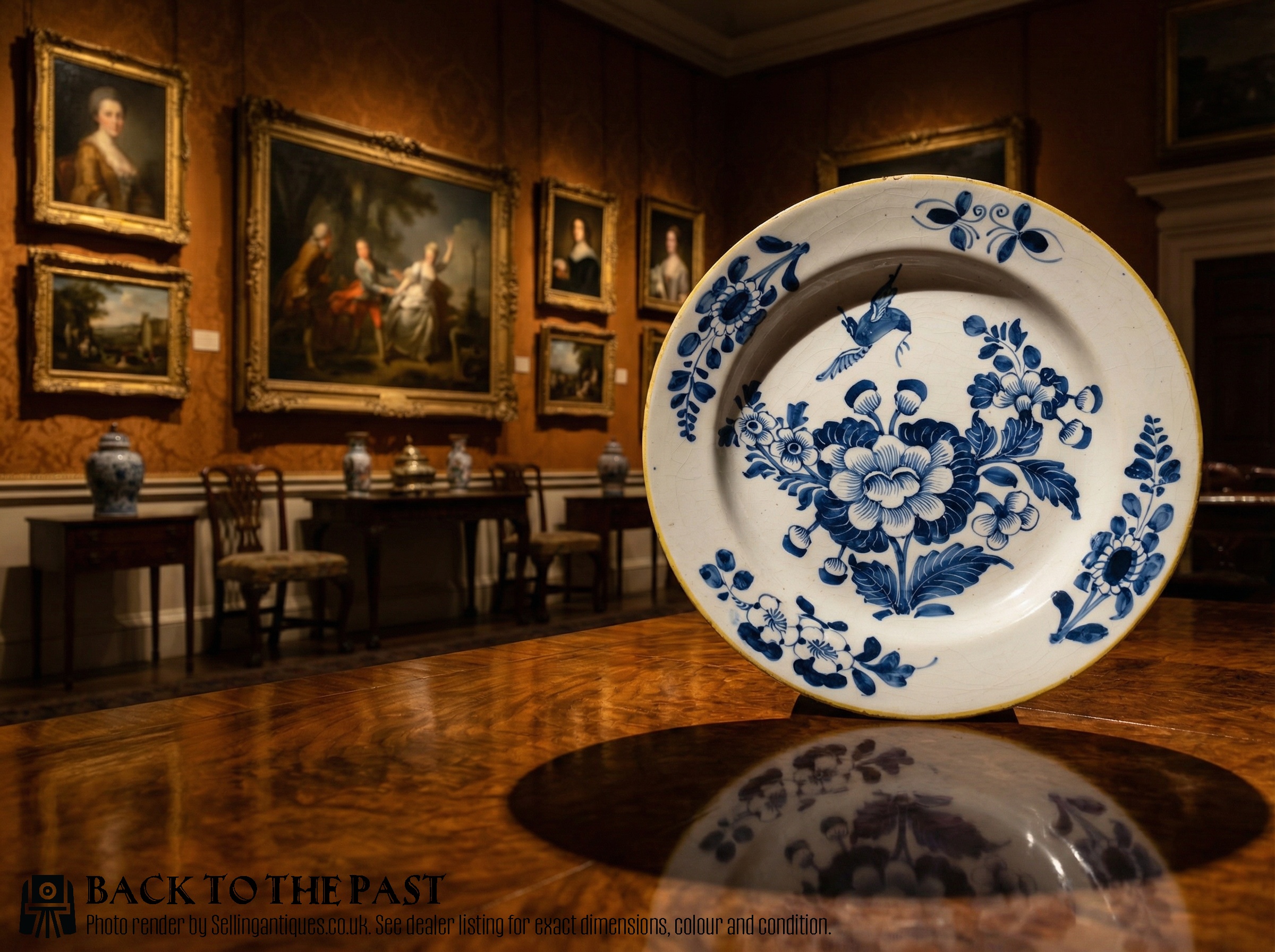
Blue White Wall Platter
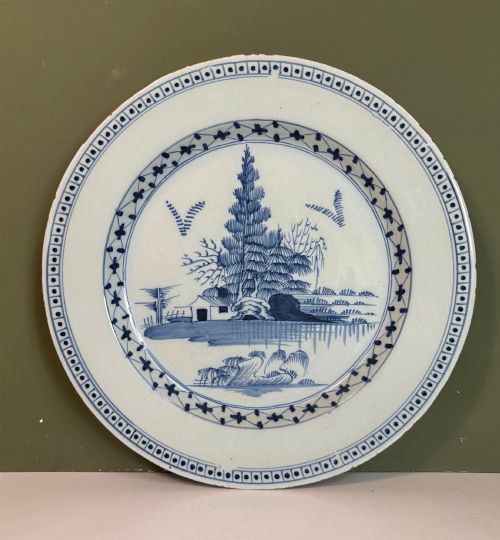
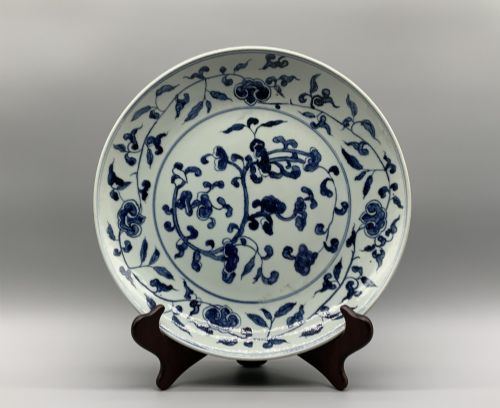
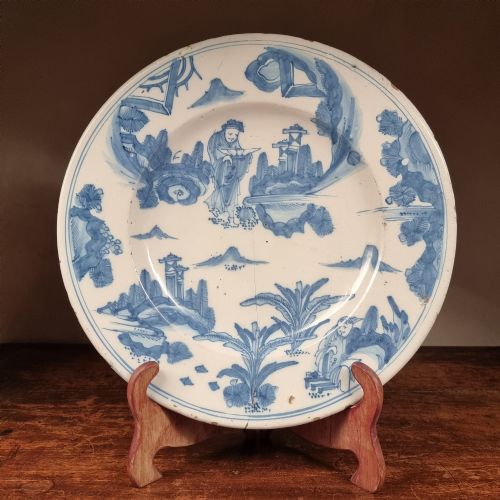
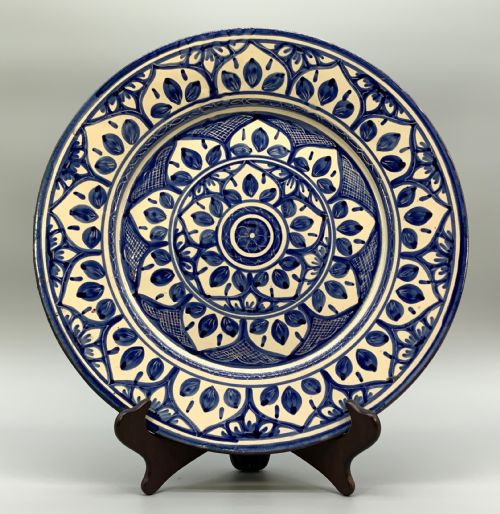
When you search for a blue white wall platter, you encounter substantial display plates and chargers originating from various global ceramic traditions. The selection spans earthenware and porcelain formats designed primarily for hanging and interior decoration.
Dutch Delft chargers and Japanese Arita Imari pieces dominate the offerings on this page. English transferware, Chinese export porcelain, and continental earthenware also appear frequently across multiple centuries.
These items range from modest nineteenth-century plates to massive seventeenth-century chargers intended to command attention on a wall. Their forms encompass lobed dishes, scalloped edges, and wide circular platters.
How they were made
Potters utilised earthenware and porcelain bodies finished with tin glaze, cobalt glaze, or direct cobalt pigment painting. Hand-painted brushwork and transfer printing represent the primary methods for applying the characteristic blue ornamentation.
Firing techniques evolved from early Delft kilns to nineteenth-century Staffordshire works, producing varying depths of blue against white tin glaze or pearlware grounds. Many pieces rely on contrasting scrolling foliate borders to frame central pictorial scenes.
The listings span earthenware, porcelain, and tin-glazed earthenware from the 18th century, 19th century, and Victorian periods.
What varies in quality
The crispness of the cobalt pigment application distinguishes finer work from simpler production, particularly where hand-painted brushwork defines complex floral or architectural motifs. Consistency in the glaze finish and the stability of the ceramic body also mark the distinction.
Scale and ambition separate standard domestic plates from monumental exhibition chargers. Early execution and the preservation of the original tin glaze or porcelain surface carry significant weight.
Royal Bonn·John Ridgway·Stubbs·Minton·Bassano pottery works·Caughley
The Blue White Wall Platter Glossary
- Charger
- A large decorative plate intended for display rather than table service. These substantial vessels anchor wall arrangements.
- Tin-Glaze Earthenware
- Pottery coated with an opaque white tin oxide glaze that accepts cobalt pigment painting directly. This surface defines traditional Delftware.
- Imari
- Japanese porcelain decorated in underglaze blue, iron red, and gilt, though pieces on this page focus on the blue and white palette. Arita kilns produced much of this ware.
- Transferware
- Pottery decorated by pressing a design from an engraved copper plate onto tissue paper and transferring it to the ceramic body. This technique enabled uniform production in nineteenth-century England.
- Kraak Style
- Chinese porcelain design characterised by panelled borders and central motifs, widely copied in seventeenth-century Dutch Delft.
Blue White Wall Platter: Frequently Asked Questions
Are these plates safe for food use?
Antiques from seventeenth-century Delft to nineteenth-century transferware were created for display or historical dining practices. Many older glazes contain lead or other materials unsuitable for modern consumption.
Treat these items strictly as wall art and decorative objects rather than tableware. Washing them in modern dishwashers will damage the historic glaze.
How do I distinguish Delft from Japanese export?
Dutch Delft utilises an earthenware body covered in an opaque tin glaze that often shows minor surface crazing. Japanese pieces on this page are typically hard-paste porcelain with a resonant ring and vitrified body.
The blue tones on Delft tend towards a slightly softer hue under tin glaze, whilst Arita porcelain displays crisp cobalt beneath a clear glass-like glaze.
What is the difference between a plate and a charger?
Plates were traditionally sized for individual dining portions during various service styles. Chargers are significantly larger plates designed to sit beneath smaller courses or function independently as table centrepieces.
On walls, chargers provide the dominant visual weight due to their expansive diameters. Smaller plates appear in matched pairs or grouped arrangements.
How do I date an antique blue and white charger?
Dating relies on stylistic clues, ceramic bodies, and regional manufacturing methods. Tin-glazed earthenware points towards seventeenth and eighteenth-century European production, whilst pearlware and refined ironstone suggest the nineteenth century.
Examining the foot ring, glaze pooling, and the character of the cobalt pigment reveals the manufacturing era. Maker marks, where present, narrow the timeline further.