


Blue White Faience Dish
A blue white faience dish brings tin-glazed earthenware into a room, offering painted cobalt pigment on pottery that collectors display on walls and surfaces.
Blue White Faience Dish
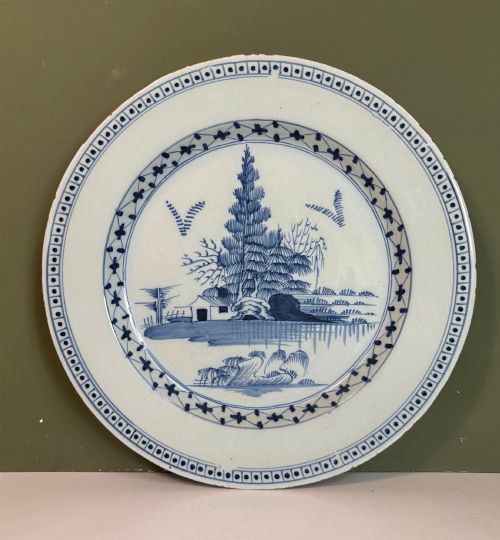
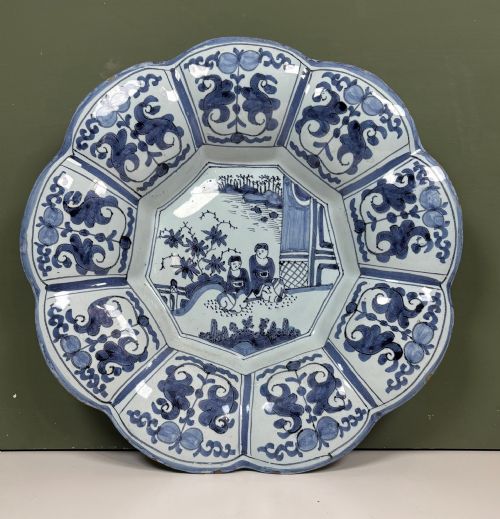
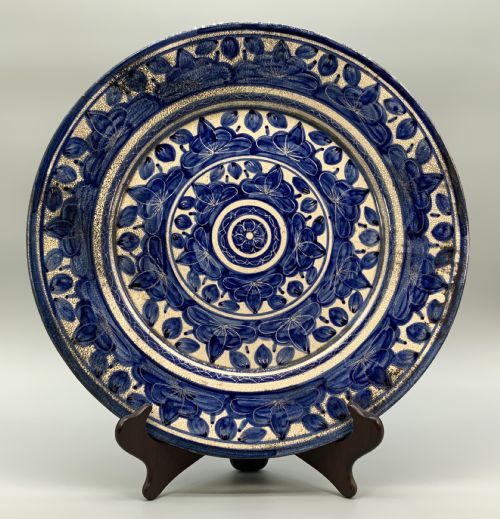
A blue white faience dish encompasses tin-glazed earthenware forms ranging from large decorative chargers and plates to smaller pin trays and sauceboats. When searching for a blue white faience dish, buyers encounter items produced across the seventeenth, eighteenth, and nineteenth centuries.
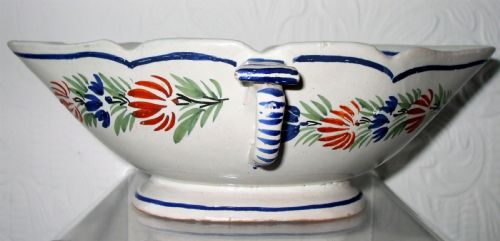
Smaller vessels such as vide-poche dishes, trinket dishes, and double sauceboats represent the domestic utility found alongside grand decorative plates. Each piece demonstrates the tin-glazed earthenware tradition passed down through European workshops.
Materials and technique
Makers formed these pieces in earthenware and ceramic, applying an opaque tin glaze that created a white surface suitable for painting. Artisans brushed cobalt pigment directly onto the absorbent unfired or biscuit-fired glaze before a final kiln firing.
This technique demanded steady hands, as the porous tin glaze absorbed the cobalt pigment instantly, making corrections impossible. The interaction between the metallic pigment and the tin glaze produced the characteristic blue and white palette seen across the centuries.
Some eighteenth-century chargers bear workshop kiln scars on the back where clay stilts bit into the glaze during the fiery transformation.
Quality factors
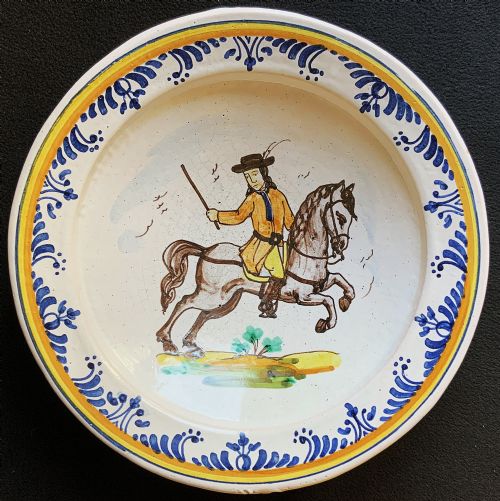
Quality rests upon the crispness of the cobalt painting and the balance of the composition across the ceramic surface. Early chargers and plates show confident brushwork where botanical or pictorial motifs engage with the circular format.
The glaze coverage and stability during firing determine the tactile finish of the dish. Superior examples display smooth tin glaze without excessive pitting, allowing the hand-painted cobalt details to remain sharp and distinct.
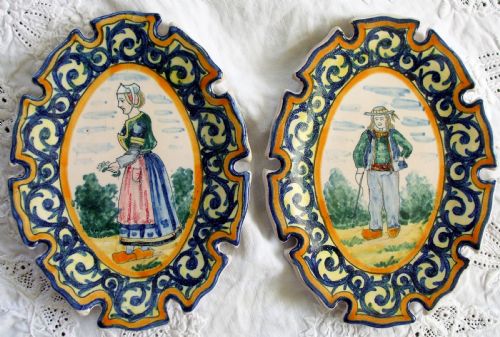
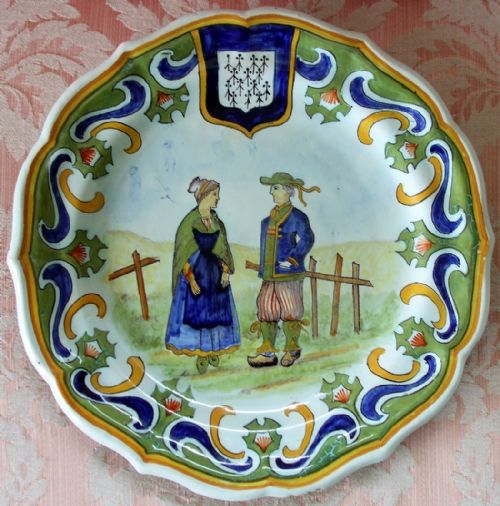
HB Quimper·HR Quimper·Desvres·Gien
The Blue White Faience Dish Glossary
- Faience
- Tin-glazed earthenware produced in continental Europe, particularly in France, Germany, and Spain. The technique involves coating a clay body with a white tin oxide glaze before painting.
- Delftware
- Tin-glazed pottery made in the Netherlands and England, famous for blue and white designs influenced by imported Chinese porcelain. Production centred on Delft during the seventeenth and eighteenth centuries.
- Charger
- A large decorative plate designed to be displayed on a wall or dresser rather than used for dining. These wide earthenware surfaces allowed painters to execute ambitious pastoral or floral scenes.
- Cobalt pigment
- The metallic colourant used to achieve the deep blue painted decoration on tin-glazed earthenware. It withstands high kiln temperatures without losing its intensity.
- Vide-poche
- A small pocket-emptying dish meant for holding everyday small items like coins or keys. French faience makers shaped these into shallow trays for hall tables.
Blue White Faience Dish: Frequently Asked Questions
How do I hang a heavy charger safely?
Displaying a large tin-glazed charger requires a dedicated wall bracket with broad brass or coated wire fingers that distribute weight evenly across the rim. Avoid spring-loaded hangers with sharp tips that can bite into fragile earthenware edges.
Ensure the fixing goes directly into wall studs or uses appropriate masonry anchors rather than simple plasterboard screws. Check the mount periodically to confirm the ceramic remains secure against the wall.
Can I use these dishes for serving food?
Using antique tin-glazed earthenware for serving food is generally discouraged due to the porous nature of historic ceramic bodies and historical glazes. Older pieces may have hairline cracks or crazing that harbour bacteria and moisture.
Display these items as decorative plates or utilise them dry for holding non-perishable items. Gentle dusting and minimal handling preserve the painted cobalt surface over time.
How do I tell Dutch delft from French faience?
Dutch delft typically leans towards a brilliant white tin glaze with cobalt blue painting inspired by Chinese export porcelain, often featuring floral sprays or maritime scenes. The foot rims frequently show unglazed clay where firing stilts supported the piece.
French faience from centres like Quimper or Gien often incorporates polychrome palettes or distinct regional figures alongside blue and white designs. Maker marks and painted initials on the base provide clear attribution to specific French towns.