
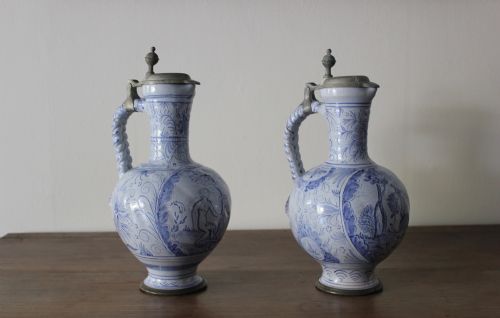


Blue White Ewer
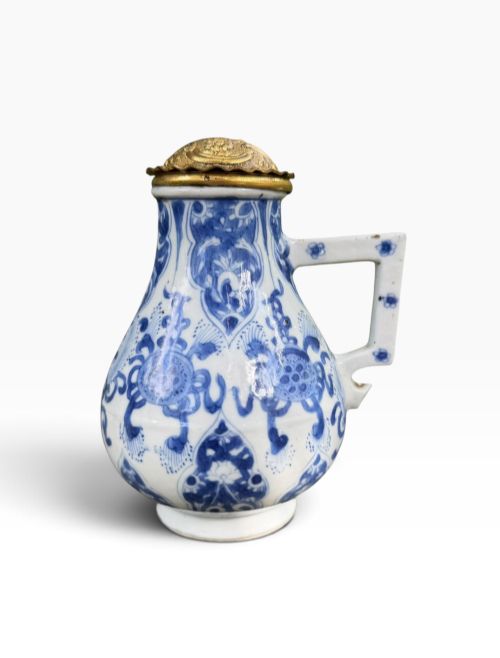
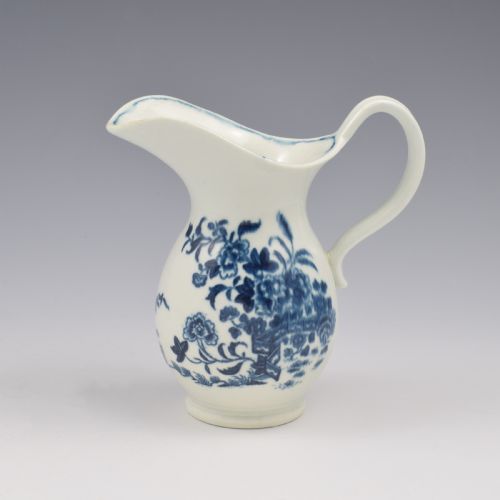
A blue white ewer is a pouring vessel for water or wine, prized for cobalt pigments painted across tin glaze or porcelain.
Blue White Ewer
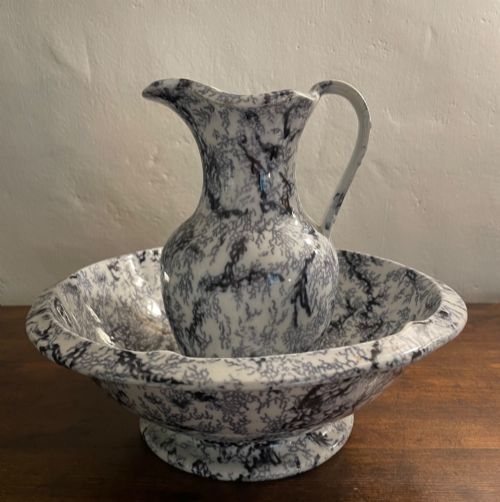
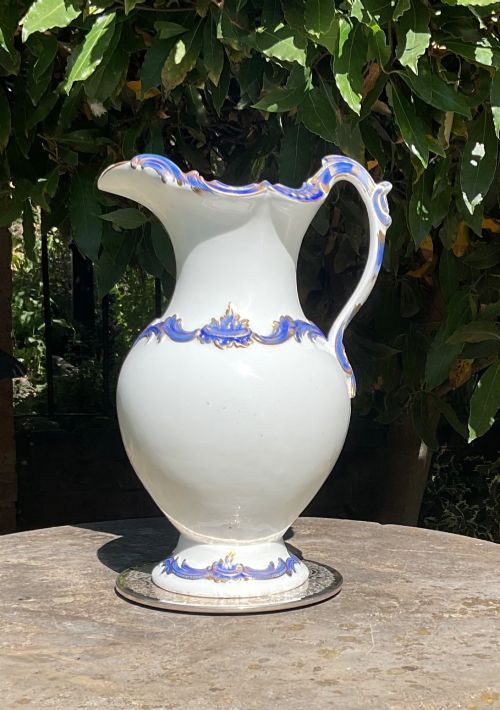
Buyers seeking a blue white ewer encounter ceramics spanning the seventeenth century through to the early twentieth century, originating from English factories and Asian kilns alike. The selection commonly includes porcelain water jugs, Delft vessels, earthenware washstand basins, and wine ewers.
Forms range from compact cream boats and low ewers to large Victorian bathroom sets and Chinese Ming style teapots. English examples often sit alongside Japanese Arita pieces and Chinese Kangxi period imports.
How they were made
Potters shaped these vessels using earthenware, ironstone, and porcelain, applying cobalt blue pigments directly onto the body or beneath a transparent glaze. Many surfaces received tin glaze or enamel highlights, while select nineteenth-century pieces feature gilt enrichment.
Factories like Worcester, Minton, and Spode utilised transfer printing and hand-painting techniques. Japanese pieces from Arita employed traditional cobalt painting traditions on high-fired porcelain bodies.
Site listings feature blue white ewer examples spanning earthenware, ironstone, and porcelain across the seventeenth, eighteenth, and nineteenth centuries.
What varies in quality
Quality rests in the crispness of the cobalt painting and the stability of the glaze, distinguishing finely potted porcelain from heavier utilitarian earthenware. The precision of the transfer print or brushwork dictates visual depth.
Completeness of sets also separates pieces, as matching basin and jug combinations hold greater presence than solitary items. The handling of spouts and applied handles reveals the modeller's skill.
Masons Ironstone·Minton·Doulton Burslem·Spode·Dr Christopher Dresser
The Blue White Ewer Glossary
- Ewer
- A large jug with a wide spout and handled body, traditionally used for pouring water. They appear frequently in washstand sets.
- Tin Glaze
- An opaque white glaze containing tin oxide, providing a smooth surface for cobalt blue painting on earthenware vessels. It is typical of Dutch Delftware.
- Flow Blue
- A nineteenth-century transfer printing style where cobalt blue bleeds slightly into the surrounding glaze during firing. This creates a soft, hazy aesthetic.
- Ironstone
- A heavy, durable ceramic patented in the nineteenth century to imitate porcelain. It resists chipping and forms robust jugs and basins.
Blue White Ewer: Frequently Asked Questions
What was a blue white ewer used for?
These vessels served practical functions such as pouring water at a washstand or serving wine and tea at table. Many formed part of larger toilet sets paired with matching basins.
Over time, their decorative cobalt patterns transitioned them from daily utility items into display pieces valued for their ceramic artistry.
How do I date a blue white ewer?
Dating relies on identifying the ceramic body, glaze characteristics, and factory marks on the base. Seventeenth and eighteenth-century pieces often display thinner potting and hand-painted cobalt, while Victorian items frequently utilise transfer printing.
Comparing the shape of the handle and spout against known period styles helps narrow the manufacturing decade.
How should I display a ceramic ewer?
Ceramic ewers require stable surfaces away from high-traffic edges due to their protruding spouts and handles. Placing them on sturdy sideboards or within cabinets protects them from accidental knocks.
Keeping them away from direct sunlight preserves the brightness of the white ground and the blue cobalt pigments.