
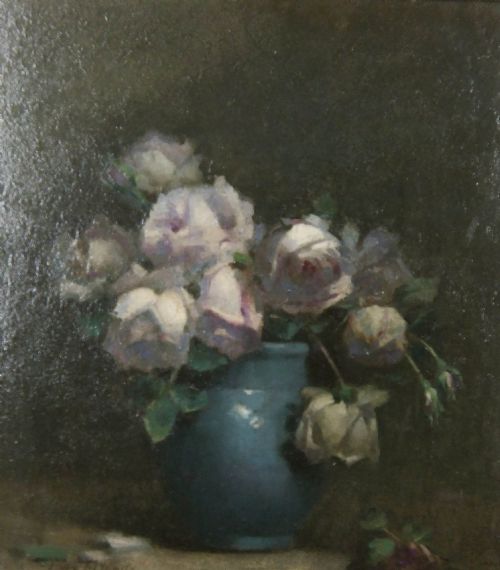
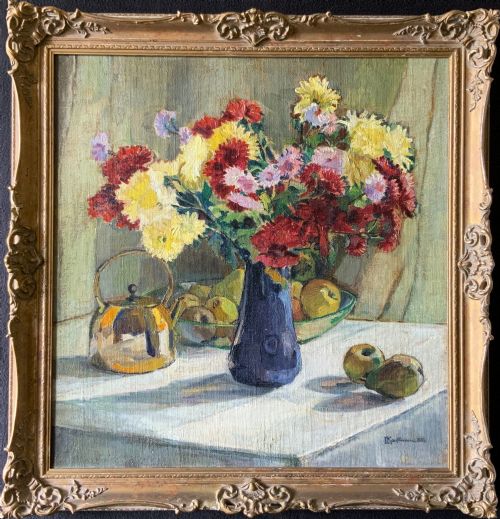


Blue Vase Oil Painting
These blue vase oil painting works capture floral arrangements and still life compositions across the nineteenth century and twentieth century.
Blue Vase Oil Painting
A blue vase oil painting depicts floral still life arrangements, often featuring roses, peonies, irises, and summer flowers. The pieces on this page span from the nineteenth century through the mid-twentieth century.
Buyers encounter British Impressionist, Post-Impressionist, Art Deco, and Mid-Century Modern styles rendered on canvas, board, and wood support. Many works highlight traditional floral studies alongside modernist interpretations.
The selection includes framed canvases and boards, alongside related decorative items such as French porcelain lamps recorded in the broader inventory. These paintings range from signed British works to continental European compositions.
How they were made
Artists apply oil paint or tempera onto canvas, board, and wood surfaces, frequently building texture with visible brushwork. Some works incorporate gilt frames to complement the painted composition.
The support materials include traditional stretched canvas and rigid boards, while pigment application ranges from smooth modernist finishes to pointillist techniques.
The inventory includes British Impressionism, Modernism, and Art Deco styles alongside traditional floral still life subjects.
What varies in quality
Quality rests in the handling of light, colour harmony, and the confidence of the brushwork within the floral arrangement. Signed works by recognised painters carry distinct provenance.
The preservation of the pigment, stability of the canvas or board, and the compatibility of the original framing contribute to the standing of each piece.
William Thomas Wood·Owen Bowen·Stuart Armfield·John Burns Robertson
The Blue Vase Oil Painting Glossary
- Oil paint
- A slow-drying paint made by combining pigments with drying oils such as linseed. It allows artists to blend tones and build thick impasto textures.
- Canvas
- A heavy woven fabric stretched across a wooden frame to serve as a support for painting. Linen and cotton are the primary textiles utilised.
- Tempera
- A permanent, fast-drying painting medium consisting of coloured pigments mixed with a water-soluble binder medium. It produces a matte surface finish.
- Board
- A rigid flat panel used as an alternative to stretched fabric. Artists frequently painted directly onto wooden or composition boards during the twentieth century.
- Gilt frame
- A wooden protective border coated in gold leaf or metallic paint. These decorative housings frequently accompany period oil paintings.
Blue Vase Oil Painting: Frequently Asked Questions
What periods do these paintings date from?
The inventory spans the nineteenth century up to the mid-twentieth century, with a concentration of works originating around the 1930s to 1960s.
Mid-century modernism and British impressionism represent the primary aesthetic movements seen across the selection.
How should I clean an oil painting?
Surface dust should be removed gently with a soft, dry brush by a professional conservator. Avoid using water or chemical solvents on the paint surface.
Framed works benefit from stable indoor humidity away from direct sunlight to preserve the pigments.
Are these paintings signed by the artist?
Many of the listed works feature artist signatures or studio attribution notes on the canvas or board. Unsigned pieces are often attributed to specific regional schools based on style.
Documentation and signatures help establish the origin and period of each composition.
What supports are used for these works?
Artists utilised stretched canvas, wooden panels, and rigid boards as the primary foundations for their paint layers. Each material reacts differently to environmental shifts.
Canvas supports are often secured on wooden stretcher frames behind decorative mouldings.