


Blue Upholstered Chaise
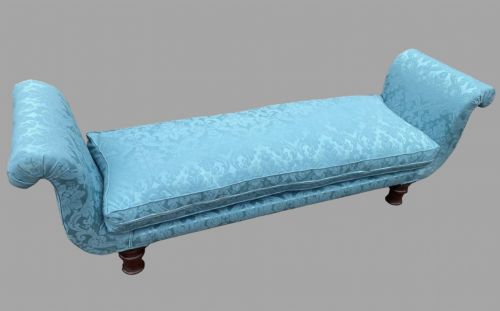
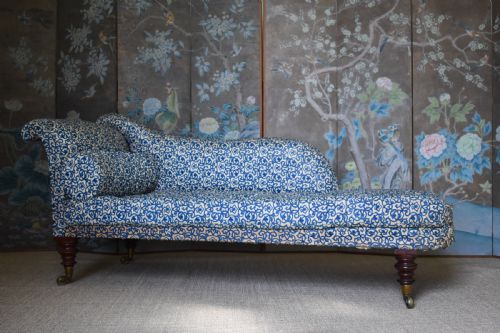
These blue upholstered chaise pieces combine nineteenth-century frames with tactile blue fabrics, offering both a commanding silhouette and a comfortable day seat.
Blue Upholstered Chaise
When you search for a blue upholstered chaise, you encounter nineteenth-century daybeds, chaise longues, and kidney sofas designed for reclining. These pieces appear in Victorian and nineteenth-century French Empire styles.
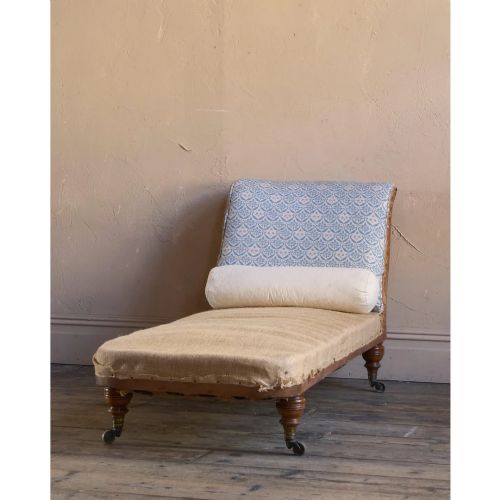
The versions you are most likely to meet on this page feature timber or mahogany frames paired with blue damask, cotton, velvet, or fabric upholstery. They range from French lit bateau forms to late Victorian day beds raised on turned legs with original castors.
Makers such as Howard and Sons and Miles & Edwards contributed to this group, alongside French daybeds and reclining day beds. Each example provides a prolonged seat designed for resting in a parlour or bedroom.
How they were made
Makers constructed these frames from timber and mahogany, often shaping them into distinct French lit bateau or kidney sofa curves. These wooden structures provide the underlying strength for daily reclining.
Upholsterers applied cotton, velvet, and blue damask over the internal stuffing, securing the textiles to match the distinct period aesthetic. Brass components frequently appear on castors that support the heavier Victorian day bed designs.
Upholstery fabrics recorded across these daybeds include cotton, velvet, and blue damask.
What varies in quality
Quality rests in the precision of the timber frame carving and the integrity of the original wood. Pieces bearing the mark of notable firms demonstrate superior joinery compared to unmarked workshop productions.
The treatment of the blue fabric upholstery and the preservation of original brass castors dictate the aesthetic standing of each piece. Finer examples retain their structural harmony between the wooden chassis and the upholstered day bed form.
Howard and Sons·Miles and Edwards
The Blue Upholstered Chaise Glossary
- Chaise Longue
- A long reclining chair that allows a person to sit with their legs extended. These nineteenth-century forms serve as both seating and day beds.
- Lit Bateau
- A French bed style featuring scrolled ends resembling a boat. This nineteenth-century form appears in select chaise and daybed listings.
- Castor
- A small wheel mounted on a swivel assembly attached to furniture legs. Original brass castors allow these heavy day beds to move smoothly across floors.
Blue Upholstered Chaise: Frequently Asked Questions
What is a blue upholstered chaise?
A blue upholstered chaise is a nineteenth-century daybed or reclining seat covered in blue fabric, cotton, velvet, or damask.
These pieces combine wooden frames, such as mahogany and timber, with extended seating surfaces designed for daytime resting.
How do I identify a Victorian chaise?
Victorian examples often feature turned wooden legs fitted with original brass castors and button-tufted or damask upholstery.
They reflect nineteenth-century British and French design preferences, distinguishing themselves from later twentieth-century day beds through dense timber construction.
Where should I place a daybed?
These pieces suit spacious bedrooms, drawing rooms, or quiet reading corners where their elongated silhouette can function as a focal point.
Because they invite reclining, ensure there is adequate floor clearance around the frame and its castors.
What materials make up these frames?
Frames consist primarily of wood, specifically mahogany and other nineteenth-century timber stock.
Upholstery materials include cotton, velvet, and damask, while subsidiary elements like brass support the moving castor wheels.