
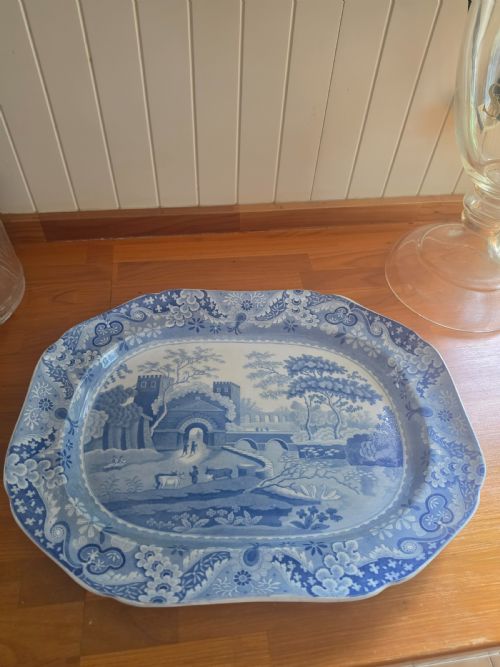
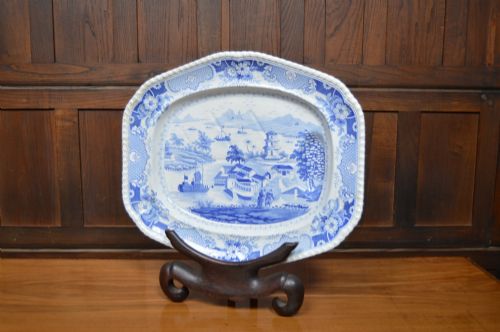
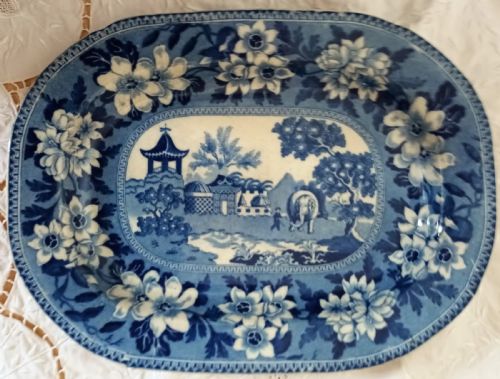
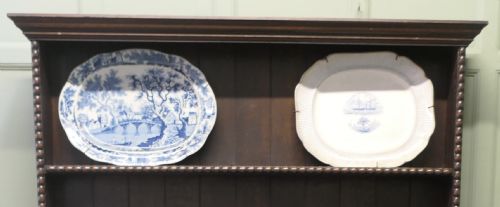


Blue Transferware Meat Plate
A blue transferware meat plate brings robust nineteenth-century utility and intricate cobalt pattern to the modern dining table.
Blue Transferware Meat Plate
A blue transferware meat plate is a large serving platter designed for presenting joints of meat at the nineteenth-century dining table. These substantial earthenware and ironstone dishes provide a striking visual centrepiece with their deep blue printed scenes.
Most examples found here date from the Georgian and Victorian periods, spanning the early decades of the nineteenth century through to the late eighteen-eighties. The forms range from simple flat platters to deep serving dishes and pieces fitted with matching ceramic drainers.
The patterns printed upon them draw heavily from romantic landscapes, architectural subjects, and Chinoiserie motifs such as temples, ruins, and gardens. Makers across Staffordshire produced these robust platters in quantity, ensuring a rich variety of pictorial subjects for the collector.
Materials and Transfer Printing Technique
Potters formed these heavy platters from earthenware and dense ironstone, materials chosen to withstand the rigours of carving heavy joints of meat at the table. The white or cream body provided a bright ground for the contrasting blue decoration.
Makers applied the design using a copperplate printing method, transferring the cobalt pigment onto tissue paper before pressing it onto the biscuited clay. This printed surface was then sealed beneath a clear lead glaze and fired in a kiln to fix the deep blue colour.
Listings feature nineteenth-century earthenware and ironstone platters decorated in cobalt pigment, spanning the Georgian and Victorian eras.
Distinctions in Quality
Quality in a blue transferware meat plate rests largely upon the crispness of the copperplate impression and the depth of the cobalt pigment. Superior pieces display sharp architectural lines and rich tonal variations within the transfer print, whereas lesser examples appear blurred or muddy.
The weight and presence of the ceramic body also separate standard wares from the finest productions. Ironstone bodies and pieces complete with their original matching drainers represent the higher tier of nineteenth-century manufacture.
Spode·John Rogers and Son·Mason's·Don Pottery·Thomas Lakin·Copeland and Garrett·Minton·Davenport·Elkin Knight and Bridgwood
The Blue Transferware Meat Plate Glossary
- Transferware
- Earthenware or ironstone pottery decorated by printing a design from an engraved copper plate onto the clay surface using metallic pigments. This technique allowed intricate pictorial scenes to be replicated rapidly across large production runs.
- Ironstone
- A dense, durable type of ceramic patented in the early nineteenth century to imitate Chinese porcelain. It resists chipping and staining far better than standard earthenware.
- Drainer
- A perforated ceramic insert that fits inside the well of a meat platter to allow juices to pool beneath the joint. These scarce components are highly prized by collectors.
- Cobalt Pigment
- The metallic oxide used to achieve the characteristic deep blue colour in nineteenth-century underglaze printing. It withstands high kiln temperatures without losing its intense hue.
Blue Transferware Meat Plate: Frequently Asked Questions
What were blue transferware meat plates used for?
These large ceramic platters served as the primary vessels for presenting roasted joints of meat and fowl at the nineteenth-century dining table. Their generous proportions and sturdy ironstone bodies accommodated heavy portions carved directly during the meal.
Many incorporated deep wells and channels, sometimes paired with a separate ceramic drainer insert, to collect meat juices and keep the carving elevated at the table.
How do I date an antique meat platter?
Dating relies upon a combination of maker marks stamped or printed on the reverse, the stylistic clues of the transfer pattern, and the physical characteristics of the ceramic body. Georgian examples often feature romantic landscape scenes and specific Staffordshire maker names from the early decades of the century.
Victorian pieces frequently display registration marks or specific ironstone formulations that narrow down the decade of production. Examining the glaze and weight of the earthenware also helps distinguish early nineteenth-century pieces from later Victorian output.
Can I use these platters for serving food today?
Most nineteenth-century earthenware and ironstone platters remain structurally sound for serving dry foods, cold meats, and canapés at modern gatherings. Their robust historical manufacture suits careful contemporary use.
Due to the age of the lead glazes and the risk of crazing absorbing oils or moisture, owners generally wash them gently by hand rather than placing them in a modern dishwasher.
How do I display a large meat platter?
The substantial size and pictorial depth of these platters make them ideal for wall display using secure, coated wire hangers designed for heavy ceramics. Alternatively, they sit safely upright on sturdy plate stands displayed on sideboards or dressers.
Arranging a group of different topographical or Chinoiserie patterns together creates a striking decorative focal point in a dining room or kitchen.