

Blue Tableware
Blue tableware brings together centuries of porcelain, pottery and silver, offering rich cobalt tones and transfer-printed scenes for the dining table.
Blue Tableware
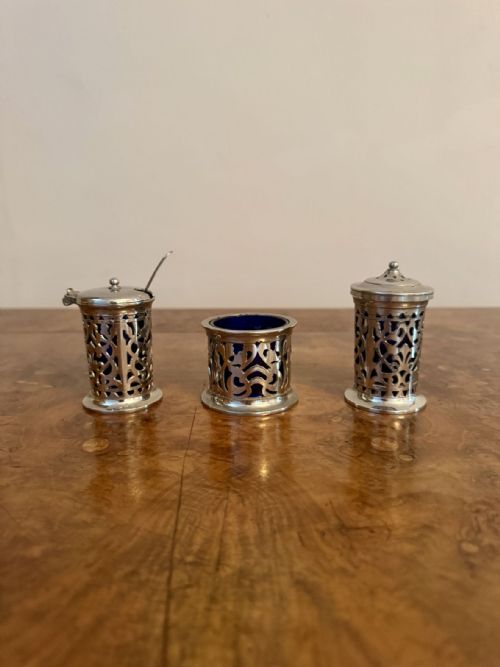
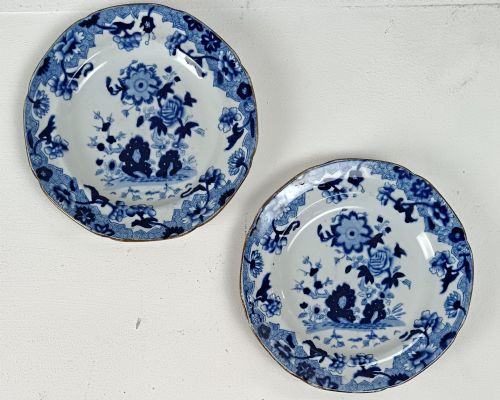
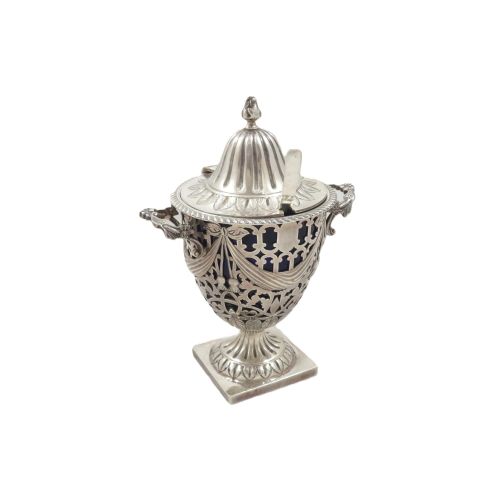
Blue tableware encompasses everything from Georgian transfer-printed pottery platters and porcelain dessert services to Victorian sterling silver mustard pots fitted with cobalt glass liners. Buyers look for service items, tureens, plates and condiment sets that bring functional historic craft to the table.
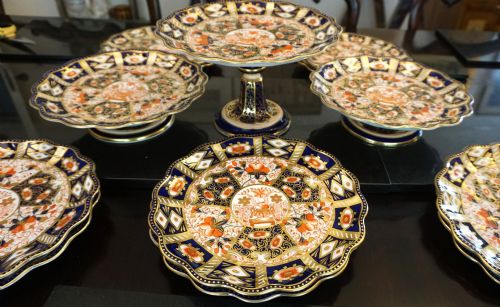
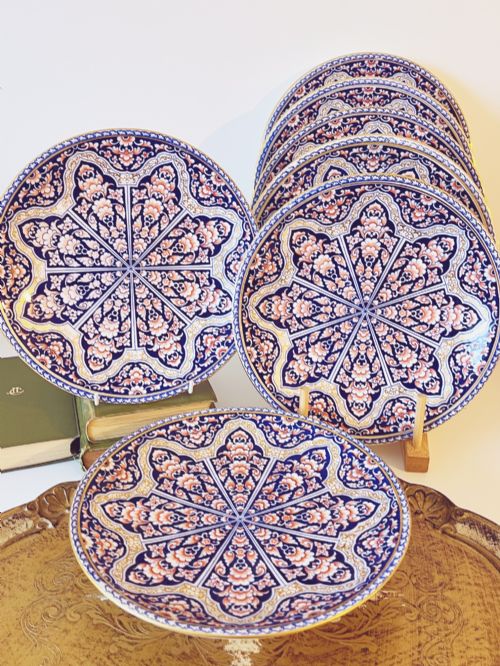
The most common examples on this page are nineteenth-century earthenwares bearing blue and white transfer prints, alongside porcelain dessert pieces from factories like Spode and Davenport, and silver salt cellars holding deep blue glass.
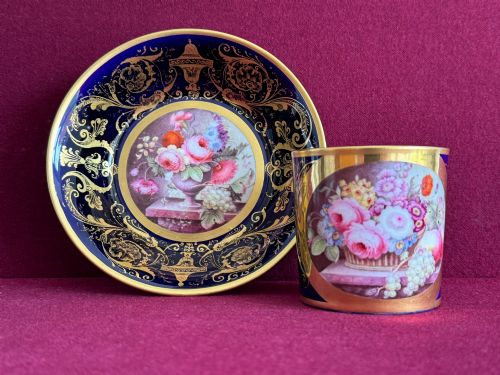
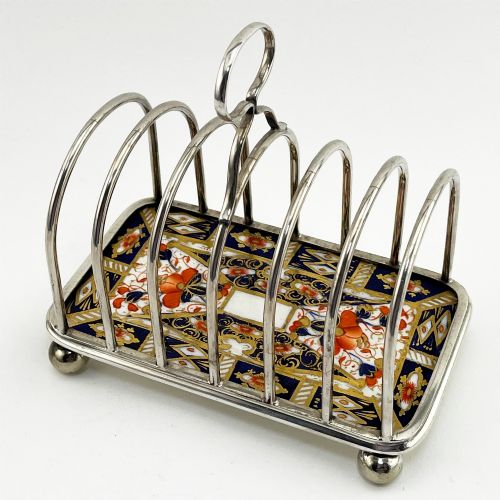
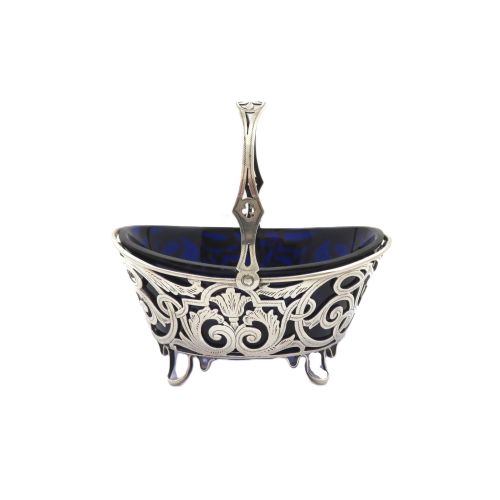
Pieces span multiple centuries, touching Georgian earthenware, Victorian silver wirework and Edwardian sugar baskets, showing how cobalt pigments and blue glass units remained popular across generations.
Materials and methods of production
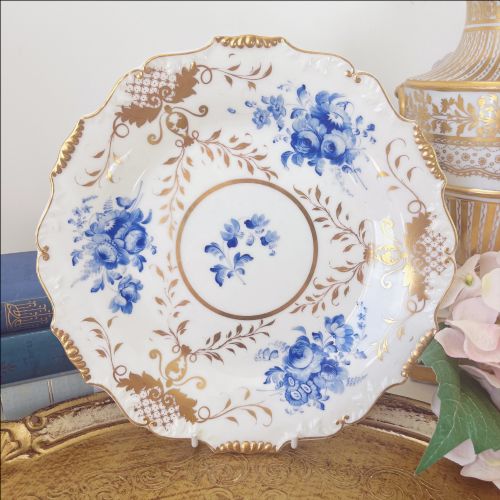
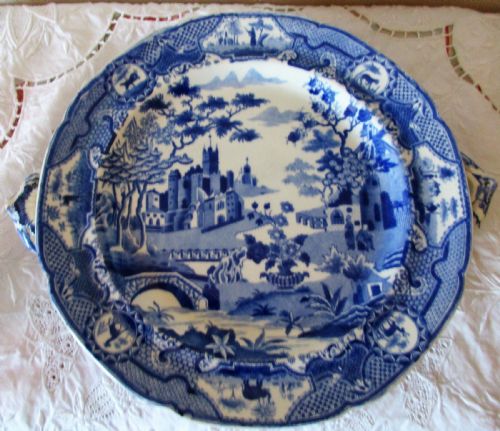
Pottery and porcelain items rely on cobalt oxides applied under or over the glaze, fired at high temperatures to achieve deep blue transfer-printed scenes such as gothic castles and eastern street views.
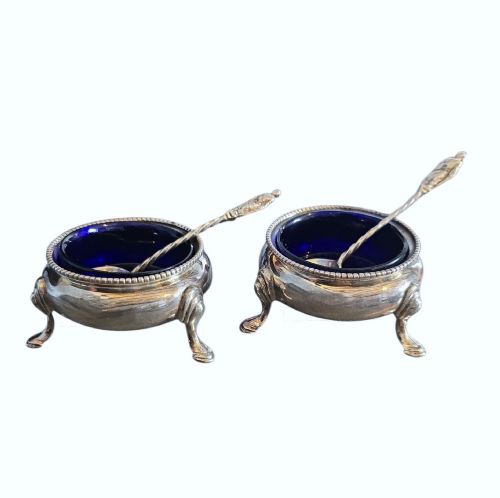
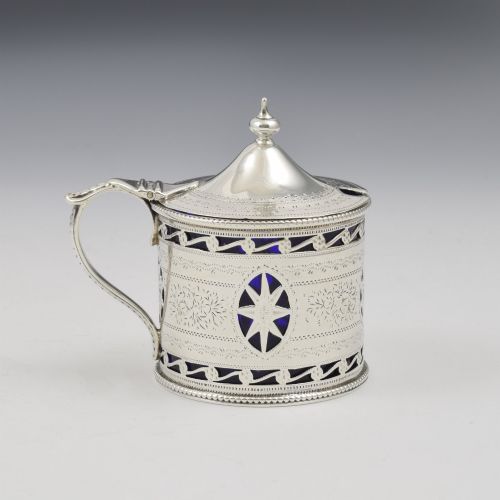
Silver items utilise sterling grade metal, often pierced or worked into wirework frames, paired with blown cobalt glass liners designed to hold condiments securely within open salt cellars and mustard pots.
Blue Tableware Retail Price Guide 2026
Typical asking prices for blue tableware among the pieces listed under this phrase on Sellingantiques today, from the lower quarter to the upper quarter. They describe what is for sale here now, not the wider market.
The listings span multiple eras, encompassing eighteenth-century porcelain pieces, Georgian transfer-printed pottery, Victorian silver tableware and Art Deco condiment sets.
Distinctions in manufacturing quality
Quality rests on the crispness of the transfer print and the delicacy of the porcelain body, where early Worcester or Spode bodies show superior translucency compared to heavier utilitarian earthenware.
In silver and glass items, the weight of the sterling frame, the precision of the piercing and the clarity of the blown cobalt glass liner set finer maker-attributed pieces apart from standard plate.
Davenport·Dr Wall·Minton·H and R Daniel·Royal Crown Derby·Nathan and Hayes·Spode·J and R Riley·J and R Clews·William Neale·Grainger's Worcester·Doulton Lambeth
The Blue Tableware Glossary
- Transfer-printed
- A decoration technique where an engraved copper plate transfers a design onto paper, which is then stamped onto the pottery before glazing. This method allowed intricate landscape scenes to be produced consistently.
- Cobalt glass
- A deep blue glass coloured by the addition of cobalt oxide, frequently used for removable liners inside silver salt cellars and condiment pots. It protects the silver from corrosive contents while providing a vibrant visual contrast.
- Tureen
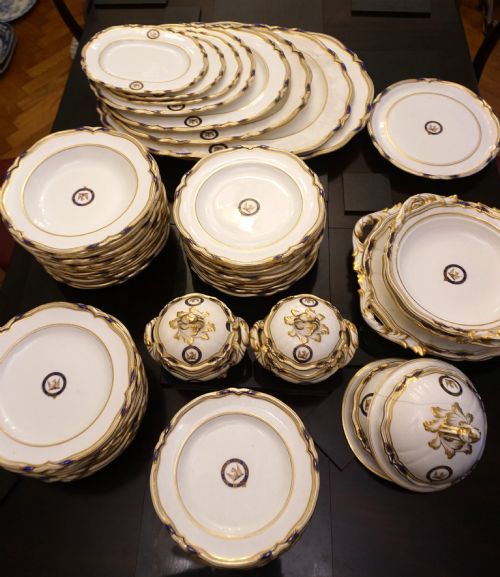
- A deep covered bowl designed for serving soups, vegetables or sauces at the dining table. Examples range from earthenware transfer-printed vessels to porcelain dessert cream tureens.
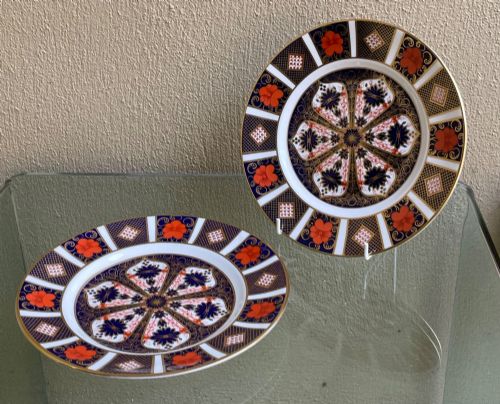
- Imari style
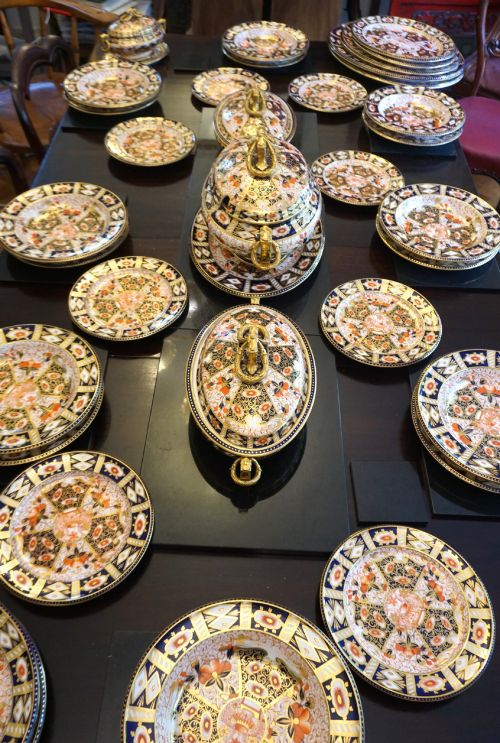
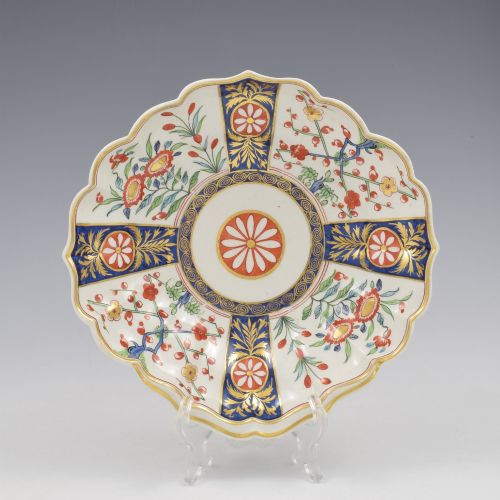
- A decorative scheme inspired by Japanese export wares, featuring rich cobalt blue combined with iron red and gilt highlights. Factories across England adopted this palette during the eighteenth and nineteenth centuries.
- Salt cellar
- A small open vessel or enclosed pot used to hold table salt before the invention of free-flowing salt. They often feature sterling silver frames with contrasting blue glass interiors.
Blue Tableware: Frequently Asked Questions
How do I clean antique silver salt cellars with glass liners?
Remove the cobalt glass liner from the silver frame before cleaning to prevent harsh metal polishes from contacting the glass. Wash the glass gently in warm soapy water and dry thoroughly.
Polish the sterling silver frame separately using a soft cloth and approved silver cleaner. Ensure both components are completely dry before reassembling the pieces for display.
What is transfer-printed pottery?
Transfer printing is a manufacturing method developed in the eighteenth century to apply detailed patterns onto earthenware and porcelain. An engraved copper plate transfers ink onto tissue paper, which is pressed onto the ceramic body.
This technique enabled factories to produce intricate pictorial designs, such as castle scenes and eastern landscapes, with a uniformity that hand-painting could not match.
Can I use antique blue and white plates for dining?
Many nineteenth-century earthenware and porcelain plates remain structurally sound for gentle modern dining use. Hand washing is essential to preserve the historic glaze and prevent crazing from thermal shock.
Avoid dishwashers, microwaves and abrasive scouring pads, as historic glazes and transfer prints can degrade under harsh modern cleaning agents.
How do I identify Imari style patterns?
Imari style decoration is characterised by a distinct colour palette combining deep underglaze cobalt blue with iron red and added gilt details. The aesthetic originates from Japanese export porcelain copied by European factories.
English makers adopted these vibrant floral and geometric motifs extensively across dessert services and dinner sets during the Georgian and Victorian periods.