

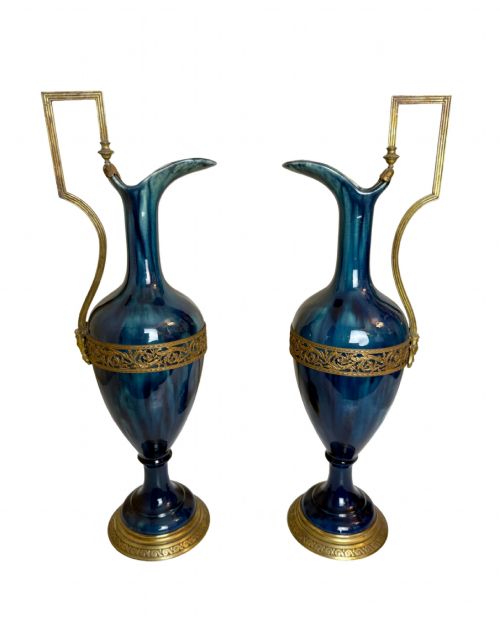
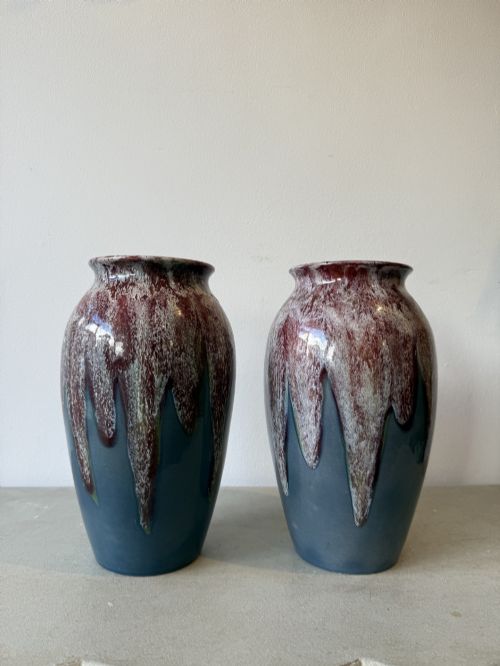
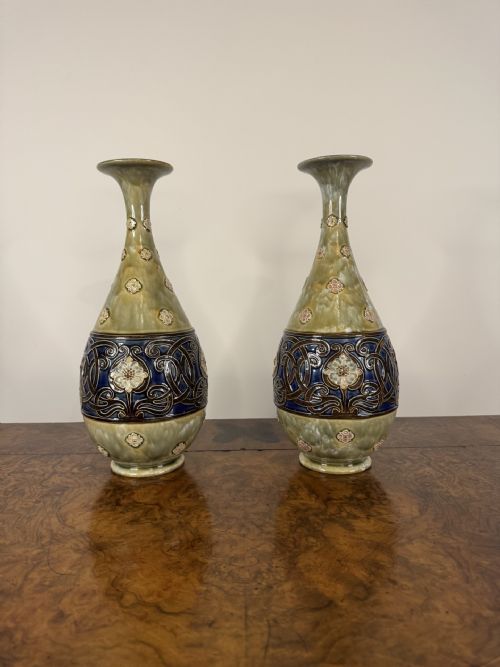


Blue Stoneware Urn Pair
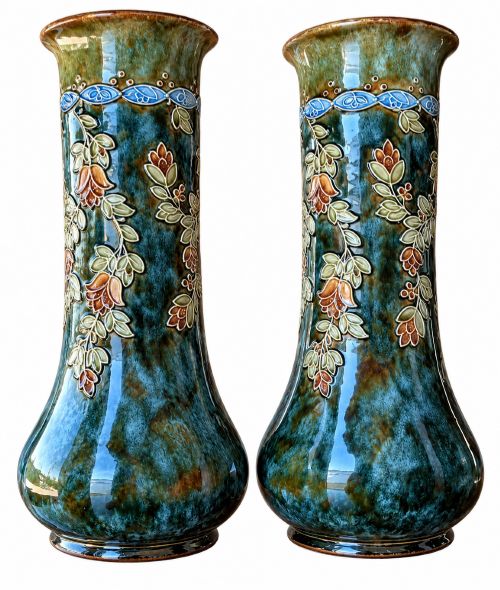
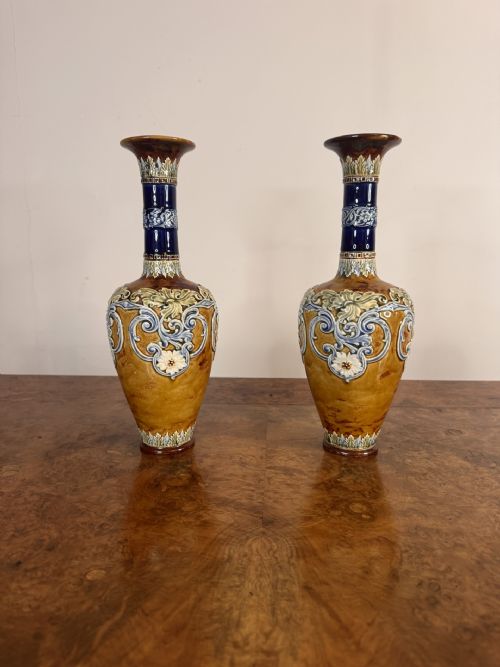
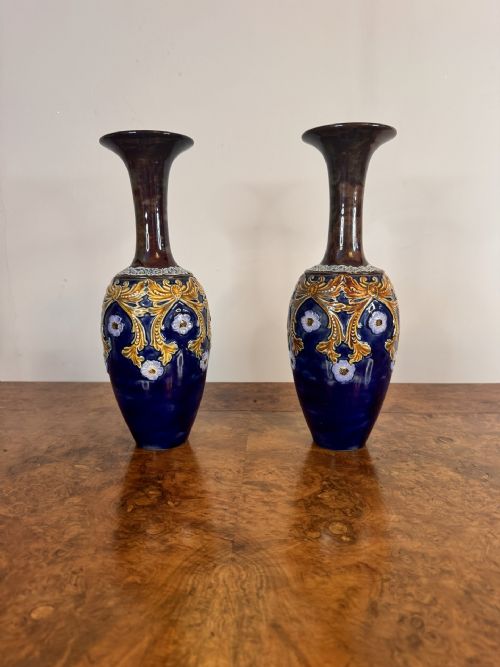
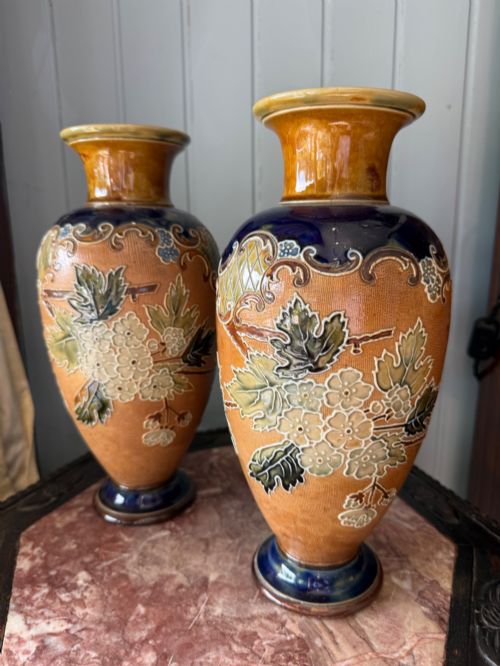
A blue stoneware urn pair brings a striking architectural silhouette and rich cobalt depth to a mantelpiece.
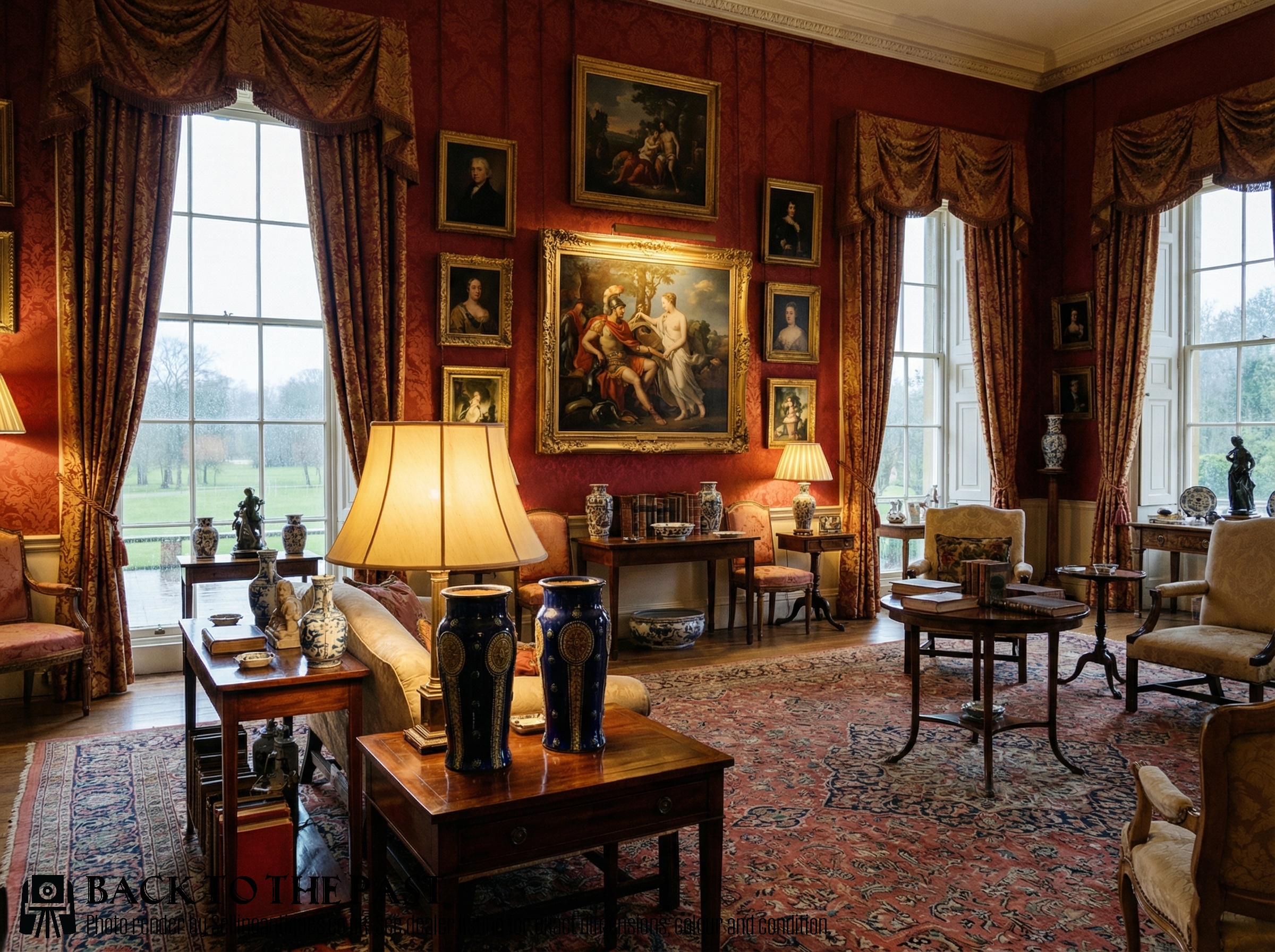
Blue Stoneware Urn Pair
A blue stoneware urn pair comprises matching symmetrical vessels shaped for display rather than utility, typically featuring classical or organic contours. These decorative objects emerge predominantly from late nineteenth and early twentieth century production, spanning Victorian, Art Nouveau, and Arts and Crafts movements.
Most examples encountered here originate from British potteries, particularly the Doulton Lambeth studios and Wedgwood, utilising durable ceramic bodies. Buyers often select these pairs to anchor a symmetrical display on a sideboard or mantel.
The forms range from traditional campana shapes to slender baluster profiles, frequently decorated with relief ornamentation or contrasting glazed finishes. Each pairing reflects the distinctive moulding and firing techniques of its specific workshop and period.
What varies in quality
The distinction between standard production and exceptional work rests on the crispness of the moulded relief and the control of the cobalt glaze during firing. Pieces bearing named artist signatures or distinct workshop ciphers generally demonstrate superior hand-finishing.
Proportion and symmetry define the visual success of the pairing, ensuring both vessels match closely in height, contour, and depth of colour. The complexity of the decorative scheme, from simple glazed surfaces to intricate enamel work, further elevates the piece.
Blue Stoneware Urn Pair Retail Price Guide 2026
Typical asking prices for blue stoneware urn pair among the pieces listed under this phrase on Sellingantiques today, from the lower quarter to the upper quarter. They describe what is for sale here now, not the wider market.
Listings feature Victorian and Edwardian periods, utilising stoneware, porcelain, and jasperware across urn, vase, and ewer forms.
Royal Doulton·Doulton Lambeth·Wedgwood·Louisa Wakely·Emily Edwards·Ethel Beard
The Blue Stoneware Urn Pair Glossary
- Stoneware
- A robust, vitrified ceramic fired at high temperatures until non-porous. It accepts rich salt glazes and intricate surface textures.
- Jasperware
- A fine-grained, unglazed stoneware developed by Wedgwood, famous for its matte coloured body and contrasting white bas-reliefs.
- Campana
- A classical bell-shaped vessel form with a flared rim and footed base, often utilised for ornamental garden or mantel urns.
- Baluster
- An architectural vase form characterised by a swollen lower body that tapers towards a narrow neck.
- Slater's Patent
- A Doulton technique pressing lace or textile patterns into moist clay to create textured backgrounds for enamel decoration.
Blue Stoneware Urn Pair: Frequently Asked Questions
How do I date a blue stoneware urn pair?
Dating relies primarily on factory impressed stamps, artist monograms, and stylistic indicators such as Victorian revival motifs or flowing Art Nouveau lines.
Examining the base marks often reveals specific cipher systems used by potteries to designate exact production decades.
Where should I display my urn pair?
These symmetrical vessels suit balanced settings such as mantelpieces, console tables, or matching pedestals where their shared silhouette creates visual harmony.
Positioning them away from direct high-traffic edges protects their glazed or relief surfaces from accidental knocks.
Can these urns hold water?
While the stoneware and ceramic bodies are fundamentally waterproof, many antique pieces serve strictly decorative purposes to protect internal historic finishes.
Using them for dried botanicals rather than fresh water arrangements preserves the interior condition of older glazed surfaces.
What causes differences in the blue glaze?
Variations in cobalt application and kiln temperature naturally create lighter or deeper tones across different firing batches.
Hand-applied glazes on nineteenth-century pieces often display subtle tonal shifts that distinguish them from uniform modern ceramics.