
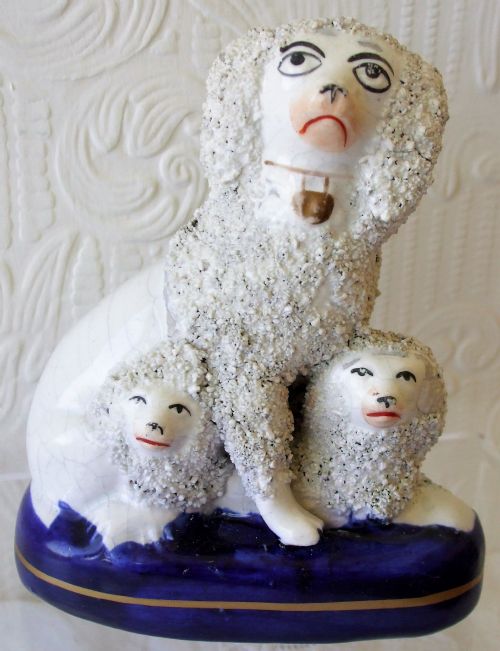


Blue Staffordshire Figurine
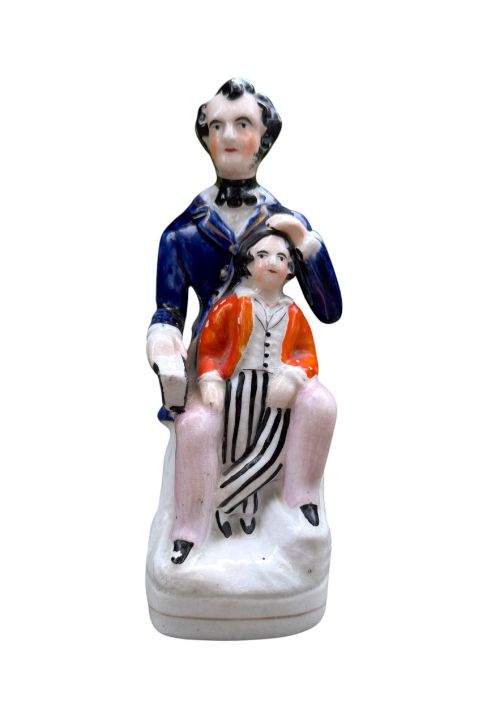
A blue staffordshire figurine brings nineteenth century character to a mantelpiece, depicting everything from royal portraits and literary heroes to seated dogs.
Blue Staffordshire Figurine
When you search for a blue staffordshire figurine, you encounter earthenware modelled as human subjects, theatrical characters, and animal groups from the nineteenth century. These ceramic pieces range from flatback portrait figures designed to stand against a wall to functional objects such as inkwells, quill holders, and toby jugs.
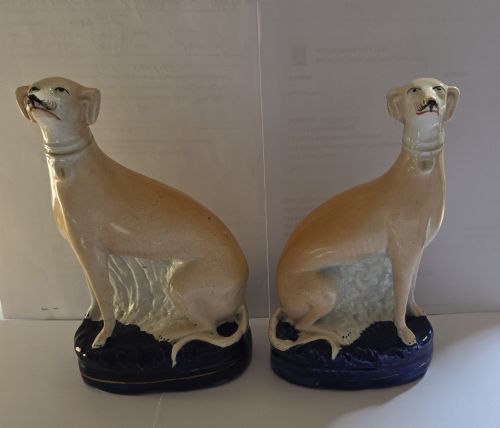
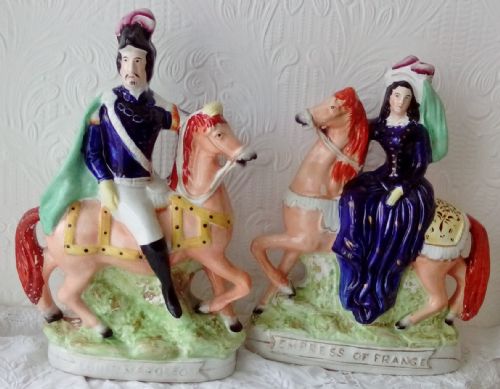
The Victorian era dominates these listings, with many examples originating from the mid to late nineteenth century. You will frequently find pairs of dogs, royal figures, and literary subjects produced in Staffordshire potteries during this period.
How They Were Made
Many figures utilise a flatback construction, meaning the reverse is left unglazed and unmodelled because the piece was intended to be displayed against a wall.
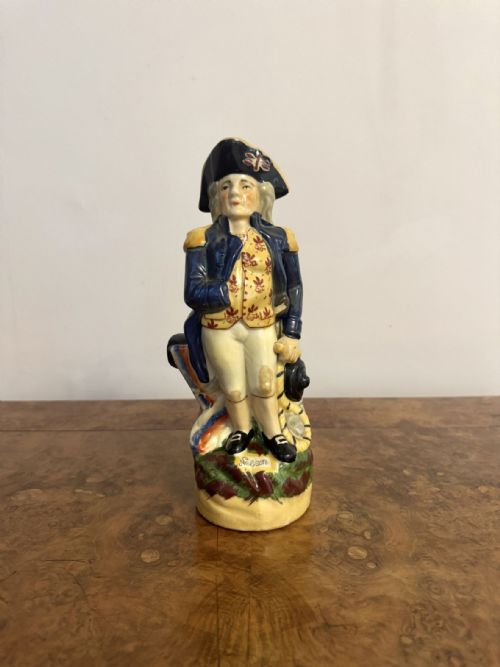
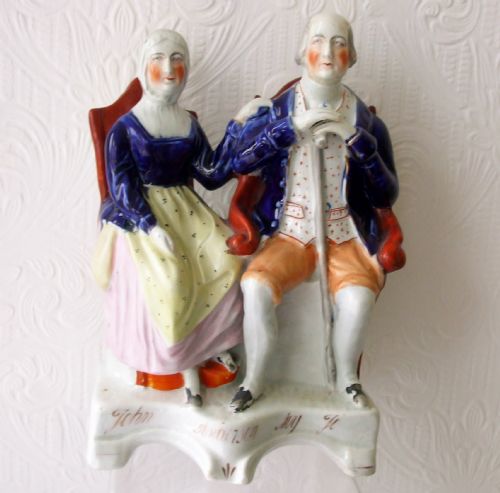
Benjamin Franklin makes an unexpected appearance disguised under the name Washington on a nineteenth century Staffordshire figure.
What Varies in Quality
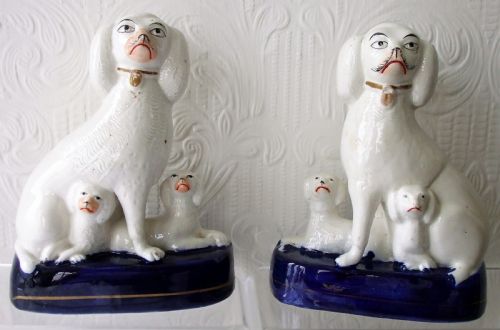
Completeness also dictates standing, particularly with matched pairs of dogs or multi-figure groups that were originally manufactured to be displayed together on a mantelpiece.
The Blue Staffordshire Figurine Glossary
- Flatback
- A figure moulded with a finished front and a flat, unornamented reverse designed to sit flush against a wall. This style became common in nineteenth century Staffordshire pottery.
- Earthenware
- A porous ceramic body fired at lower temperatures than stoneware or porcelain. It serves as the primary material for these Victorian figures before being glazed and painted.
- Toby jug
- A pottery jug modelled in the shape of a seated person, often depicting a notable historical figure or fictional character. Examples from this period feature detailed facial moulding.
- Spill vase
- A hollow vertical cylinder incorporated into a figure group to hold wooden spill sticks used for lighting fires or pipes. These combine decorative modelling with domestic utility.
- Lead glaze
- A glossy coating applied to ceramic surfaces before firing to give a smooth finish. It protects the underlying earthenware and accentuates the enamel paint.
Blue Staffordshire Figurine: Frequently Asked Questions
What subjects do these figures show?
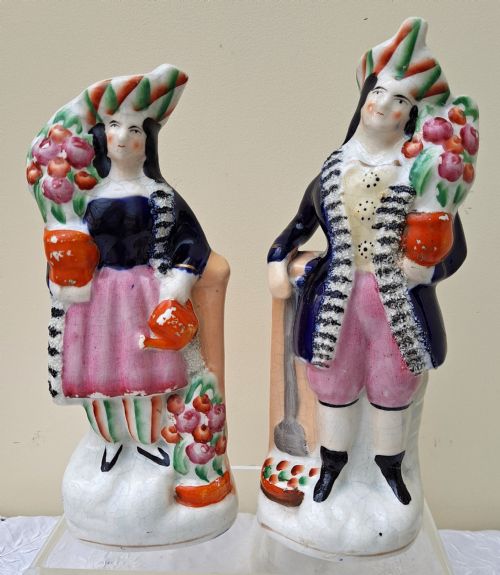
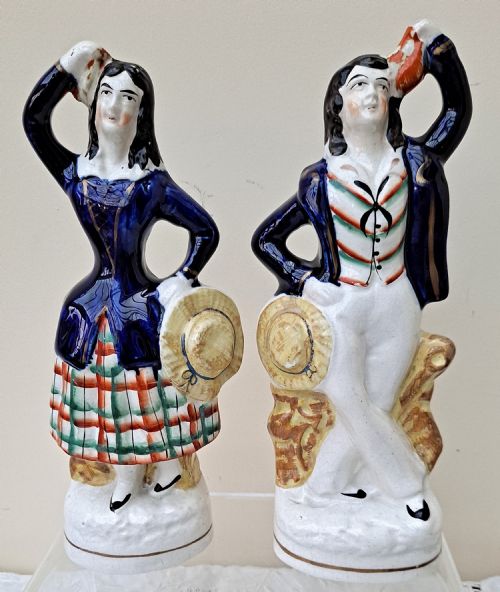
The listings include royal portrait figures, theatrical characters, sailors, gardeners, and historical personalities such as Lord Nelson and Queen Victoria.
Animal groups are equally common, particularly seated whippets, poodles with pups, and spaniels resting on cushions.
Were these figures meant for display?
Most pieces served as decorative ornaments for the mantelpiece or sideboard during the Victorian period, designed to catch the eye in a domestic interior.
Some examples also incorporated practical uses, functioning as inkwells, watch holders, or quill holders alongside their decorative modelling.
How can I tell the period?
The pieces date predominantly from the nineteenth century, aligning with the Victorian era and specific reigns such as that of Queen Victoria.
Stylistic cues include flatback construction, cobalt blue decoration, and subject matter reflecting contemporary historical events or popular culture of the mid-nineteenth century.