






Blue Sea Watercolour Art
Blue sea watercolour art captures coastal atmospheres, maritime scenes, and historic vessels through translucent washes on paper.
Blue Sea Watercolour Art
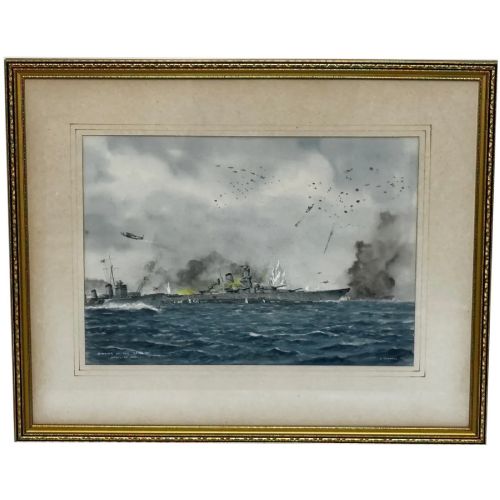
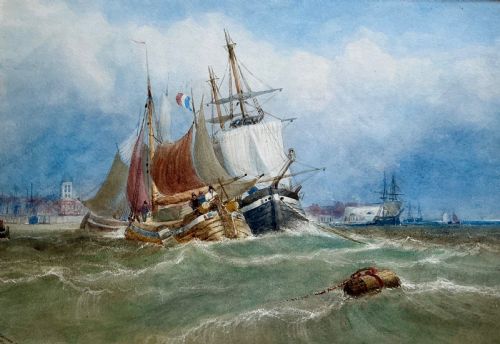
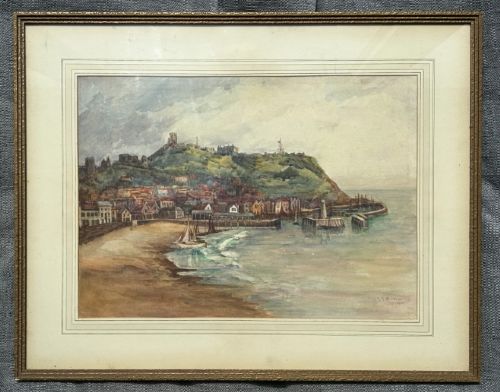
Blue sea watercolour art encompasses maritime paintings, coastal landscapes, and harbour scenes created during the nineteenth and twentieth centuries. These works record naval vessels, fishing boats, and coastal towns through the distinct medium of watercolour on paper.
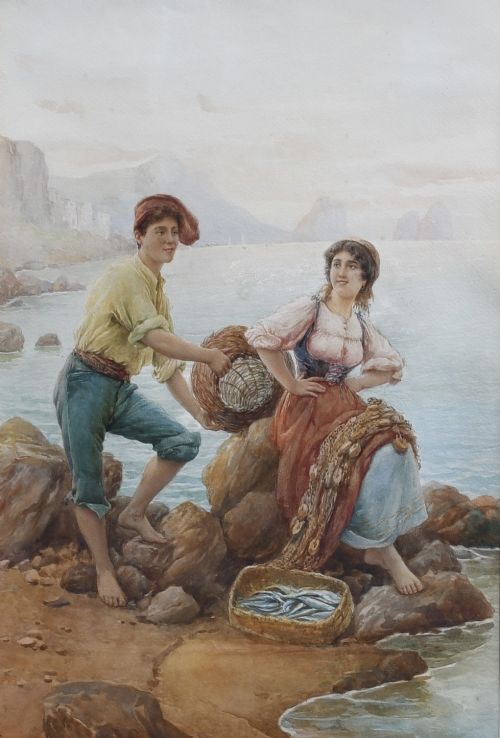
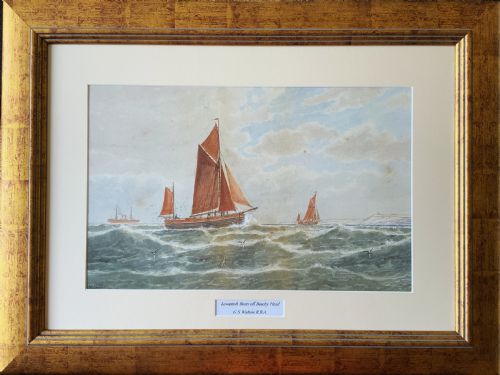
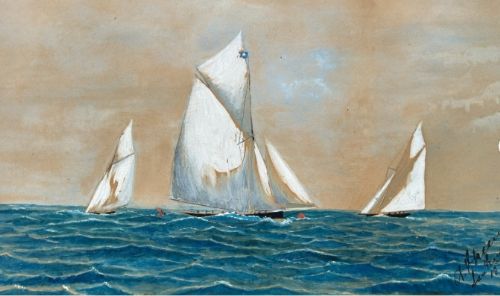
Buyers will encounter traditional British and European coastal views alongside depictions of racing yachts and merchant shipping. The subjects range from calm summer seas to dramatic scenes of choppy waters and lighthouses.
Pieces frequently arrive framed in wood or gilt wood, often preserved behind glass to protect the delicate pigment from atmospheric damage. The selection spans Victorian marine art through to mid-twentieth-century maritime painting.
How They Were Made
Artists applied watercolour pigment and ink onto paper surfaces, utilising the white of the unpainted paper to create highlights of light and foam. The water-soluble pigments allowed for rapid washes that captured shifting weather conditions and translucent sea depths.
Works were commonly completed with fine ink detailing for rigging, architecture, and vessels, then secured behind glass within wooden or gilt wood frames.
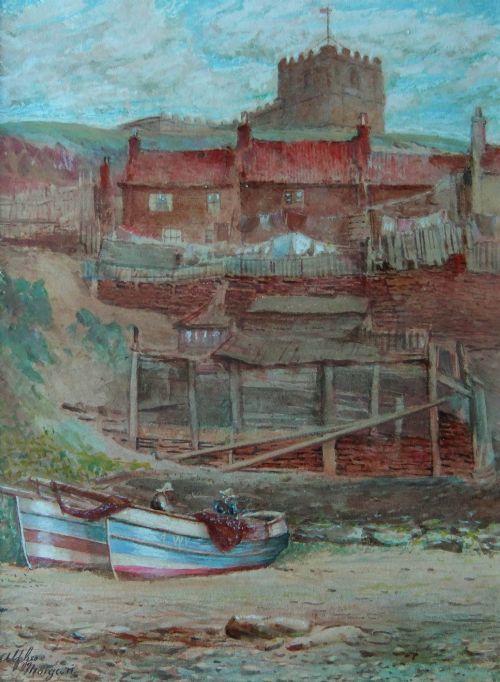
Several artists captured the aroma of wet sand and salt by simply painting fishermen hauling seaweed carts in Whitby.
What Varies in Quality
Quality rests upon the artist's command of light, atmosphere, and maritime detail, distinguishing skilled observations from routine topographical records. Superior examples capture the weight of water, movement of sailing craft, and precise rigging with confident brushwork.
Condition also governs value, as exposure to light fades watercolour pigments over decades. Stronger survivals retain rich tones in the blue sea and clear paper integrity.
James Orrock·Charles Edward Dixon·John E. Aitken·Eric Tufnell·William Banks Fortescue·Alfred G. Morgan·Carlo Ferranti·George Stanfield Walters·Henry Barlow Carter·F A Roylance·George F Pennington·William Lee Hankey·William Tuck·John McDougal·Samuel Owen·Frederick Stuart Richardson·George Hamilton Constantine·Percy Brooke·William Kay Blacklock·Julian Drummond·James George Bingley·Joseph Newington Carter·WF Mitchell·Peter Ghent·Samuel John Milton Brown
The Blue Sea Watercolour Art Glossary
- Watercolour
- A paint consisting of a pigment suspended in a water-soluble vehicle. It is applied in translucent washes on paper to create luminous effects.
- Seascape
- A type of artwork depicting the sea, coastlines, and marine vessels. These scenes focus primarily on the expanse of water and coastal weather.
- Gilt wood
- Wood coated with a thin layer of gold leaf or gold paint. This finish frequently frames antique maritime watercolours.
- Barque
- A sailing vessel with three or more masts. Such ships appear frequently in nineteenth-century maritime art.
- Provenance
- The chronological history of the ownership of a piece. Documented origins help confirm attribution to listed artists.
Blue Sea Watercolour Art: Frequently Asked Questions
How do I date an antique sea watercolour?
Dating relies on costume, ship design, artist signatures, and framing methods. Victorian and Edwardian works often feature specific vessel rigs and paper watermarks.
Examine the reverse of the frame for old dealer labels or inscriptions that record dates and locations.
Where should I hang maritime watercolours?
Display these works away from direct sunlight to prevent the watercolour pigments from fading. Consistent indoor humidity protects both the paper and the wooden frames.
Mounting them behind protective glass filters ultraviolet light and stops airborne dust settling on the delicate surface.
Are all these paintings British?
The majority reflect British and European coastal locations, including Yorkshire harbours, Cornish fishing villages, and French ports. Occasional works record American coastal scenes.
Signatures and titles on the mount or reverse usually identify the specific stretch of water depicted.
What is the difference between a marine and coastal scene?
Marine scenes focus primarily on ships, naval engagements, and deep-water sailing vessels in open seas. Coastal watercolours generally feature land, beaches, lighthouses, and harbour activities.
Many pieces bridge both categories by showing vessels entering or leaving port.