





Blue Sea Landscape Painting
Blue sea landscape painting captures the movement of coastal waters and open horizons across the nineteenth and twentieth centuries.
Blue Sea Landscape Painting
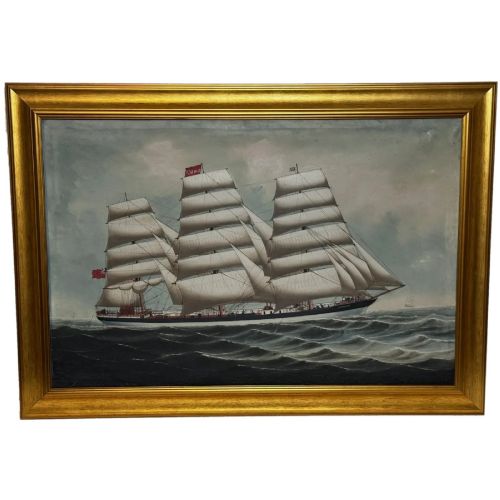
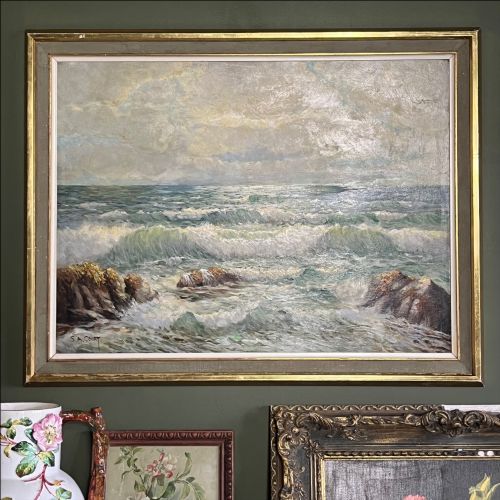
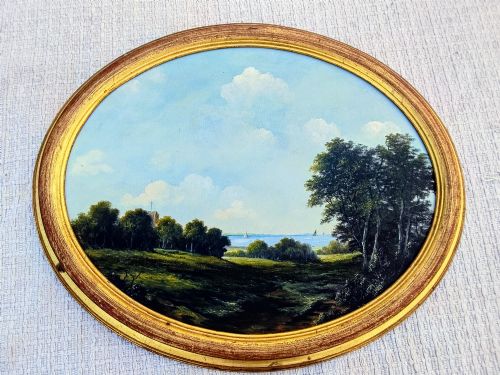
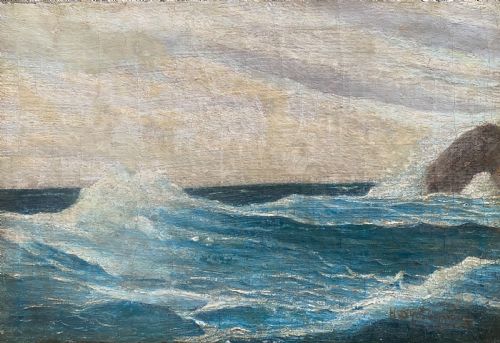
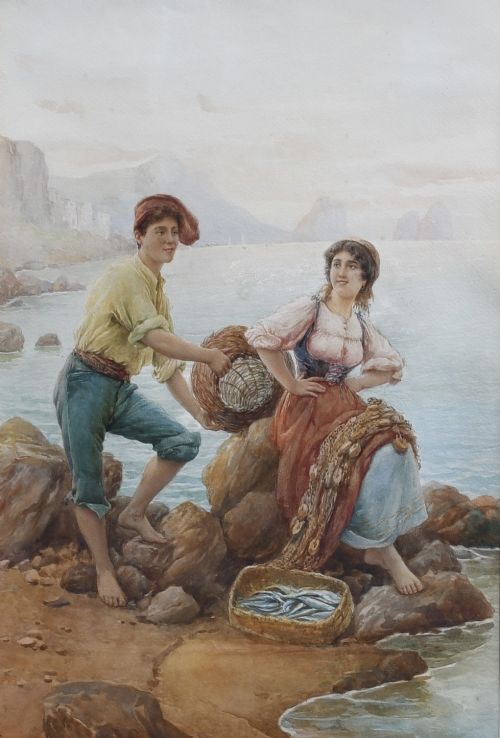
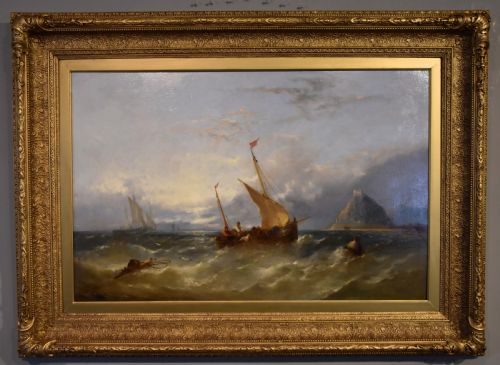
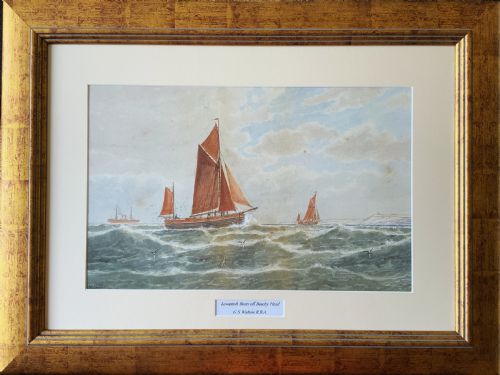
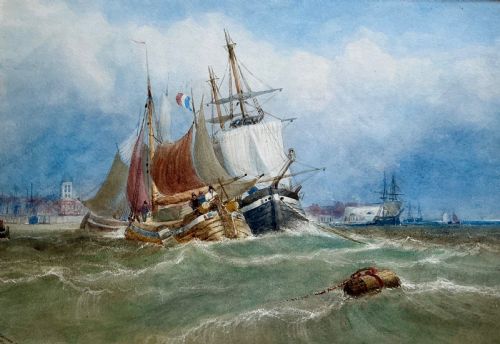
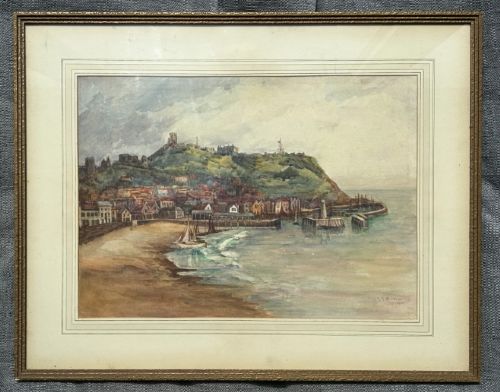
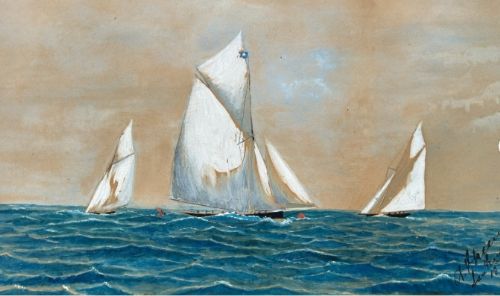
A blue sea landscape painting brings maritime scenes, harbours, and coastal cliffs directly into interior spaces. These works range from calm tidal inlets to heavy swells under grey skies, capturing shores across Britain, France, and further afield.
Most pieces encountered here date from the nineteenth century through to the mid-twentieth century. The selection spans traditional maritime watercolours and impressionist oil paintings on canvas or paper.
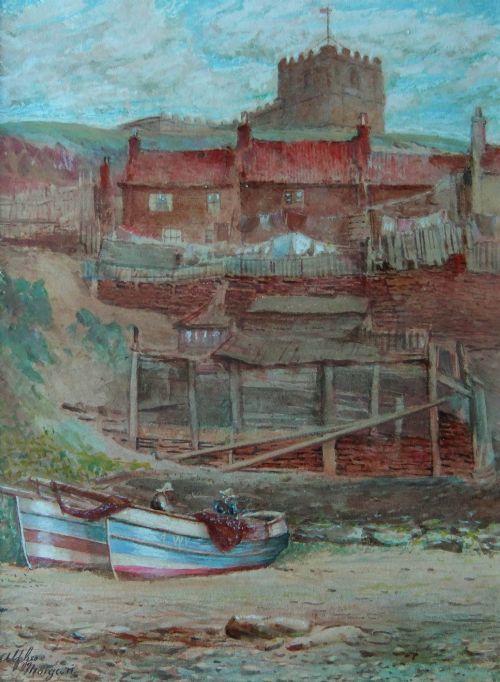
Artists often focused on local fishing fleets, rocky headlands, and sandy bays. Working either outdoors or in studios, they recorded the changing light over coastal waters.
Materials and technique
Painters relied principally on oil paint applied to canvas or wood panels, alongside watercolour pigment worked onto paper. Oil allowed for rich, layered textures that built up the weight of waves and clouds.
Watercolour technique demanded precision and speed, particularly when artists worked en plein air to catch fleeting atmospheric effects on the coast. Transparent washes created luminous skies and shifting sea tones.
Substantial wooden frames, sometimes glazed for paper works, protected these pieces and completed their presentation.
Several canvases capture Victorian artists braving bracing coastal winds to paint harsh northern seas.
Distinctions in quality
Quality rests on the artist's command of light, proportion, and the movement of water. Stronger works convey real depth in the sea and atmosphere in the sky rather than relying on formulaic brushwork.
Compositional balance separates standard topographical records from compelling artistic interpretations. The placement of boats, figures, or headlands directs the viewer's eye across the canvas.
The handling of pigment, whether the fluid transparency of watercolour or the confident impasto of oil, defines the technical achievement of each piece.
James Orrock·Reginald Arthur Borstel·Sidney A Court·John E Aitken·William Banks Fortescue·Bernard Benedict Hemy·Alfred G Morgan·William Henry Williamson·George Stanfield Walters·Henry Barlow Carter·George F Pennington·Raymond Moritz·Jean Baptiste Olive·William Lee Hankey·William Tuck·John McDougal·Charles Malfroy·Frederick Stuart Richardson·Thomas Rose Miles·George Hamilton Constantine·Percy Brooke·James Torrington Bell·Gustave de Breanski·William Kay Blacklock·James George Bingley
The Blue Sea Landscape Painting Glossary
- En plein air
- Painting outdoors to capture direct observations of natural light and weather. This approach became central to impressionist and post-impressionist coastal art.
- Impasto
- Paint applied thickly to a canvas, leaving visible brush or palette knife marks. This technique gives physical texture to crashing waves and clouds.
- Seascape
- A work of art depicting the sea, coastal views, or marine activity. These pieces often focus on the interaction between land, water, and sky.
- Watercolour
- Paint consisting of pigment suspended in a water-based solution, typically applied to paper. It offers unique luminosity and delicacy in maritime scenes.
- Provenance
- The documented history of ownership of an artwork. Clear records help establish authenticity and past exhibitions.
Blue Sea Landscape Painting: Frequently Asked Questions
How do I care for antique watercolours?
Keep works on paper away from direct sunlight to prevent fading of pigments and discolouration of the paper support.
Ensure they are framed behind glass with acid-free mounts and stored in stable humidity conditions.
Where were these coastal scenes usually painted?
Artists frequently travelled to active fishing ports, rugged cliffs, and sandy bays around Britain and continental Europe.
Locations like Cornwall, Yorkshire, and the Normandy coast were particularly popular destinations for marine painters.
What is the difference between oil and watercolour here?
Oil paintings use pigment suspended in drying oils on canvas or wood, allowing for rich textures and deep colour layering.
Watercolours use water-soluble pigments on paper, creating lighter, more translucent atmospheric effects.
How do I date a nineteenth-century marine painting?
Examine the style of dress on any figures, the type of vessels depicted, and the framing materials used.
Signatures, dates inscribed on the reverse, and exhibition labels also provide reliable chronological markers.