
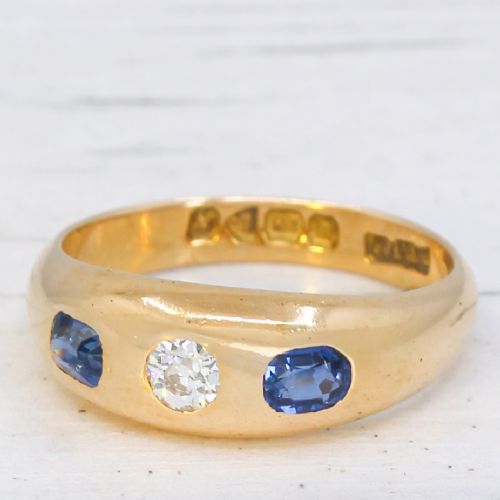


Blue Sapphire Band Ring
A blue sapphire band ring brings together deep blue corundum and precious metal, offering a rich flash of colour for everyday wear.
Blue Sapphire Band Ring
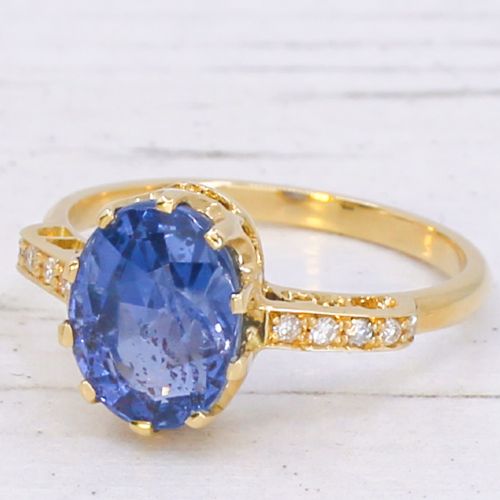
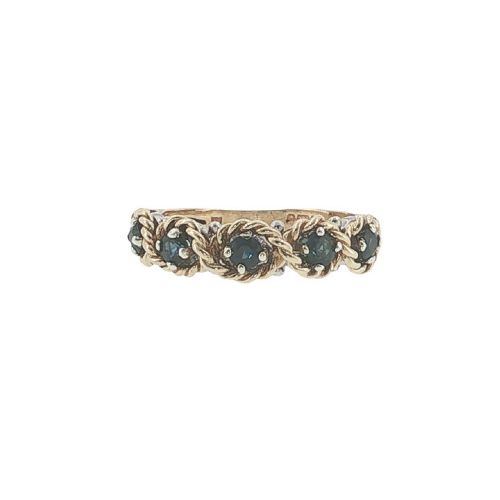
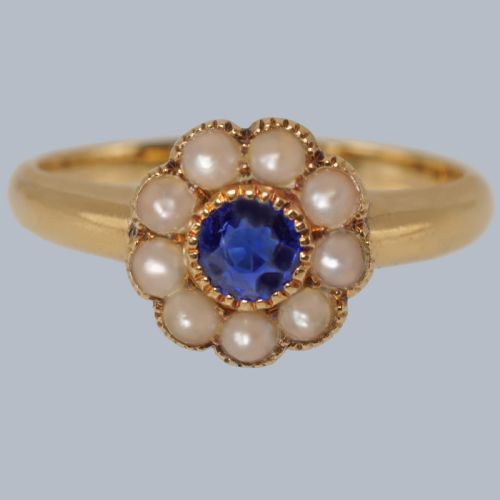
A blue sapphire band ring spans several decades of jewellery design, from Victorian split pearl clusters to mid-century unheated Ceylon stones. Collectors encounter traditional multi-stone layouts, half eternities, and boat rings alongside simpler five-stone configurations.
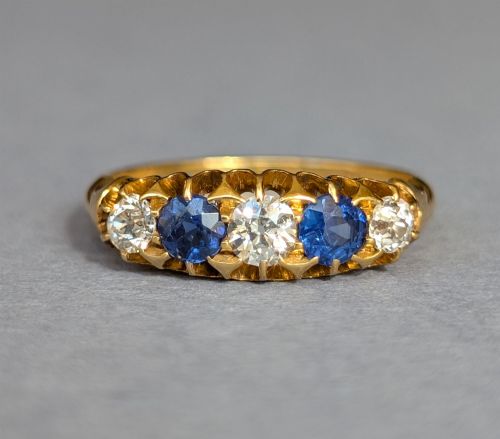
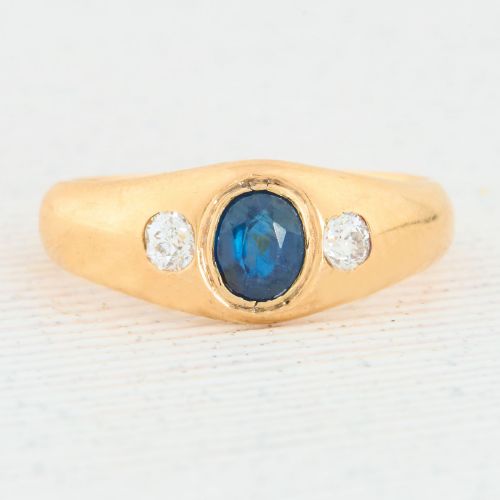
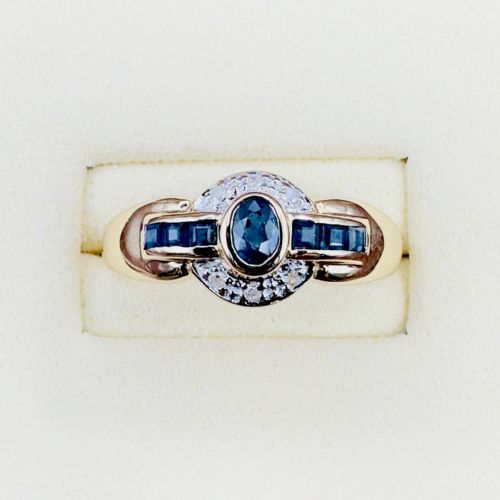
Victorian and Edwardian examples frequently pair deep blue gems with old cut diamonds in yellow gold or platinum settings. Later mid-century iterations lean towards clean lines, highlighting oval and princess cut stones.
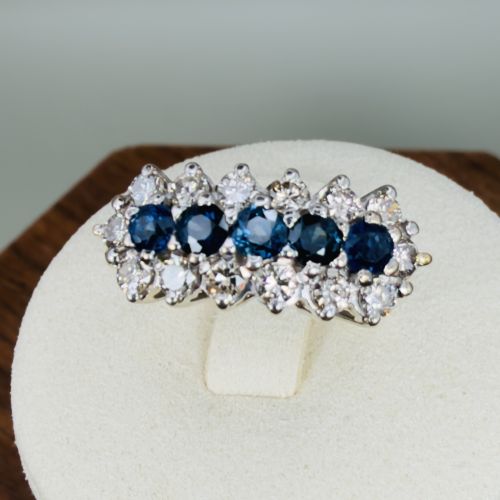
The selection ranges from delicate low-profile bands to substantial cluster rings. Buyers find pieces originating from various eras, including the Art Deco period and the mid-twentieth century.
Materials and construction
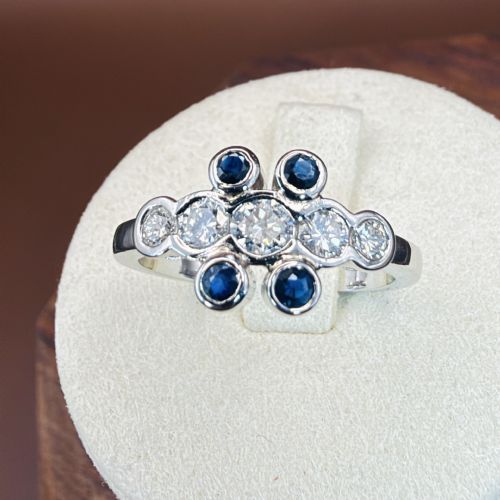
Goldsmiths set these blue sapphire and diamond stones into 9ct gold, 18ct yellow gold, 14ct gold, and platinum. Metal selection shifted over the decades, moving from warm yellow gold in earlier Victorian pieces to white metals and platinum by the Art Deco era.
Craftsmen utilised secure claw, channel, and flush settings to hold the gems in place. Multi-stone formats often alternate sapphires with diamonds, whilst gypsy rings sink the stones flush into the heavy gold band.
Listings feature yellow gold, white gold, 9ct, 14ct, 18ct gold, and platinum.
Assessing quality
The distinction between average and exceptional pieces rests on the origin and treatment of the sapphire itself. Unheated stones from specific regions like Ceylon, Kashmir, or Burma command greater attention from collectors.
The proportion and cut of the accompanying diamonds, alongside the weight and integrity of the gold or platinum mount, elevate a piece. Hallmarks and original period setting work further distinguish finer examples.
The Blue Sapphire Band Ring Glossary
- Band ring
- A finger ring of approximately uniform width throughout its circle. These often sit flush against other bands.
- Trilogy ring
- A ring featuring three main stones set in a row. They frequently represent the past, present, and future.
- Gypsy ring
- A style where stones are embedded directly into the thick metal band with flush star settings. This form was popular in the late nineteenth and early twentieth centuries.
- Half eternity
- A band set with a single line of gemstones spanning the upper half of the hoop. This layout avoids stones pressing against adjacent fingers.
- Boat ring
- A navette-shaped setting resembling the hull of a boat, tapering gently at both ends. It allows multiple stones to sit horizontally across the finger.
Blue Sapphire Band Ring: Frequently Asked Questions
How do I wear a blue sapphire band ring daily?
Sapphire ranks very high on the Mohs hardness scale, making it durable enough for regular wear on the hand.
However, softer accompanying materials like pearls or older gold settings require mindful care during heavy manual tasks.
What is an unheated sapphire?
An unheated sapphire is a natural gemstone that has not undergone thermal enhancement to improve its colour or clarity.
Such stones retain their geological authenticity and generally carry higher desirability among collectors.
How can I tell a Victorian sapphire ring from an Edwardian one?
Victorian pieces often utilise rich yellow gold and incorporate sentimental motifs like split pearls alongside deeper blue stones.
Edwardian and Art Deco examples frequently transition towards platinum settings, intricate filigree, and brighter diamond pairings.
Can I resize an antique band ring?
Many gold and platinum band rings can be adjusted by a skilled jeweller without compromising the structural integrity.
However, full eternity styles or rings with continuous shoulder stones present difficulties for resizing.