

Vintage Five Stone Ring
Choosing a vintage five stone ring brings together enduring craftsmanship and the distinct character of past decades.
Vintage Five Stone Ring
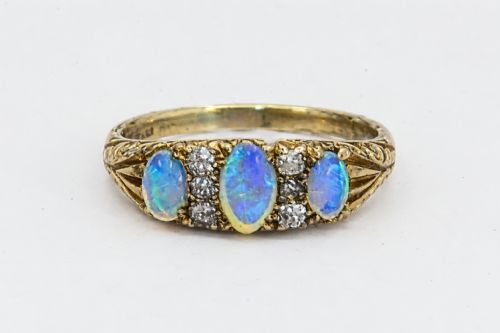
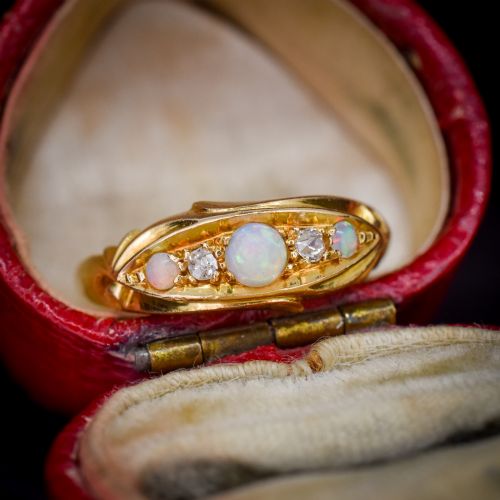
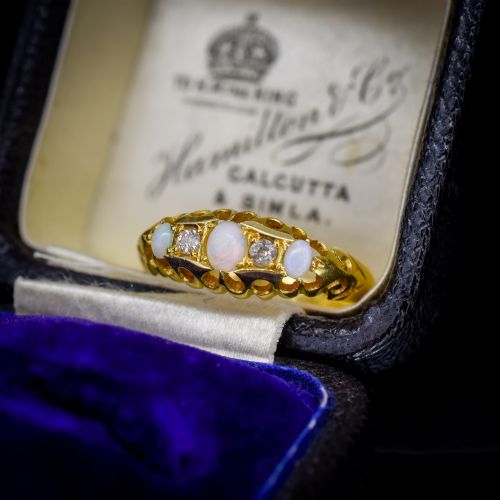
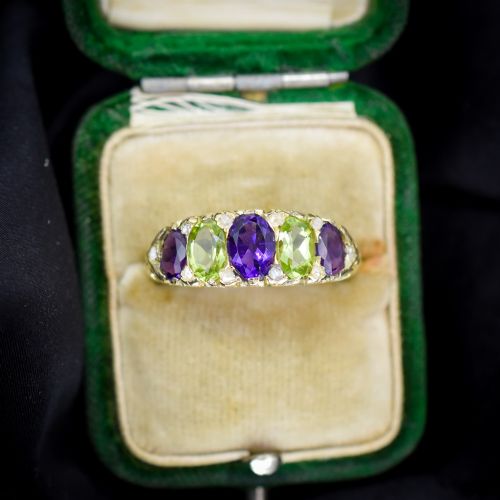
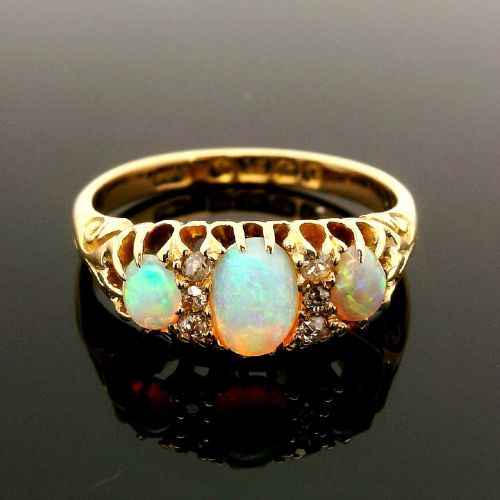
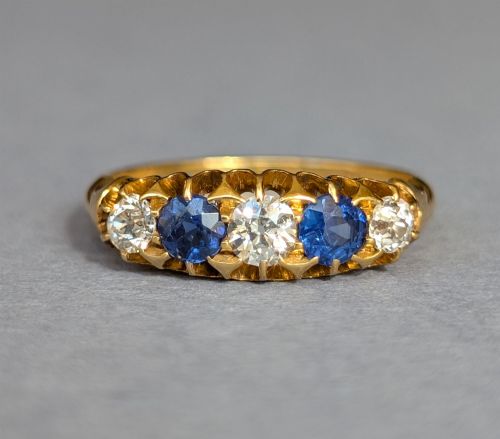
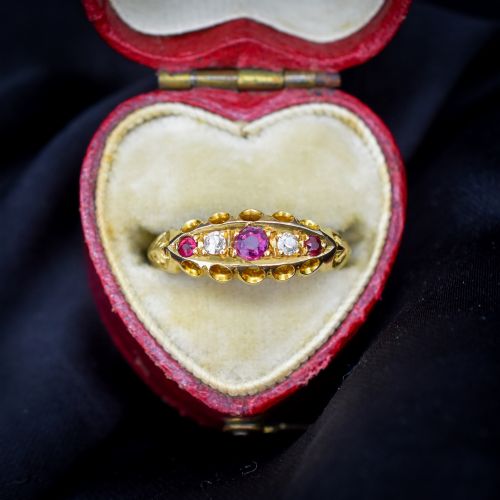
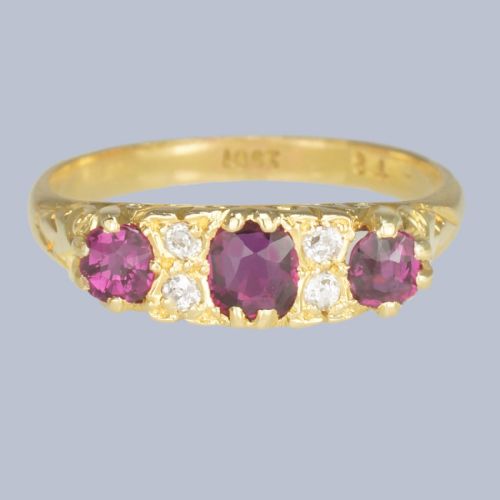
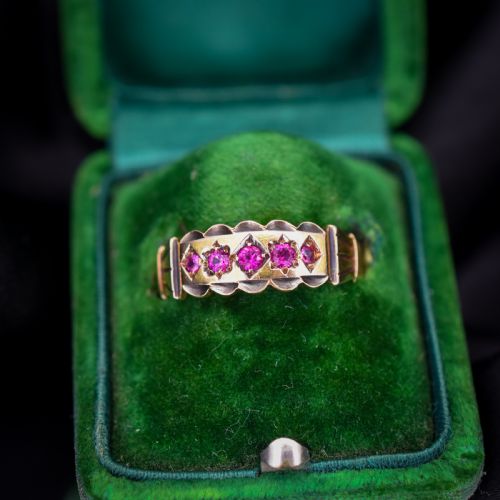
Many examples utilise the traditional boat shape or navette profile, where the mounting tapers gracefully towards the shoulders. These configurations appeared frequently in British workshops from the late nineteenth century through the early decades of the twentieth century, often bearing provincial assay office hallmarks from Chester or Birmingham.
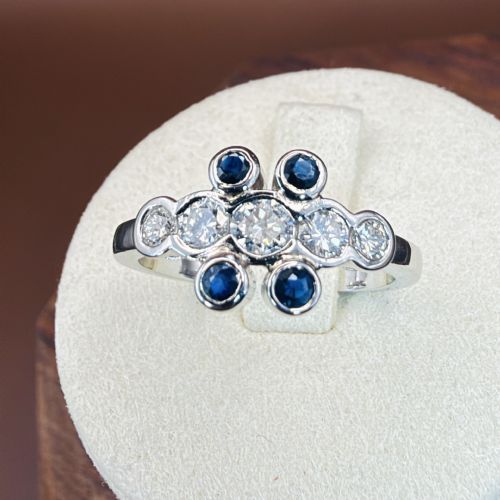
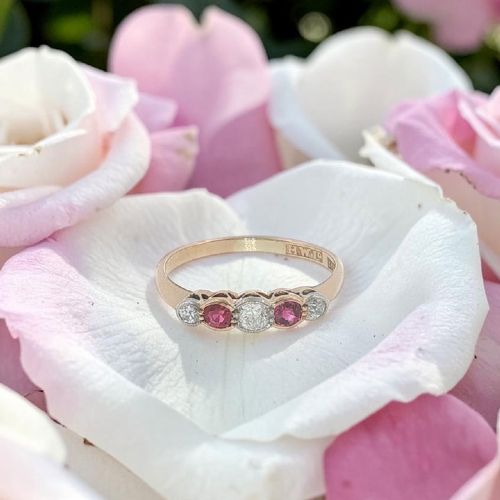
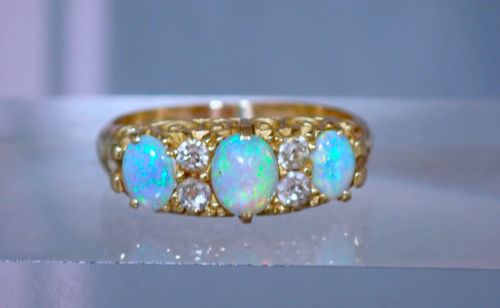
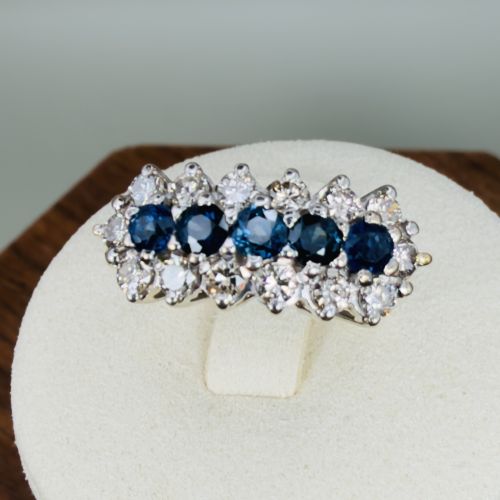
Later mid-century and vintage iterations shift towards cleaner half-hoop bands in yellow, white or platinum-plated gold. Whether set with old cut diamonds or glowing cabochon opals, the pieces reflect the prevailing aesthetic of their respective eras without losing their foundational symmetry.
How They Were Made
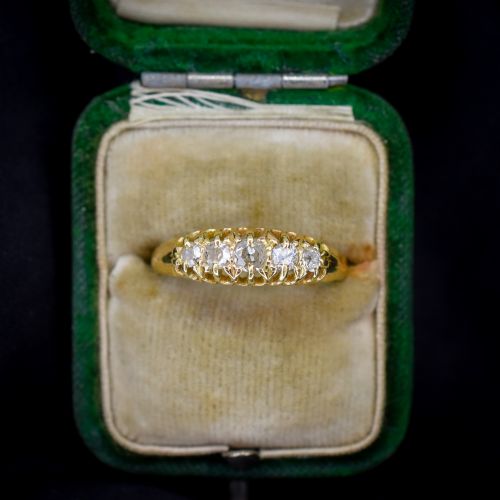
Metals such as 18ct yellow gold, 18ct white gold, platinum and occasionally 9ct or 14ct gold provide the structural foundation for these rings. Goldsmiths utilised claw settings, boat mountings and secure flush designs to hold the stones in a neat horizontal sequence.
Gemstones were shaped by hand, featuring old cut diamonds, old European cuts, rose-cut facets and polished cabochons for softer stones like opals and turquoises. Artisans balanced each stone carefully within the metal framework to create a continuous display across the hand.
Vintage Five Stone Ring Retail Price Guide 2026
Typical asking prices for vintage five stone ring among the pieces listed under this phrase on Sellingantiques today, from the lower quarter to the upper quarter. They describe what is for sale here now, not the wider market.
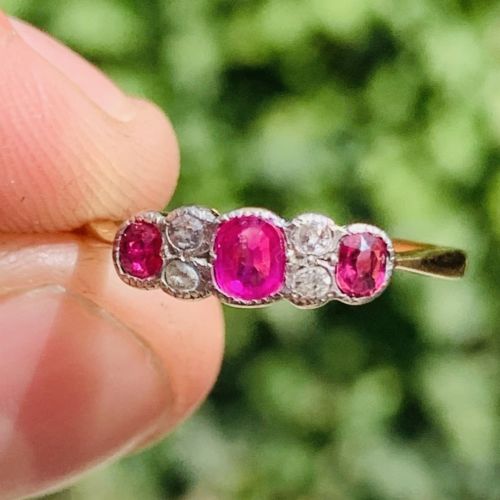
Listings feature periods spanning the 19th century through the 1970s, utilising diamonds, rubies, sapphires, opals and platinum.
What Varies in Quality
The standard of execution depends heavily on the precision of the stone setting and the integrity of the metalwork in the band. Superior examples maintain crisp proportions in the shoulders and secure claw or boat mounts that hold each gem firmly in alignment.
The quality of the individual stones dictates much of the overall merit, particularly the clarity and cut of the diamonds or the play of colour within natural opals. Hallmarks stamped clearly by historic assay offices add traceable provenance that elevates the integrity of the piece.
The Vintage Five Stone Ring Glossary
- Boat Ring
- A ring featuring a navette or boat-shaped setting that curves gently across the finger. This silhouette was immensely popular during the Edwardian and late Victorian periods.
- Old Cut Diamond
- A diamond cut by hand before modern machinery standardised proportions, typically displaying smaller tables and higher crowns. These stones catch candle or natural light with a distinct, softer brilliance.
- Half Hoop
- A setting style where gemstones span halfway around the circumference of the finger in a single row. It forms the structural basis for traditional five stone rings.
- Navette
- A French term meaning little ship, describing a pointed, elongate oval shape used for ring settings. It provides an elegant frame for clustered or linear gem arrangements.
- Cabochon
- A gemstone shaped and polished with a smooth, convex dome rather than faceted edges. This cut is frequently seen on vintage opals, turquoises and garnets.
Vintage Five Stone Ring: Frequently Asked Questions
How do I wear a five stone ring daily?
These rings pair easily with plain bands or stand alone as a statement piece on the hand. Their low-profile settings make them suitable for regular wear when cared for properly.
Consider removing the ring during heavy manual tasks to protect softer stones like opals or turquoises from accidental knocks.
What is the difference between old cut and modern diamonds?
Old cut diamonds were shaped by hand during the Victorian and Edwardian eras, resulting in chunky facets and smaller tables. They exhibit a charming, softer glow compared to mathematically precise modern cuts.
This historical cutting method means no two stones are entirely identical, giving each vintage ring a unique personality.
Are these rings suitable for engagements?
Many vintage five stone rings served as traditional engagement jewellery throughout the nineteenth and twentieth centuries. The continuous line of stones symbolizes a lasting bond and sits comfortably alongside a wedding band.
Art Deco and Edwardian platinum examples are particularly sought after for modern proposals due to their intricate metalwork.
How do I identify the age of my ring?
British hallmarked pieces often feature town marks, maker's marks and date letters stamped inside the shank. Reference guides for assay offices in Birmingham, Chester, London and Sheffield help pinpoint the exact year of manufacture.
Stylistic cues such as boat mountings or specific gemstone combinations also point toward Victorian, Edwardian or mid-century periods.