
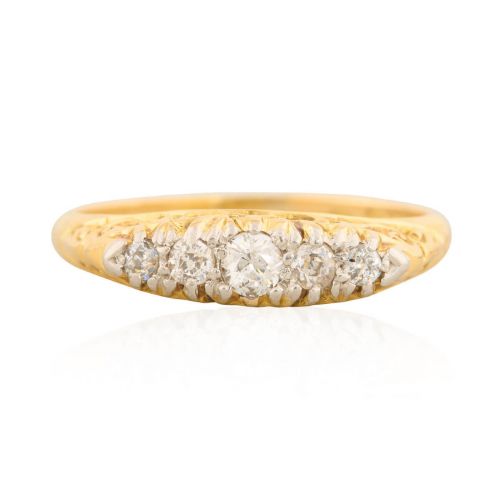

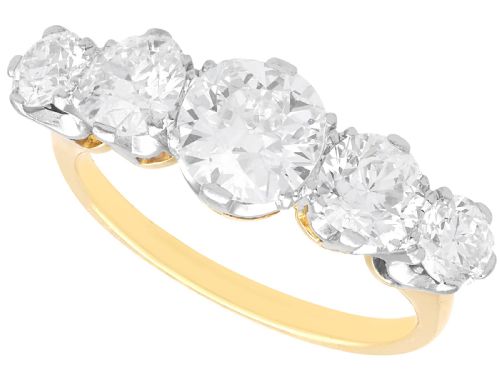


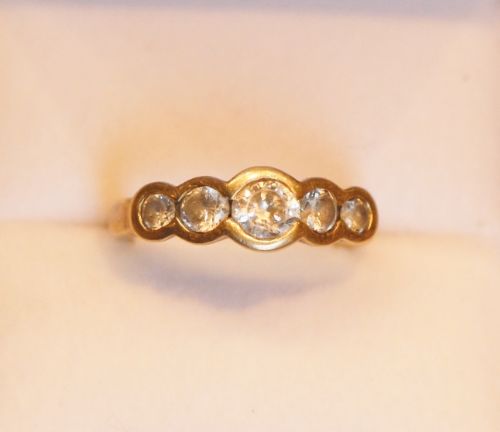
Graduated Diamond Ring
A graduated diamond ring carries stones of increasing scale across the finger, bringing quiet balance to the hand.
Understanding the graduated diamond ring
A graduated diamond ring presents five stones arranged in a row, with the central diamond sitting largest and the flanking stones stepping down in size towards the band. This layout draws the eye across the hand in a measured, balanced line that flatters the fingers.
The selections on this page span the Victorian, Edwardian and Art Deco periods, predominantly taking the form of five-stone half hoop rings and crossover designs. These pieces date from around nineteen hundred to nineteen thirty, showing how the silhouette shifted from early nineteenth-century cluster roots to cleaner twentieth-century lines.
Most examples rely on a classic five-stone configuration where old cut diamonds provide the focal points. Whether mounted in yellow gold, white gold or platinum, the arrangement remains remarkably wearable for daily use.
Materials and construction
Goldsmiths constructed these bands in eighteen-carat gold and platinum, often pairing platinum settings with yellow or white gold shanks during the transition into the twentieth century. Platinum provided the tensile strength needed for secure claw or millegrain settings, holding the stones firmly while keeping the metalwork delicate.
The diamonds themselves are predominantly old cut stones, shaped by hand before modern symmetrical faceting standards took over. This hand-cut origin gives each stone an individual character, catching candlelight and low light with broad, soft flashes rather than the sharp brilliance of modern brilliant cuts.
Retail Price Guide 2026
Typical UK retail prices for graduated diamond ring, calculated from the Sellingantiques database of over a million retail prices indexed since 2003. This retail price guide relies exclusively on Sellingantiques data; no external sources or auction records are used, so the figures do not describe the wider market.
Materials recorded across the inventory include diamond, eighteen-carat gold, eighteen-carat white gold, platinum and standard gold.
Distinctions in quality
Quality rests in the harmony of the stone progression and the crispness of the metalwork. A finer piece displays a smooth, unbroken graduation where each stone steps down in scale without a jarring gap in size or brilliance.
The hand of the maker shows in the execution of the settings, whether through fine millegrain beadwork along the platinum edges or clean, even claws. Superior examples maintain structural integrity in the gallery while letting maximum light pass through the diamonds.
The Graduated Diamond Ring Glossary
- Old cut
- A diamond cut by hand before the twentieth century, typically featuring a small table, high crown and open culet. These stones possess a distinct charm suited to antique settings.
- Half hoop ring
- A ring design where gemstones span the upper half of the band in a continuous line. This form sits comfortably alongside other bands on the finger.
- Millegrain
- A decorative technique involving a row of tiny metal beads along the edge of a setting. It frames the diamonds with a delicate texture typical of Edwardian and Art Deco jewellery.
- Crossover ring
- A style where the band sweeps and crosses over at the centre of the finger. This layout brings a dynamic movement to multi-stone rings.
Frequently Asked Questions
Can I wear my ring daily?
These pieces were built for regular wear using durable metals like eighteen-carat gold and platinum. Standard daily activities pose little threat, though removing the ring during heavy manual work protects the settings.
Taking basic precautions ensures the old cut diamonds and their mountings remain secure over decades of use.
How do I clean an antique diamond ring?
Warm soapy water and a very soft brush gently lift everyday oils from beneath the stones. Avoid harsh chemical dips, which can harm older settings or delicate metal alloys.
Periodic checks by a jeweller ensure the claws holding the graduated diamonds stay tight and secure.
What periods do these rings come from?
The available pieces originate from the Victorian, Edwardian and Art Deco eras, spanning roughly from nineteen hundred to nineteen thirty. Each period brings distinct characteristics in metal choice and stone arrangement.
Victorian and Edwardian examples often feature yellow gold or platinum-topped gold, while Art Deco pieces lean towards crisp platinum settings.
Do old cut diamonds sparkle differently?
Hand-cut diamonds feature larger facets and open culets that produce broader, softer flashes of light than modern brilliant cuts. They perform particularly well under artificial and low lighting conditions.
This distinct optical quality gives antique rings their characteristic warmth and depth.