


Platinum Five Stone Ring
A platinum five stone ring carries a line of brilliant gems across the finger, offering enduring elegance from the Victorian era through the mid-century.
Platinum Five Stone Ring
A platinum five stone ring presents a graduated or uniform row of stones set securely across the top of the band. Buyers searching for a platinum five stone ring encounter pieces predominantly from the Art Deco period alongside Victorian, Edwardian, and mid-century examples.
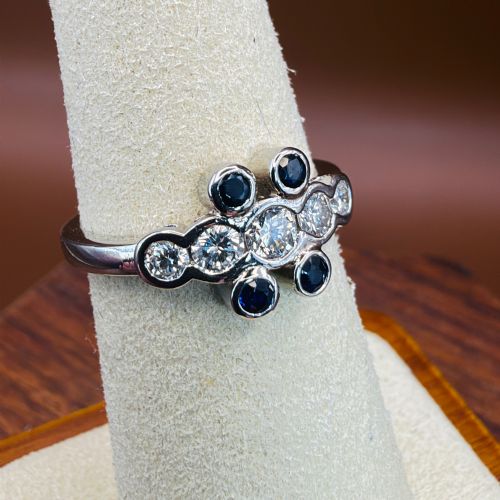
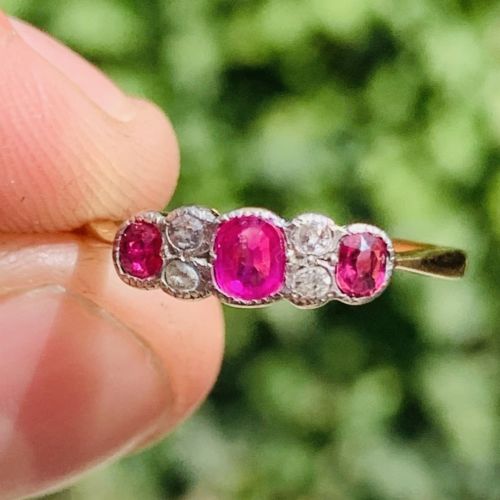
The design frequently pairs diamonds with precious colour stones such as rubies and sapphires. Settings often combine platinum for the head of the ring with 18ct yellow or white gold for the shank.
How they were made
Craftsmen utilised durable platinum to mount stones securely while minimising visible metal, allowing maximum light reflection. Older pieces combine platinum settings with 18ct yellow or white gold bands.
Gems within these rings display various historical cuts including old mine cuts, old cut diamonds, swiss cuts, and modern brilliant cuts. These stones were hand-set by jewellers working during the Victorian, Art Deco, and mid-century periods.
Some rings carry secret hand-engraved initials inside the band from lovers who parted ways generations ago.
What varies in quality
Quality depends upon the weight and clarity of the primary diamonds or the colour richness of accompanying rubies and sapphires. The precision of the stone cutting dictates how brilliantly the gems capture light across the finger.
The integrity of the shared setting and the weight of the precious metal shape the durability of the ring. Superior examples maintain crisp geometric details in Art Deco platinum work or delicate scrollwork in Victorian pieces.
The Platinum Five Stone Ring Glossary
- Platinum
- A dense, silvery-white precious metal prized for its strength and secure holding of gemstones in fine jewellery. It allows for delicate settings without risking stone loss.
- Old Cut Diamond
- A diamond cut by hand before modern machinery standardised facet proportions. These stones possess a smaller table and larger culet, giving a softer candlelight gleam.
- Art Deco
- A design style spanning the 1920s and 1930s defined by geometric symmetry, clean lines, and architectural motifs. Platinum settings dominate jewellery from this era.
- Five Stone Ring
- A ring style featuring a row of five principal gemstones mounted side by side along the band. It serves traditionally as an engagement or anniversary piece.
Platinum Five Stone Ring: Frequently Asked Questions
Can I wear a five stone ring daily?
Platinum and gold provide a sturdy foundation for everyday wear when the metal remains thick and substantial. Regular checks by a jeweller ensure the shared settings hold each stone firmly in place.
Gentle cleaning with warm soapy water removes accumulated oils from daily wear. Removing the ring during heavy manual tasks prevents unnecessary scratching or impact damage.
How do I know the period of my ring?
Stylistic clues such as geometric platinum milling point towards the Art Deco era of the 1920s and 1930s. Softer organic motifs and old mine cut stones typically indicate Victorian origins.
Hallmarks stamped inside the shank offer official clues regarding metal purity and assay office origins. Comparing the gem cuts and overall silhouette against documented eras clarifies the dating further.
What stones are used besides diamonds?
Rubies and sapphires frequently appear alongside diamonds in these multi-stone arrangements. Burmese rubies and deep blue sapphires provide striking contrast within the platinum setting.
These coloured stones alternate with diamonds or anchor the centre of the row. Such combinations reflect popular gemstone pairings from both the Victorian period and the Art Deco revival.
Are these rings suitable for engagements?
The linear arrangement of multiple stones makes these pieces a traditional choice for commitments and anniversaries. Their low profile sits comfortably alongside other bands without catching on clothing.
The historical variety of diamond weights and coloured gemstone combinations allows buyers to select a distinctive token. Each ring carries decades of previous history into its new role.