


1970s Vintage Gold Ring
A 1970s vintage gold ring brings tactile heft and bold geometric form to the hand, offering distinct period character for everyday wear.
1970s Vintage Gold Ring
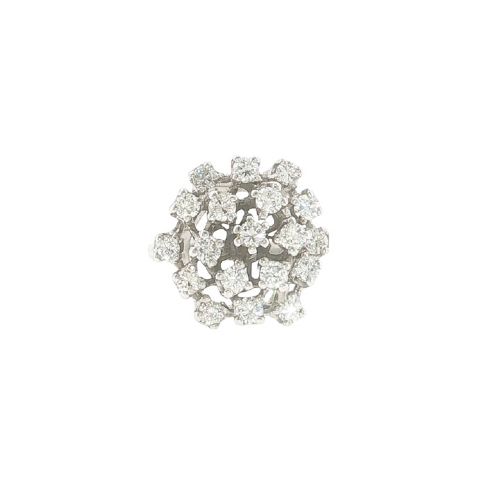
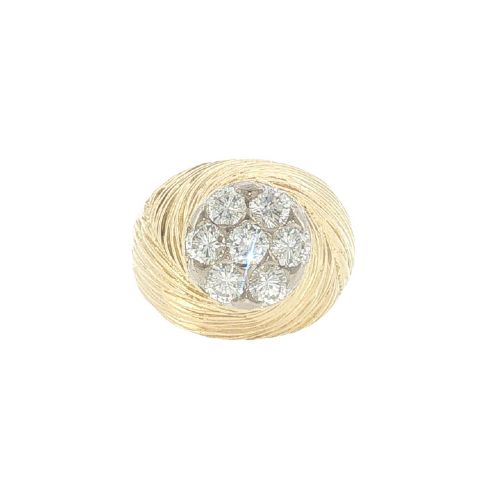
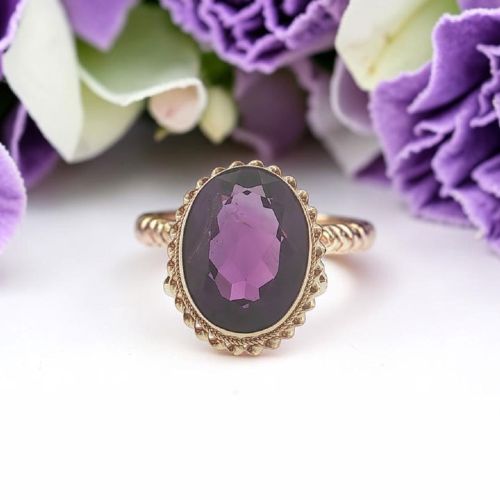
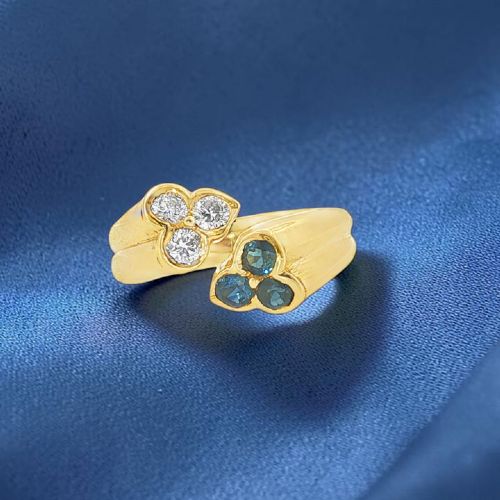
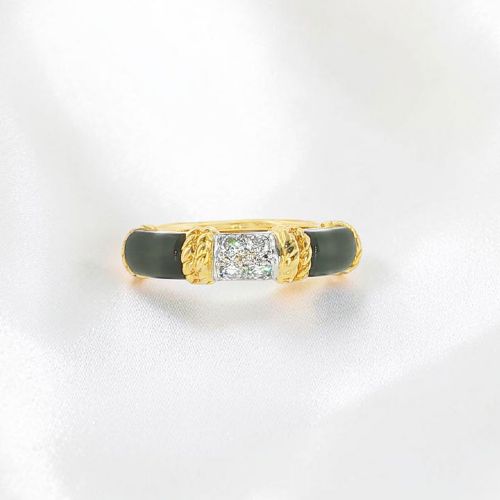
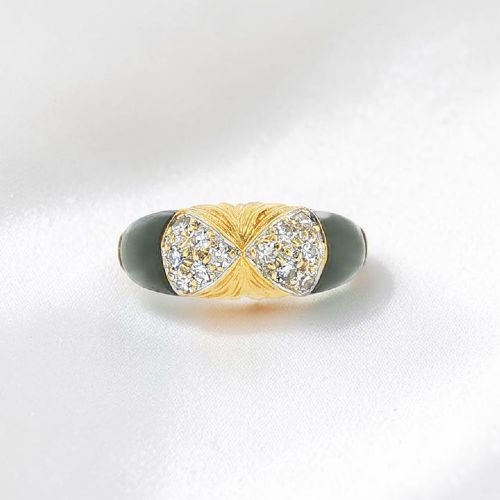
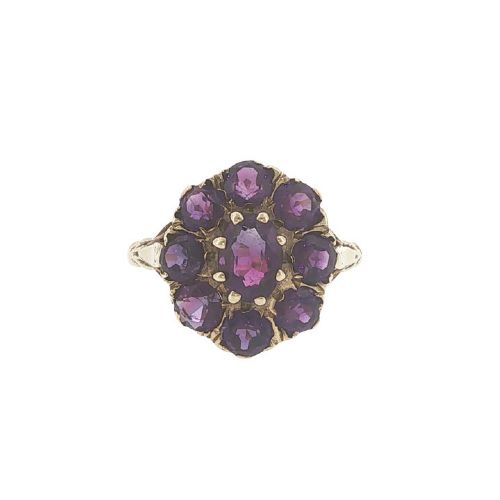
A 1970s vintage gold ring encompasses bold cocktail pieces, clusters and textured bands originating predominantly from the later twentieth century alongside occasional Edwardian inclusions. These items range from substantial gem-set clusters to sculptural forms shaped by the aesthetic shifts of the decade.
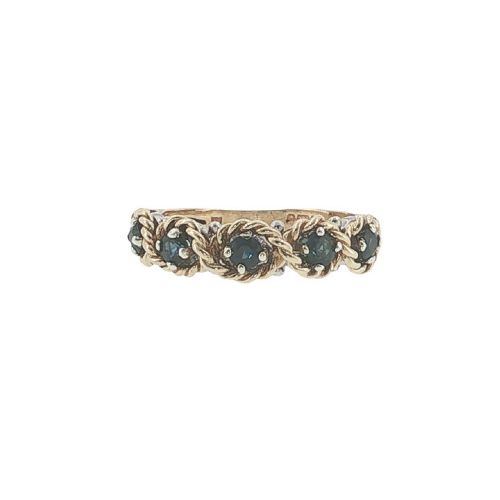
Buyers will most frequently encounter yellow and white gold settings featuring diamonds, amethysts, sapphires and black onyx. The selection spans distinct stylistic subgenres including modernist geometry and expressive brutalist texturing.
How they were made
Goldsmiths utilised 9ct and 18ct gold, casting and fabricating yellow and white precious metal into structured mounts and heavy bezels. Stones such as diamonds, amethysts, sapphires and black onyx were then secured via claw settings or flush mountings.
Surface finish played a central role, with brutalist and modernist designs relying on deliberate casting textures, polished planes and sculptural manipulation of the metal rather than simple smooth bands.
Some rings let you swap the balls around, proving that even serious gold demands a bit of playful fidgeting.
What varies in quality
The standard of design ambition and the weight of the precious metal define the upper echelon of these rings. Pieces by notable workshops display heavier gold gauges and more integrated stone arrangements compared to standard commercial output.
The calibre of the gemstones and the crispness of the casting work determine the overall refinement. Superior examples maintain sharp architectural lines and secure, high-grade stone settings.
Kutchinsky·Gilbert Albert
The 1970s Vintage Gold Ring Glossary
- Brutalist
- A design style characterised by rough, textured metalwork and sculptural, heavy forms popular during the period.
- Cocktail ring
- A large, prominent ring featuring substantial gemstones designed to draw attention during evening social gatherings.
- Cluster ring
- A setting where a central stone is surrounded by a group of smaller gemstones, often diamonds or coloured stones.
- Solitaire
- A ring featuring a single prominent gemstone, most commonly a diamond mounted on a plain or decorated band.
- Hallmark
- An official stamp applied to precious metals indicating the standard of purity and the assay office of origin.
1970s Vintage Gold Ring: Frequently Asked Questions
How do I wear a cocktail ring?
These large statement pieces work best as a single focal point on the hand, allowing the bold metalwork and stones to command attention without competing with other jewellery.
Pair them simply with plain attire to let the architectural geometry and texture of the period stand out completely.
Are these rings suitable for daily wear?
Sturdier mountings in 18ct gold handle regular use well, particularly designs featuring flush or robust claw settings that protect the stones from daily knocks.
Lighter 9ct bands and intricate openwork structures require slightly more care to preserve the original condition of the gold over time.
How do I identify a 1970s design?
Look for heavy gold weight, textured brutalist surfaces, geometric clusters and the integration of contrasting materials like black onyx alongside diamonds.
Assay office marks and date letters stamped inside the band often provide the precise year of manufacture for pieces originating from London or Birmingham.
What is the difference between yellow and white gold?
Yellow gold displays the natural warm hue of the metal alloy, whereas white gold is blended with other metals to create a silvery tone.
Both variations were utilised extensively during the decade, often chosen to complement either cool diamond brilliance or the deep tones of sapphires and amethysts.