


Traditional Sapphire Cluster Ring
These traditional sapphire cluster ring pieces bring together deep blue gems and sparkling diamonds in lasting precious metal settings.
Traditional Sapphire Cluster Ring
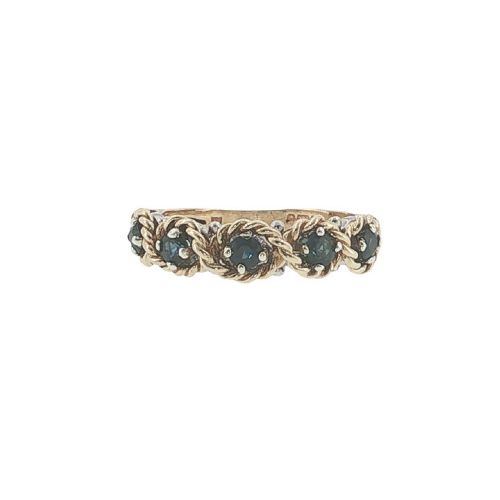
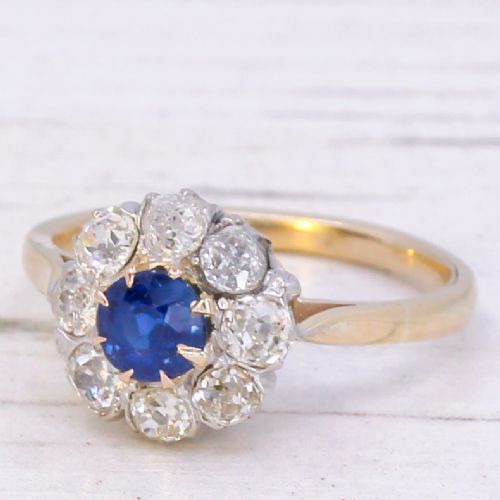
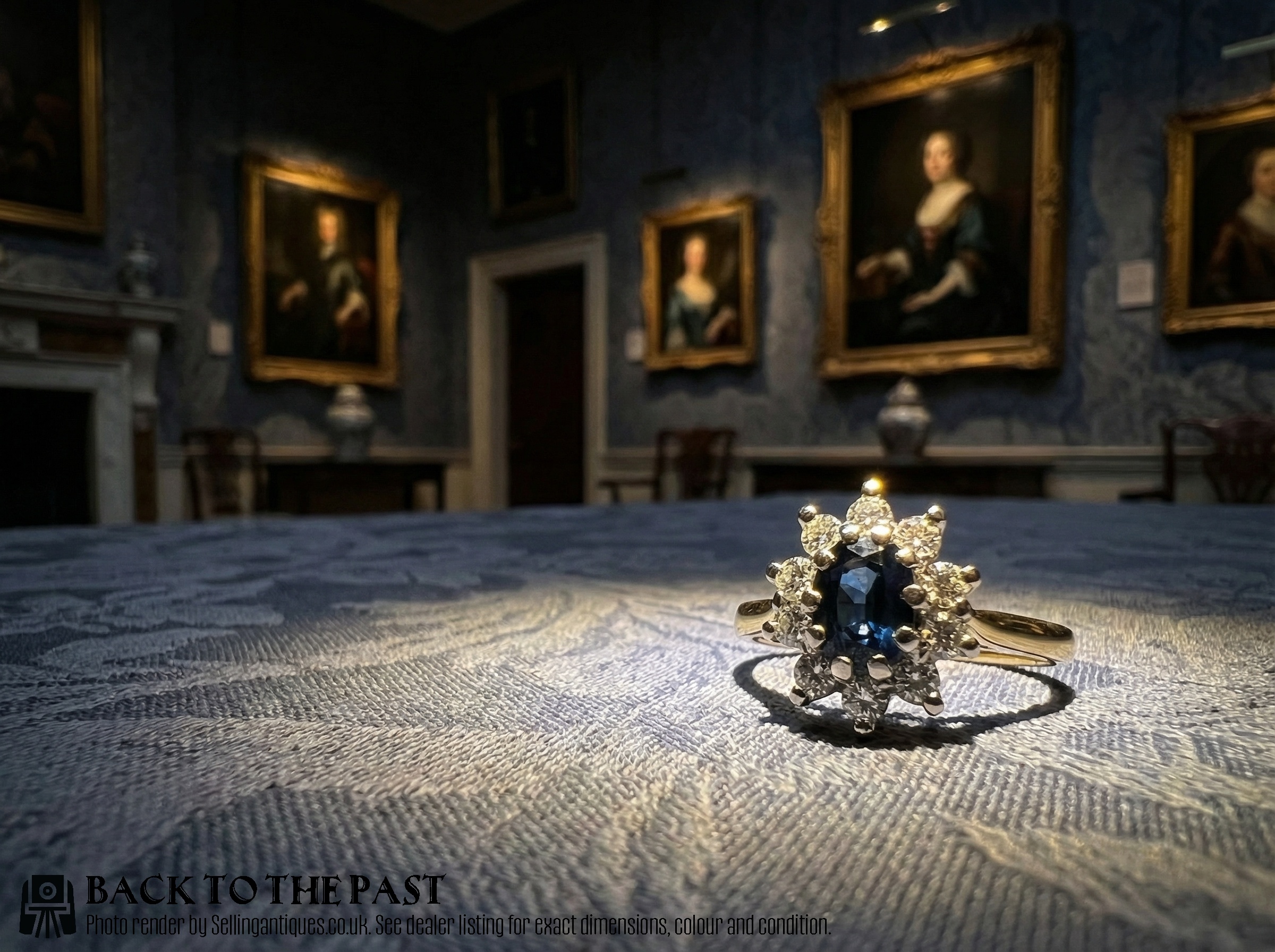
A traditional sapphire cluster ring centres on a rich blue corundum gemstone surrounded by a border of bright diamonds, creating a striking contrast of colour and brilliance. These pieces draw on traditional, Art Deco, Edwardian, Victorian, and mid-century design traditions, spanning the decades from the 1930s through to the 1970s and beyond. On this page, you are most likely to meet mid-century and vintage examples from the nineteen-fifties and nineteen-sixties, alongside selections from the nineteen-thirties and nineteen-seventies.
The enduring appeal of a traditional sapphire cluster ring lies in its balanced geometry and the dramatic frame the outer stones provide for the central gem. Jewelers arranged these stones in classic circular or oval formations, sometimes incorporating Ceylon sapphires or alternative stones such as opals alongside the core blue gems. Each ring presents a distinct proportion, reflecting the aesthetic preferences of its decade of origin while maintaining the core cluster format.
How they were made
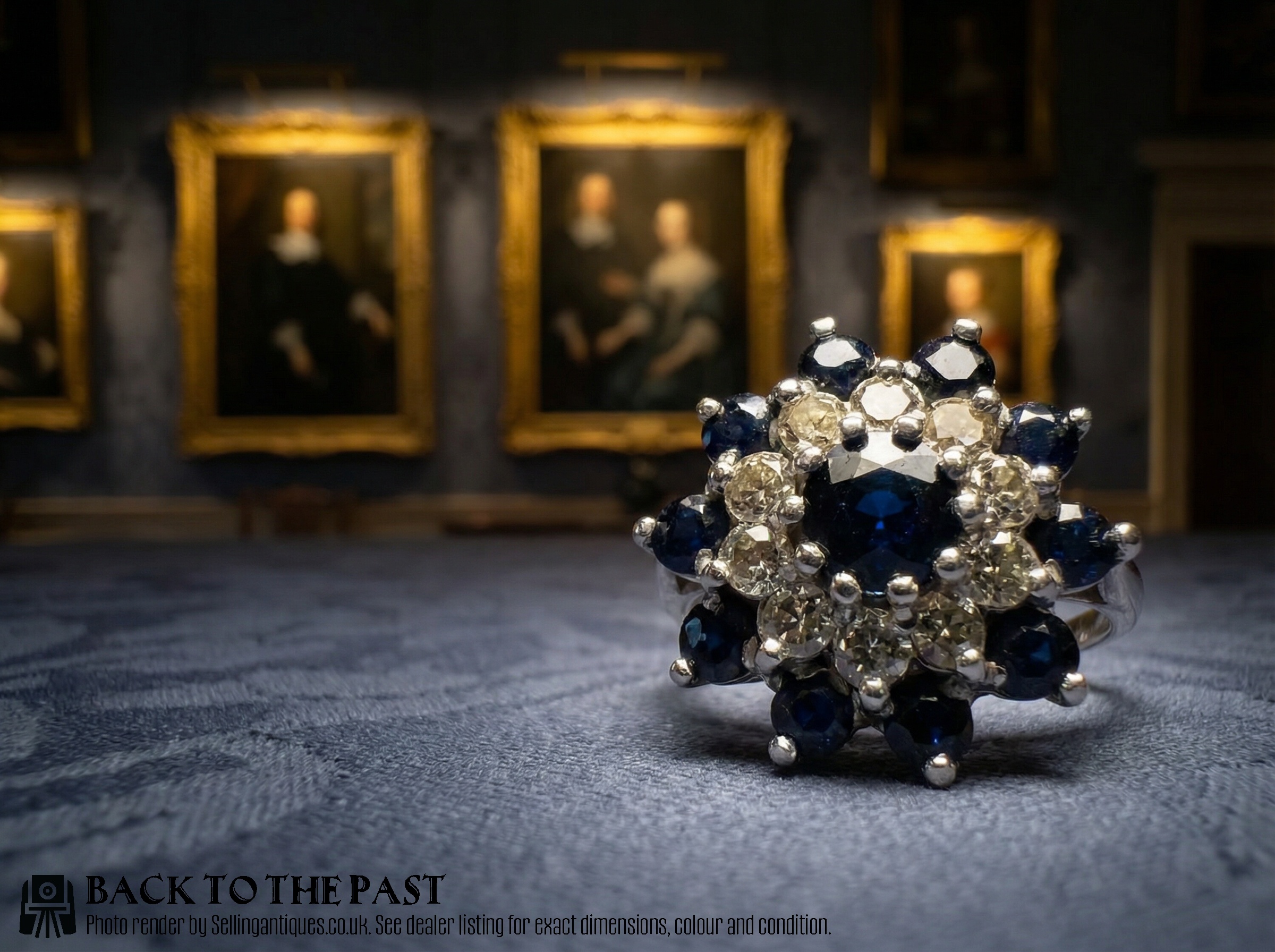
Workshops fashioned these rings using durable precious metals, mounting stones in yellow gold, white gold, and platinum. Artisans selected materials like 9ct gold and 18ct gold to provide sturdy shanks that securely held the central sapphire and surrounding diamonds in place.
Settings relied on precise claw and bezel techniques to position the cluster tightly together, maximising the play of light across both the diamonds and the sapphire. Jewellers balanced the weight of the central stone with smaller accent gems, ensuring the finished piece sat comfortably upon the finger while maintaining structural integrity.
Materials recorded across the selection include diamonds, sapphires, opals, and Ceylon sapphires set in 9ct and 18ct gold.
What varies in quality
The distinction between tiers in these rings rests upon the saturation and depth of colour within the sapphire, coupled with the cut and clarity of the surrounding diamonds. Superior examples feature a vivid, evenly distributed blue hue in the central stone, often identified as Ceylon origin, paired with crisp diamond work that enhances rather than overpowers the main gem.
Construction standards also set pieces apart, visible in the weight and finish of the gold or platinum shank and the precision of the setting work. Better-made rings display secure, uniform claw placement and substantial metal thickness that withstands daily wear, whereas simpler iterations show lighter construction and more modest stone selection.
The Traditional Sapphire Cluster Ring Glossary
- Cluster ring
- A ring featuring a prominent central gemstone encircled by a group of smaller accent stones, typically diamonds. This arrangement maximises visual impact and creates the appearance of a larger overall face.
- Ceylon sapphire
- A sapphire originating from the island nation of Ceylon, now Sri Lanka, renowned for its bright and vivid cornflower blue coloration. These stones are particularly prized in vintage jewellery.
- Platinum
- A dense, silvery-white precious metal prized for its strength and hypoallergenic properties. It securely holds small gemstone settings without adding undue bulk to delicate cluster designs.
- Carat
- A unit of weight used for measuring gemstones and pearls. In these listings, higher carat figures denote larger central sapphires or heavier total diamond weights.
Traditional Sapphire Cluster Ring: Frequently Asked Questions
How do I care for my ring?
Clean your ring gently using warm soapy water and a soft brush to remove everyday oils from beneath the stones.
Avoid wearing delicate cluster settings during heavy manual work to protect the claws holding the gems.
What metal types are used?
These rings utilise 9ct gold, 18ct gold, white gold, and platinum for their bands and settings.
Yellow gold offers a warm traditional contrast, while white gold and platinum provide a bright silvery finish that complements diamonds.
Are Ceylon sapphires different?
Ceylon sapphires originate from Sri Lanka and are celebrated for their particular brilliance and vivid blue shade.
They often command attention in vintage cluster designs due to their distinct optical clarity.