
Gold Sapphire Halo Ring
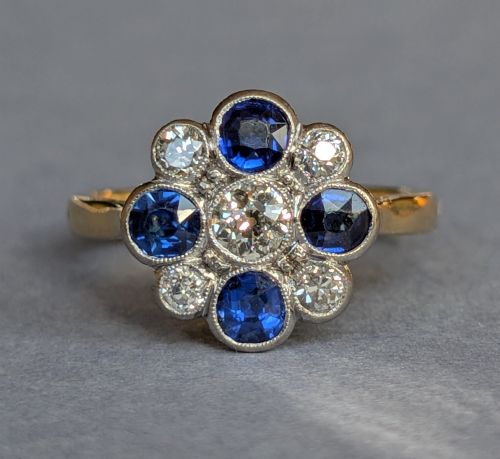
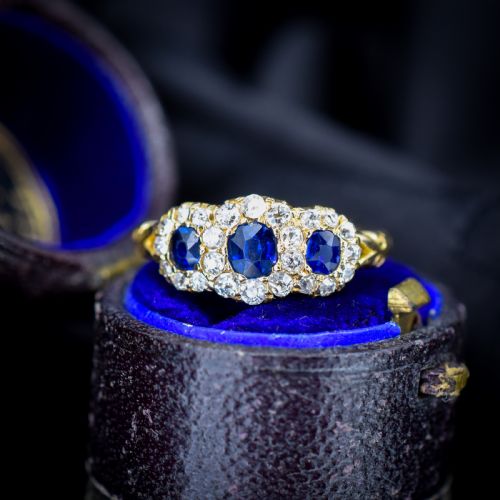
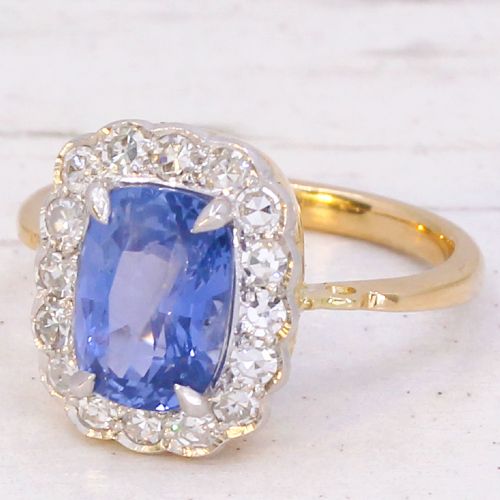
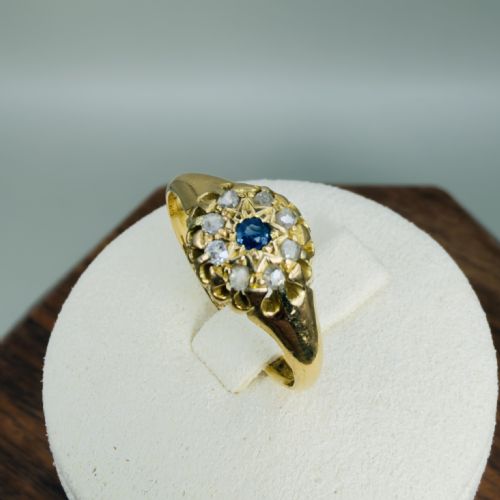
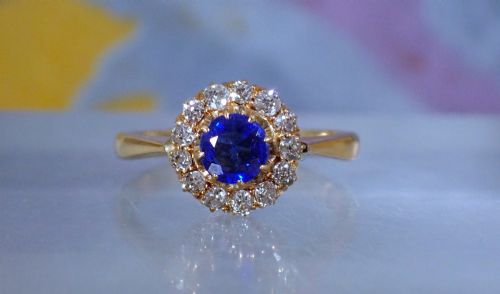
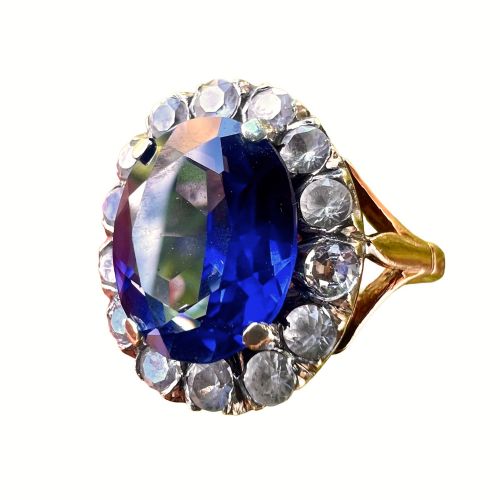
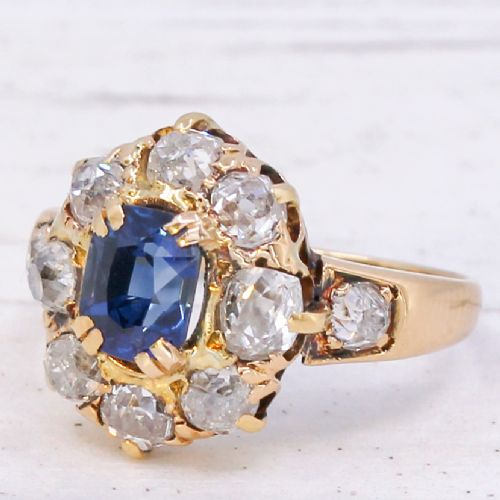
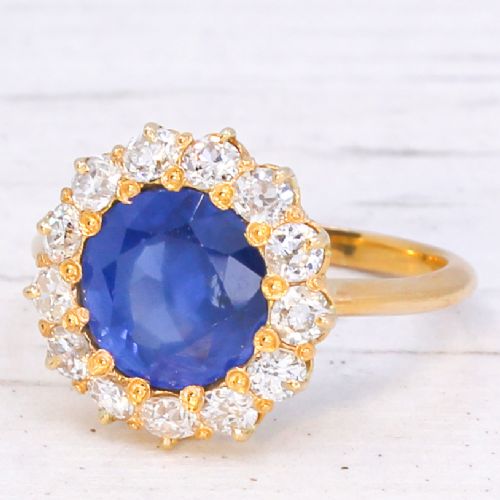
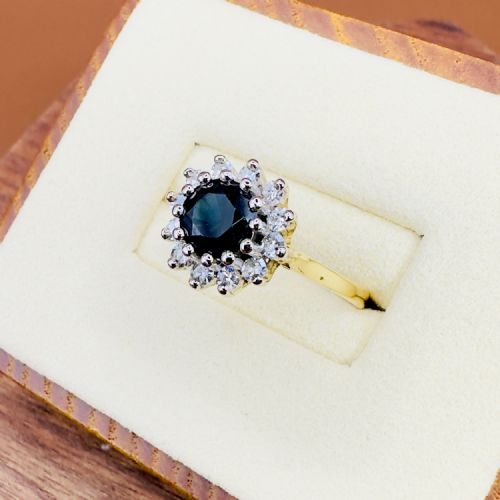
A gold sapphire halo ring centres a vivid blue gemstone within a sparkling border of diamonds, combining enduring elegance with striking visual contrast.

Gold Sapphire Halo Ring
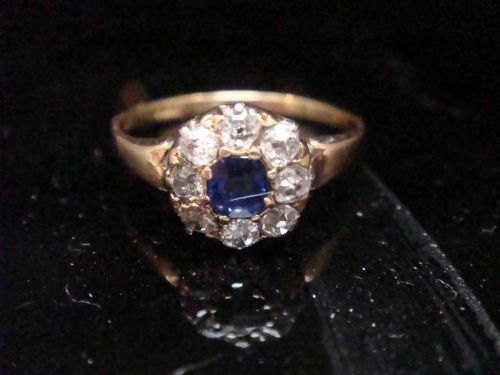
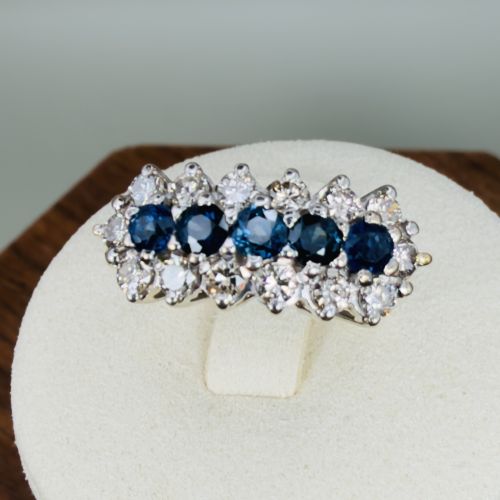
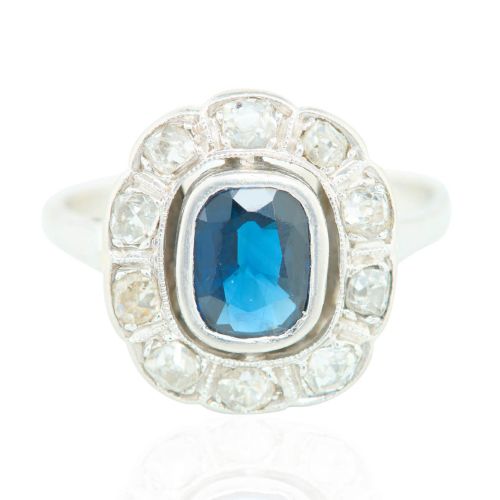
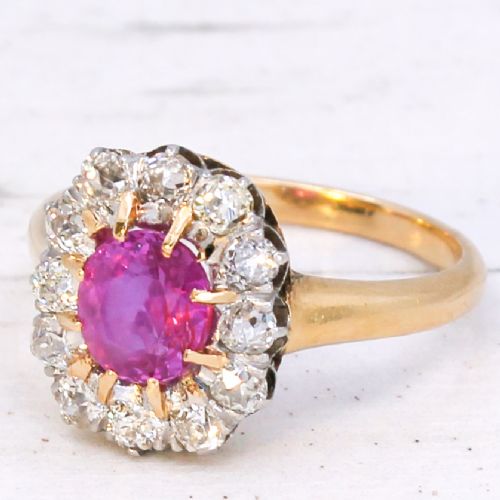
A gold sapphire halo ring brings together a central sapphire encircled by a frame of smaller accent stones, typically diamonds, creating a prominent geometric presence upon the hand.
Most examples encountered span from the late Victorian and Edwardian eras through the Art Deco period and into mid-century designs.
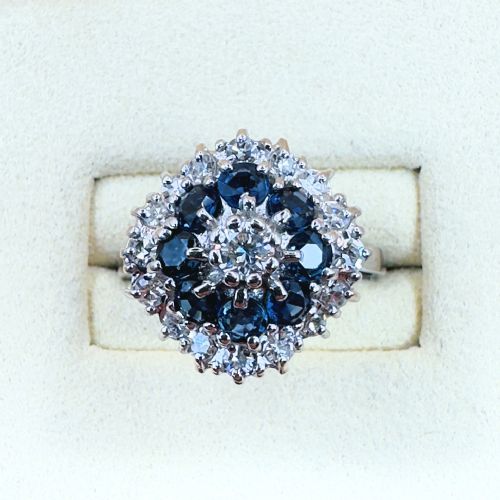
These pieces primarily take the form of cluster rings, target rings, and floral arrangements designed to maximise the light captured by both the sapphire and its surrounding border.
Materials and Construction
Craftsmen utilised various carats of gold, including yellow and white varieties, alongside platinum settings to secure the principal gemstones.
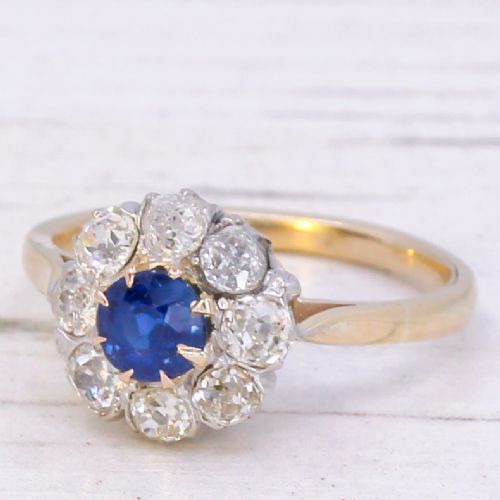
Diamonds surrounding the central sapphire are cut in various historic styles, ranging from old mine and old European cuts to brilliant and rose cuts.
Sapphires of natural origin, including unheated specimens from Ceylon and Burma, are paired with precious metals to construct durable settings capable of everyday wear.
Gold Sapphire Halo Ring Retail Price Guide 2026
Typical asking prices for gold sapphire halo ring among the pieces listed under this phrase on Sellingantiques today, from the lower quarter to the upper quarter. They describe what is for sale here now, not the wider market.
Some Edwardian makers arranged diamonds and sapphires into tiny floral daisy clusters to charm the romantic buyer.
Quality Variations
Quality rests heavily upon the natural saturation, clarity, and geographical origin of the sapphire itself, alongside the absence of artificial treatment.
The precision of the stone setting, the matching symmetry of the surrounding diamond halo, and the structural integrity of the metal band define the standard of the piece.
The Gold Sapphire Halo Ring Glossary
- Halo ring
- A ring design featuring a central gemstone encircled by a concentric border of smaller pavé or prong-set stones. This arrangement enhances the perceived size and brilliance of the middle gem.
- Cluster ring
- A ring configuration where multiple smaller stones are grouped tightly around a larger centre stone. They frequently form daisy, floral, or geometric patterns.
- Calibre cut
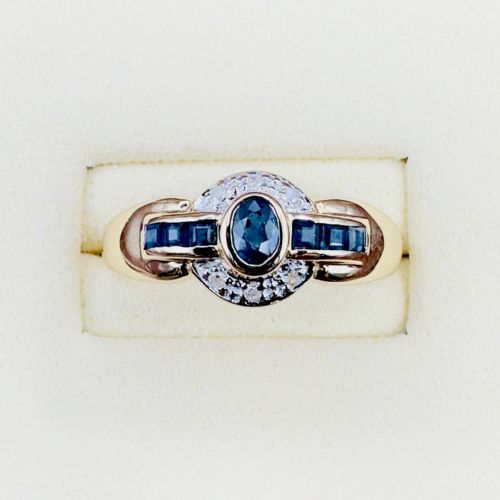
- Gemstones specifically shaped and cut to fit tightly against one another in a geometric channel or pattern with minimal visible metal. This technique is common in Art Deco jewellery.
- Old mine cut
- A diamond cut popular in the 19th and early 20th centuries, characterised by a cushion shape, high crown, and small table facet. These cuts were shaped largely by hand to catch candlelight.
- Unheated sapphire
- A natural sapphire that has undergone no thermal enhancement to improve its colour or clarity. Such stones command particular interest among collectors.
Gold Sapphire Halo Ring: Frequently Asked Questions
How do I care for a gold sapphire halo ring?
Sapphires rank high on the hardness scale, making them durable for daily wear, though the surrounding gold and smaller diamonds require regular inspection by a jeweller to ensure settings remain tight.
Cleaning should involve warm soapy water and a soft brush, avoiding harsh chemical ultrasonic cleaners that might damage softer accent stones or historic settings.
What periods do these rings come from?
The selection spans multiple decades, encompassing Victorian, Edwardian, Art Deco, and mid-century aesthetics.
Each era imparts distinct characteristics, from the delicate yellow gold daisy clusters of the early 1900s to the geometric white gold and platinum symmetry of the 1920s and 1930s.
How can I tell an old cut diamond from a modern one?
Old cut diamonds, such as old mine or old European cuts, display smaller tables and larger culets when viewed closely.
These historic cuts exhibit a softer, deeper scintillation pattern distinct from the uniform brilliance produced by modern round brilliant cuts.
Are all sapphires in these rings natural?
While the majority of pieces feature natural corundum, certain antique and vintage examples incorporate synthetic stones or specific geographical origins noted in gemological reports.
Documentation provided with individual pieces often clarifies whether a sapphire is unheated or originates from classic localities like Ceylon or Burma.