
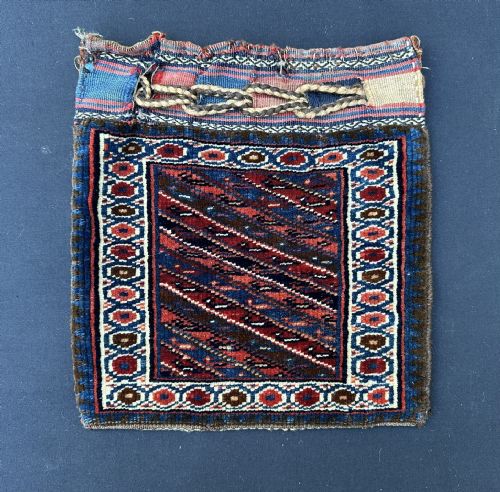
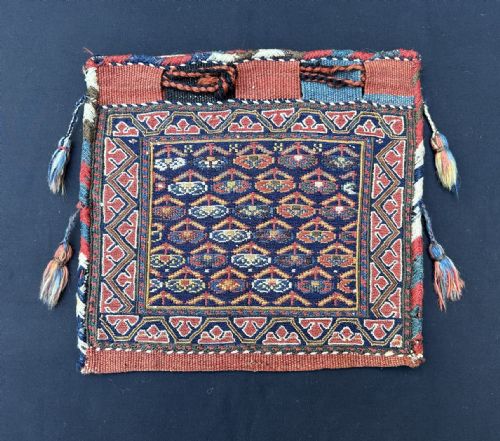
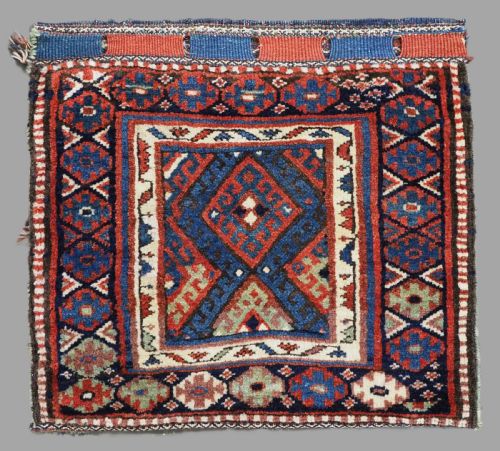


Blue Red Tribal Bag
A blue red tribal bag brings nomadic weaving traditions into a room, offering practical pouches and faces crafted by regional tribes.
Blue Red Tribal Bag
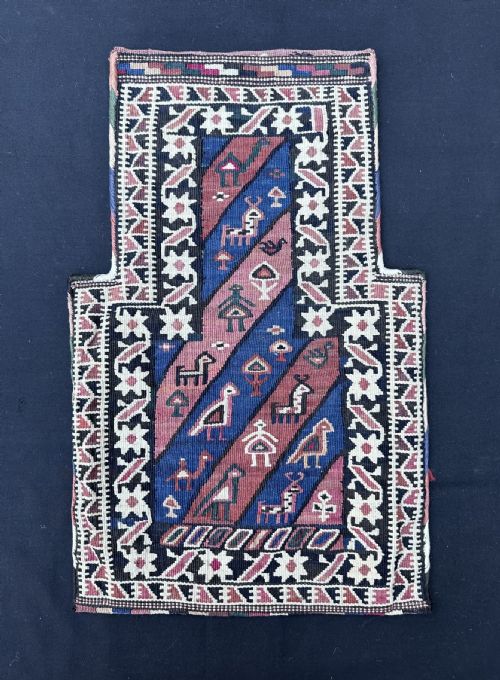
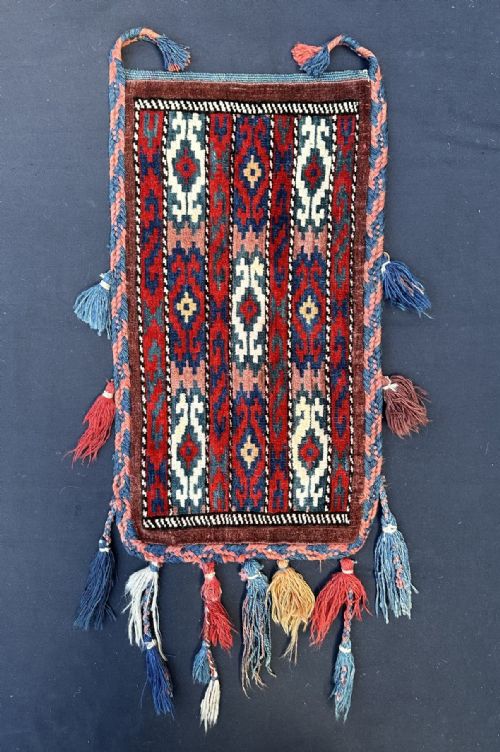
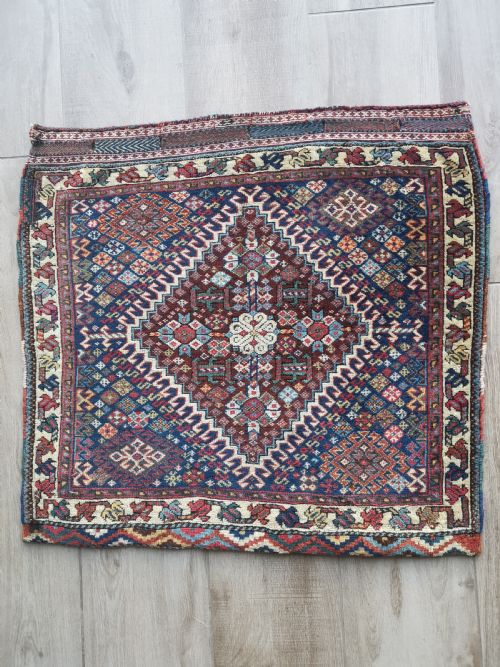
A blue red tribal bag comprises utilitarian vessels, saddlebags, salt-bags, and storage pouches woven by nomadic groups across Persia, the Caucasus, and Central Asia. These items range from complete double-sided horse bags to single bag faces, salt containers, spindle-bags, and storage containers intended for daily nomadic life. The pieces on this page span the nineteenth and early twentieth centuries, reflecting the material culture of groups such as the Qashqai, Afshar, Shahsavan, Lori, Bakhtiari, Jaf Kurd, and Yomut Turkmen.
The visual vocabulary relies on traditional tribal styles, often incorporating geometric motifs, boteh designs, and animal or dragon figures rendered in characteristic colour palettes. Collectors encounter complete half-khorjin pairs, separated bag faces, flatwoven soumak panels, and utilitarian vanity-bags that served specific functions within pastoral households. Each object documents the weaving heritage of specific regional tribes operating across defined geographical regions from western Persia to the Trans-Caspian steppes.
Materials and construction methods
Makers utilised hand-spun wool, cotton, and occasional goat hair, combining pile knotting with flatweave techniques such as soumak. Natural and vegetable dyes provided the rich blue, red, and secondary tones found across the pieces, yielding depth and variation in the fibre.
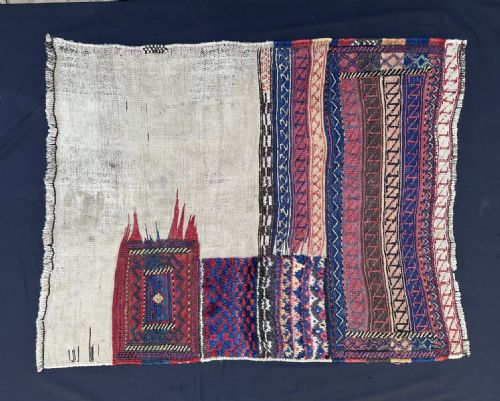
Nomadic weavers constructed these pouches for durability, employing sturdy plain weave backs to complement intricate face designs. The integration of hand-spun wool and durable goat hair ensured structural integrity for items subjected to heavy daily use in transit and camp life.
Listings feature nineteen-century nomadic weavings in wool and cotton, utilising vegetable dyes across Persian and Caucasian tribal styles.
Judging quality and execution
The quality of a blue red tribal bag depends upon the handling of the wool, the clarity of the natural dyes, and the tightness of the weave. Lustrous, luminous wool combined with precise structural execution distinguishes superior examples from standard utilitarian work.
Execution of design elements, such as intricate bird and dragon motifs in soumak or well-proportioned geometric layouts, separates refined tribal artistry from simpler household weaving. The survival of complete backs and original closures also influences the standing of a textile.
The Blue Red Tribal Bag Glossary
- Khorjin
- A traditional double saddlebag utilised by nomadic tribes for transporting possessions during migration. These pieces are frequently found separated into individual bag faces.
- Soumak
- A wrap-faced flatweaving technique that creates a durable fabric with a smooth, braided front and loose floats on the reverse. It is frequently employed on storage bags and salt-bags.
- Torba
- A wide tribal storage bag, typically wider than it is tall, used inside tents for domestic organisation. They often feature prominent gul patterns and hooked motifs.
- Mafrash
- A large rectangular storage bale or chest panel used by nomadic groups for bedding and household goods. These pieces are constructed in soumak or pile techniques.
- Gul
- A medallion or repeating primary motif found in tribal and nomadic carpets and bags, often carrying specific clan or regional identity.
Blue Red Tribal Bag: Frequently Asked Questions
What is a tribal bag face?
A tribal bag face is the decorative front of a nomadic utility pouch that has been separated from its plain weave back. These panels were often preserved as small rugs or decorative textiles when the rest of the saddlebag wore out.
Collectors prize them for displaying the primary iconography and dyework of the original vessel in a compact format.
How were these bags used originally?
Nomadic groups utilised these woven pouches for packing salt, spindles, grain, and personal belongings during seasonal migrations. Saddlebags rode across horses and camels, while smaller vanity-bags and salt-bags hung inside the tent.
Their construction balanced aesthetic expression with the rigorous demands of pastoral life.
How do I care for an antique textile?
Protect antique wool and natural dyes by keeping pieces out of direct sunlight and managing indoor humidity. Gentle vacuuming through a mesh screen removes dust without damaging fragile fibres.
Avoid chemical cleaners and consult a specialist textile conservator for washing or major repairs.
How are different tribal styles distinguished?
Tribal styles are identified by specific structural quirks, palette choices, and characteristic drawing styles particular to each confederation. Afshar and Qashqai weavers utilise distinct floral and geometric interpretations compared to Shahsavan soumak work or Yomut Turkmen guls.
Examining the side corduroy, end finishes, and wool quality helps pinpoint the originating region.