






Blue Red Japanese Vases
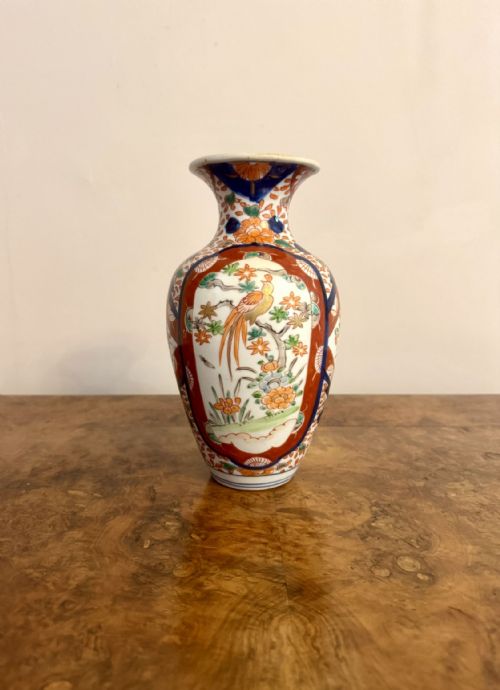
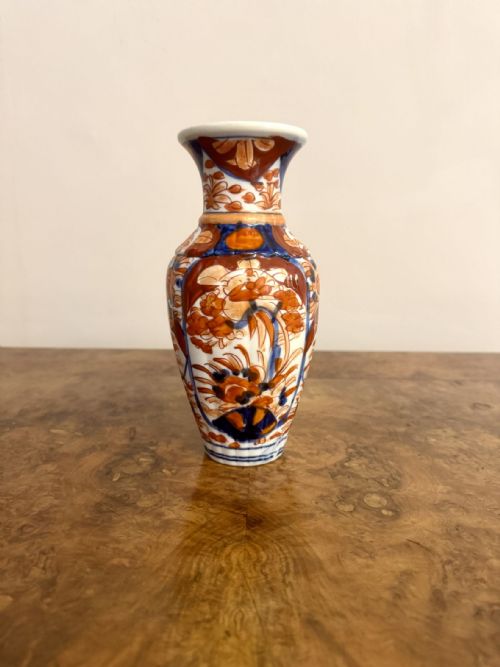
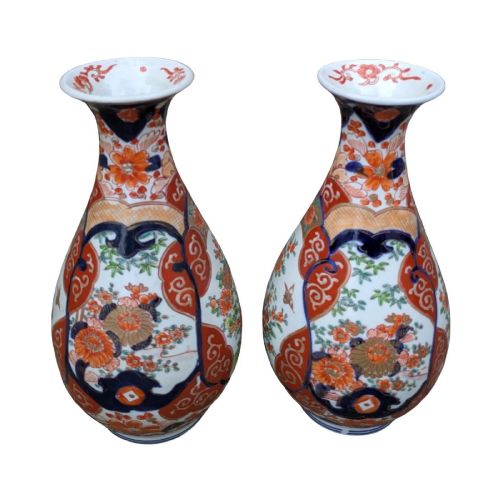
These blue red japanese vases bring strong colour and intricate pattern into a room, offering the bold palettes of Imari and Arita wares.
Blue Red Japanese Vases
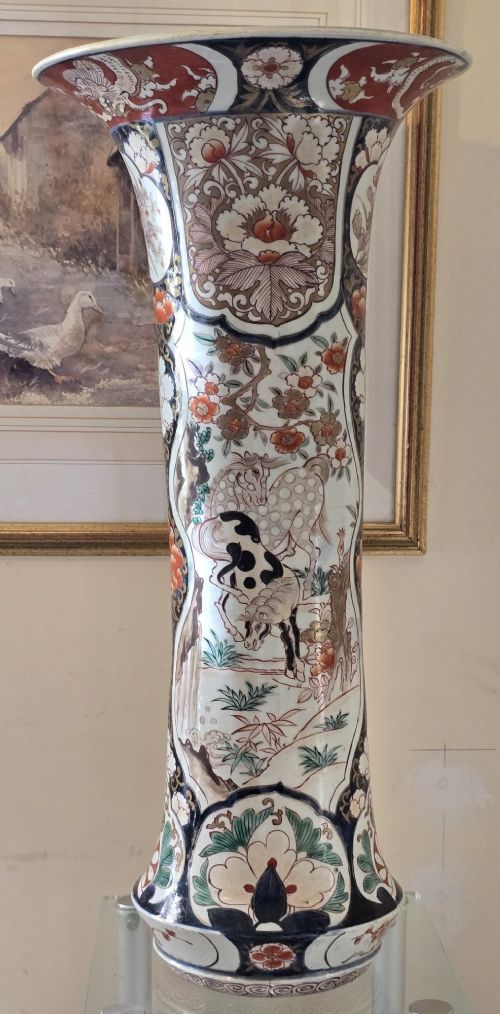
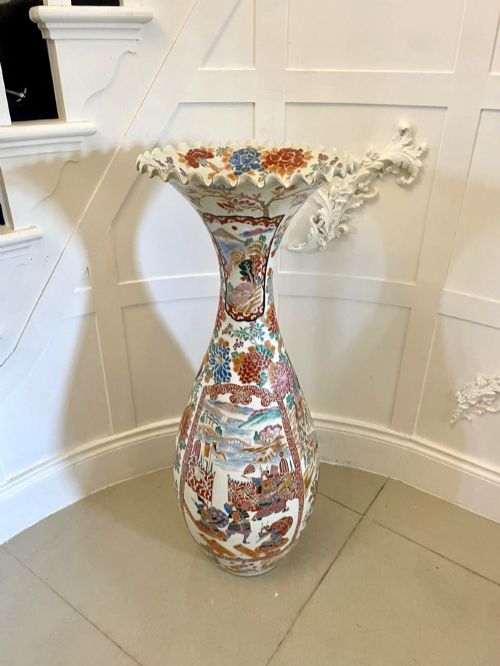
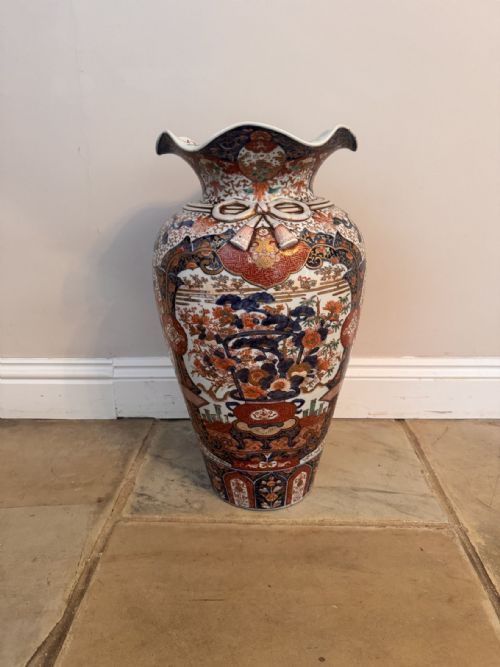
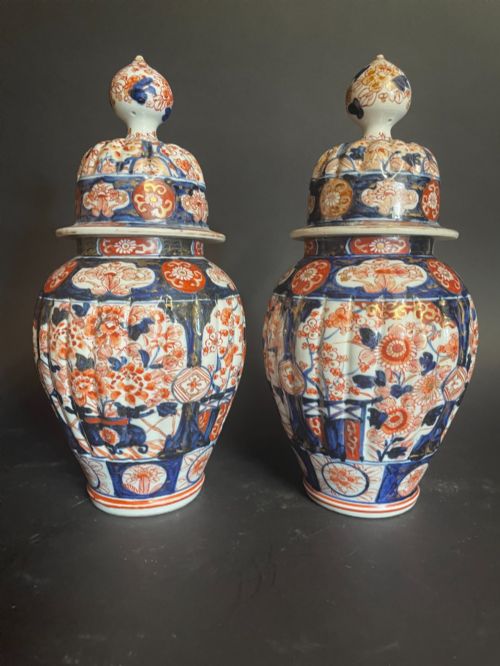
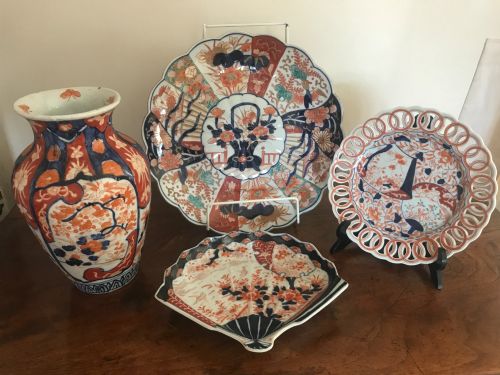
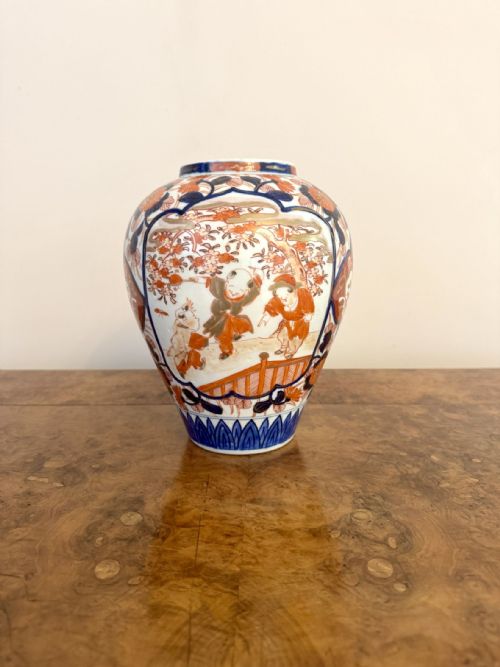
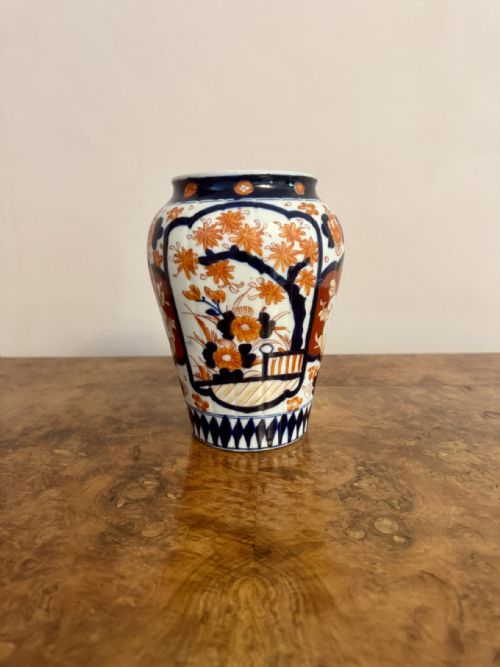
When you search for blue red japanese vases, you encounter a distinct group of ceramic vessels spanning the Edo, Meiji, and Taishō - Shōwa periods. The selection here leans heavily towards Japanese Imari porcelain, alongside related lidded jars, ginger jars, and floor-standing pieces decorated in that characteristic palette.
Many of the examples date from the nineteenth and early twentieth centuries, produced in forms ranging from small shaped bud vases to large floor vases and baluster pairs. Alongside genuine Japanese exports, the selection includes nineteenth-century European interpretations such as English Derby porcelain and Samson imari-style pieces.
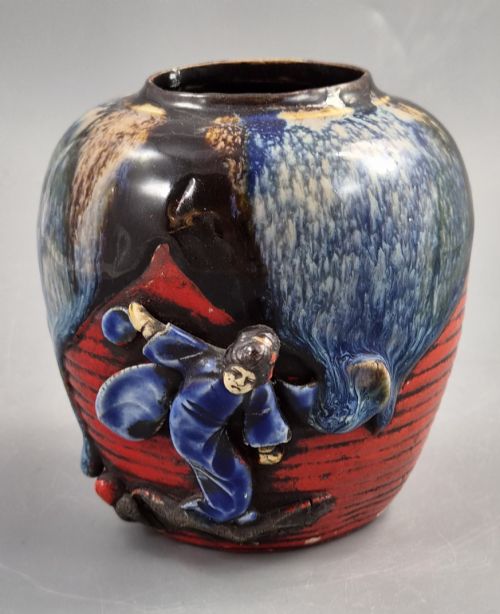
The assortment also captures specialised studio work, including Sumida Gawa wares featuring applied figures and flambé glazes. Buyers find single decorator items as well as matched pairs and garnitures of three or five vessels.
How blue red japanese vases were made
The production relies on porcelain clay bodies shaped by hand or on the wheel, often taking on fluted, hexagonal, or double gourd forms. Artisans applied underglaze cobalt blue before the initial firing, followed by iron red enamel and gold leaf or gilding during subsequent low-temperature enamel firings.
Surface ornamentation frequently incorporates hand-painted panels alongside moulded or applied elements like climbing figures and floral motifs. Some specialised pieces utilise a blue flambé glaze or incorporate brass mounts and fabric elements.
Certain Sumida Gawa jars feature small, three-dimensional figures caught mid-climb up the side of the ceramic body.
What varies in quality in blue red japanese vases
The distinction between ordinary and superior blue red japanese vases rests on the crispness of the underglaze cobalt painting and the precision of the iron red and gilt overlay. Top-tier pieces display harmonious composition across complex surfaces, whereas lesser examples show crowded or hurried brushwork.
The preservation of the original enamel colours and gold leaf over centuries dictates much of the standing of a piece. Garnitures and pairs that retain their matching covers and undamaged forms command greater interest than mismatched survivors.
Kōko·Stevenson and Hancock
The Blue Red Japanese Vases Glossary
- Imari
- A style of Japanese porcelain decorated in underglaze blue, iron red, and gilt, originating from the port of Arita. It gained massive popularity in Europe during the Edo and Meiji periods.
- Meiji Period
- The era in Japanese history lasting from 1868 to 1912, marked by increased export trade and highly detailed decorative arts. Pieces from this time often show exceptional technical control.
- Garniture
- A set of three or more matching vases or jars designed to be displayed together on a mantelpiece or cabinet top. They typically consist of a central vase flanked by matching jars.
- Baluster
- A vase form characterised by a rounded body that tapers toward the base and swells near the lower middle section, resembling an architectural baluster.
- Sumida Gawa
- A type of Japanese ceramics produced in the Tokyo area during the late Meiji and Taishō periods, known for thick flambé glazes and heavily modelled, applied figures.
Blue Red Japanese Vases: Frequently Asked Questions
What is the difference between Imari and Arita ware?
Arita refers to the town in Hizen province where the porcelain clay was mined and fired. Imari was simply the shipping port from which these wares were sent across Japan and exported to Europe.
Over time, the term Imari became synonymous with the specific blue, red, and gold palette produced in the Arita kilns during the Edo and Meiji periods.
How do I display a garniture of vases?
A garniture typically consists of three or five matching vessels designed to sit in a balanced line along a mantelpiece or large sideboard. The tallest piece rests in the centre, flanked symmetrically by the smaller lidded jars or vases.
Keep them away from direct sunlight to protect the iron red enamels and delicate gold leaf details from fading over time.
Are these vases waterproof?
Most antique porcelain and earthenware pieces from the nineteenth century and earlier were made primarily for decorative display rather than daily utilitarian use. While the glazed interiors hold water, thermal shock or accumulated moisture can sometimes stress old hairline faults.
It is safer to use a modern liner inside antique ginger jars and slender neck vases if you intend to display fresh flower arrangements.
How do I tell an Edo period vase from a Meiji piece?
Edo period export pieces dating to the late seventeenth or eighteenth centuries often feature slightly heavier, coarser paste and softer, sootier underglaze blues. The brushwork tends to be more spontaneous and painterly.
Meiji period pieces from the late nineteenth century generally display sharper porcelain bodies, brighter iron red enamels, and far more precise, dense gilding applied during an industrialising era of export.