


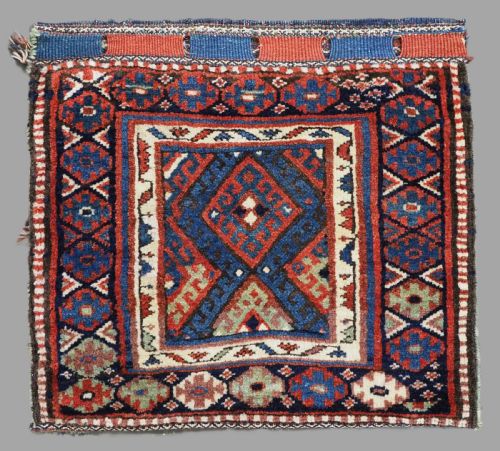


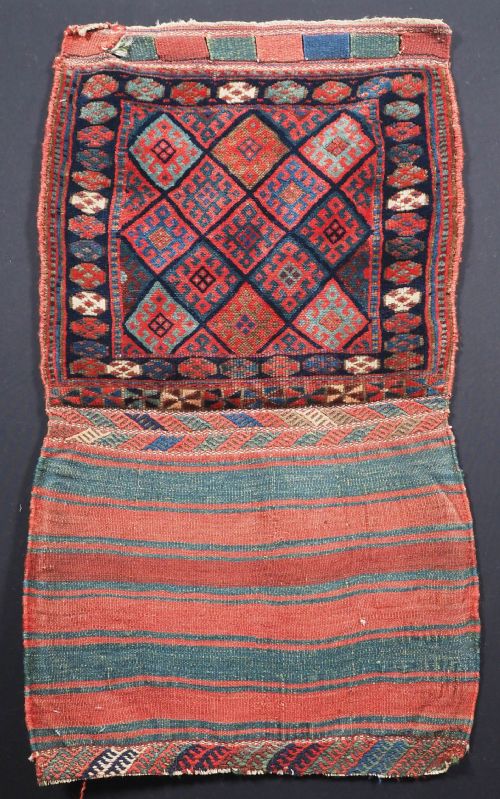

Blue Persian Khorjin
These blue persian khorjin are nomadic saddlebags and bag faces woven by tribal groups, offering authentic village artistry for your floor or wall.
Blue Persian Khorjin
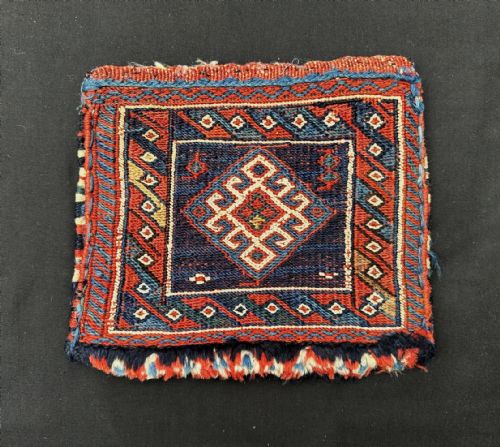
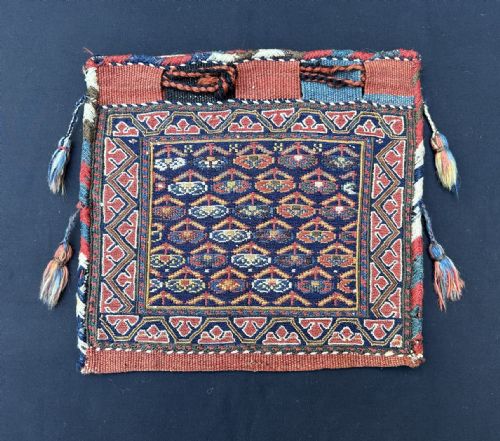
A blue persian khorjin is a woven storage bag or saddlebag face produced by nomadic and village tribes across Persia during the nineteenth and early twentieth centuries. These pieces originate from distinct tribal groups such as the Qashqai, Afshar, Shahsavan, and Kurdish weavers.
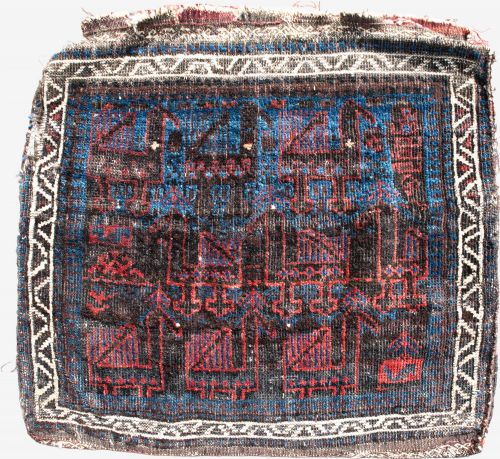
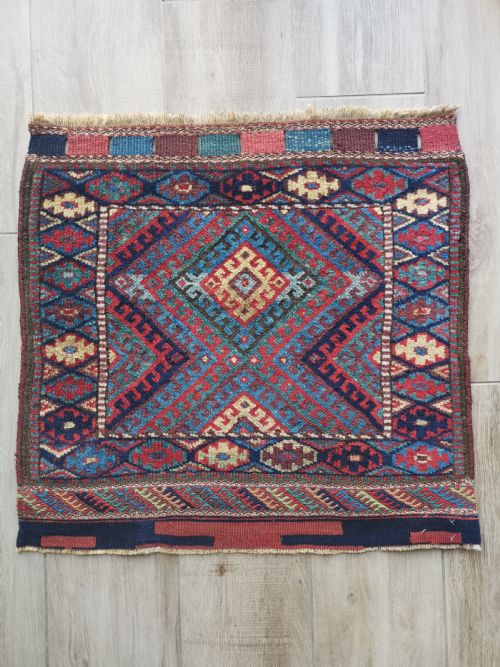
Most examples found here appear as individual bag faces rather than complete pairs, having been separated from their original plain weave backs over decades of use. They served practical nomadic functions for transporting household goods before transitioning into decorative textiles.
The format ranges from small square cushion covers and vanity bags to complete half-khorjin and sumac saddlebags. Collectors encounter diverse regional patterns reflecting the specific tribal heritage of West, South, and South-West Persia.
How they were made
Weavers utilised hand-spun wool for the pile and foundation, supplemented by cotton and goat hair for structural durability and dark outlines. Natural dyes provide the characteristic palette, derived from local plant and mineral sources.
Techniques vary between pile knotting and flatweave construction, including sumac work which creates a textured, ribbed surface structure. Complete pieces often combine pile-woven faces with durable plain weave backs designed to withstand heavy pack animal use.
Blue Persian Khorjin Retail Price Guide 2026
Typical asking prices for blue persian khorjin among the pieces listed under this phrase on Sellingantiques today, from the lower quarter to the upper quarter. They describe what is for sale here now, not the wider market.
Listings span the nineteenth and early twentieth centuries, featuring wool, cotton, and natural dye constructions from multiple Persian tribal regions.
What varies in quality
The quality of a blue persian khorjin rests in the handle of the wool and the vibrancy of the natural dyes used across the field. Softer, lustrous wool indicates careful animal husbandry and preparation by nomadic families.
Design clarity and knot density distinguish standard utility pieces from exceptional tribal art. Crisp execution of motifs like birds, dragons, and central medallions demonstrates the weaver's technical skill and artistic confidence.
The Blue Persian Khorjin Glossary
- Khorjin
- A traditional Persian saddlebag used by nomadic tribes for transport and storage. These woven containers were typically made in pairs joined by a central web.
- Bag face
- The decorative front panel of a saddlebag. Collectors often display these panels independently as small rugs or wall hangings.
- Sumac
- A flatweave technique involving wrapped supplementary weft threads. This method creates a durable fabric with a textured surface resembling embroidery.
- Boteh
- A traditional almond-shaped or paisley motif representing a floral spray or cypress tree. It appears frequently in tribal textile designs.
- Plain weave
- A simple interlace of warp and weft threads without pile. This structure forms the unadorned back panels of complete saddlebags.
Blue Persian Khorjin: Frequently Asked Questions
What is a khorjin used for?
Nomadic tribes utilised these double-sided bags for packing and transporting belongings on pack animals during seasonal migrations. They held grain, clothing, and household possessions.
Today, collectors use surviving examples as small accent rugs, cushion covers, or framed wall hangings to introduce tribal texture into interiors.
How do I hang a bag face?
Mounting a textile safely requires distributing the weight evenly without piercing the fabric with nails or direct adhesives. A professional restorer can attach a cotton sleeve along the top edge for a rod.
Alternatively, conservation-grade Velcro stitching allows the piece to adhere to a fabric-wrapped backing board for display.
Are these pieces made with natural dyes?
The nineteenth-century examples on this page rely primarily on traditional natural dye sources such as madder, indigo, and walnut shells. These materials yield rich, complex tones that age gracefully.
Over time, natural dyes develop a soft patina that synthetic colourants cannot replicate, making them highly desirable to textile collectors.
How do I tell tribal groups apart?
Tribal attribution depends on specific structural traits, colour palettes, and characteristic drawing styles unique to each group. For instance, Shahsavan pieces often feature sumac technique and animal motifs, while Afshar bags display deep indigo fields and boteh designs.
Study the borders, knotting structure, and wool quality to determine whether a piece originates from Kurdish, Qashqai, or Luri weavers.