

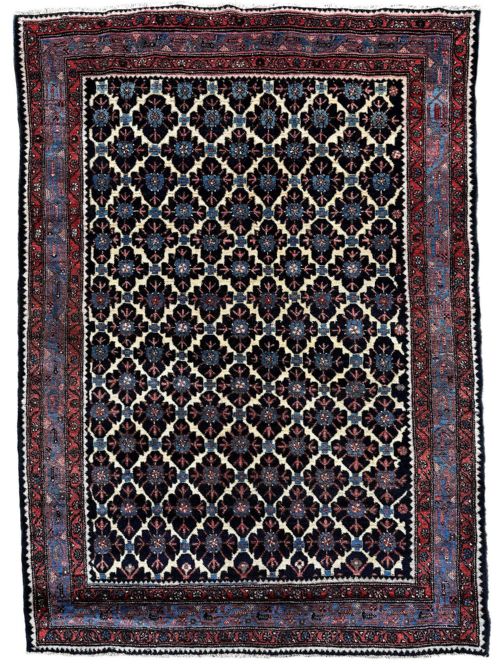


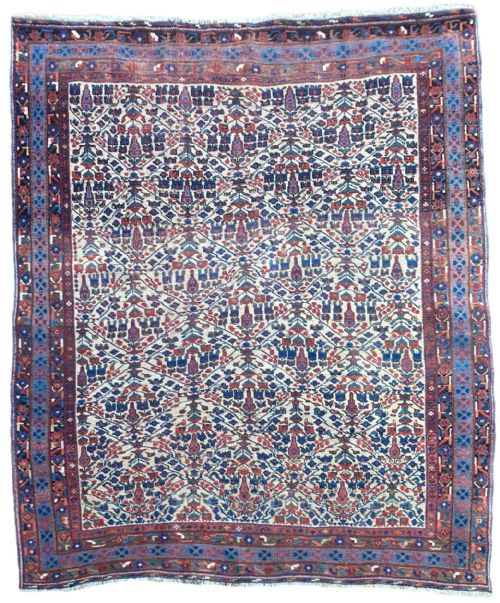


Blue Patterned Area Rug
These woven floor coverings bring ground warmth and traditional design to a room.
Blue Patterned Area Rug
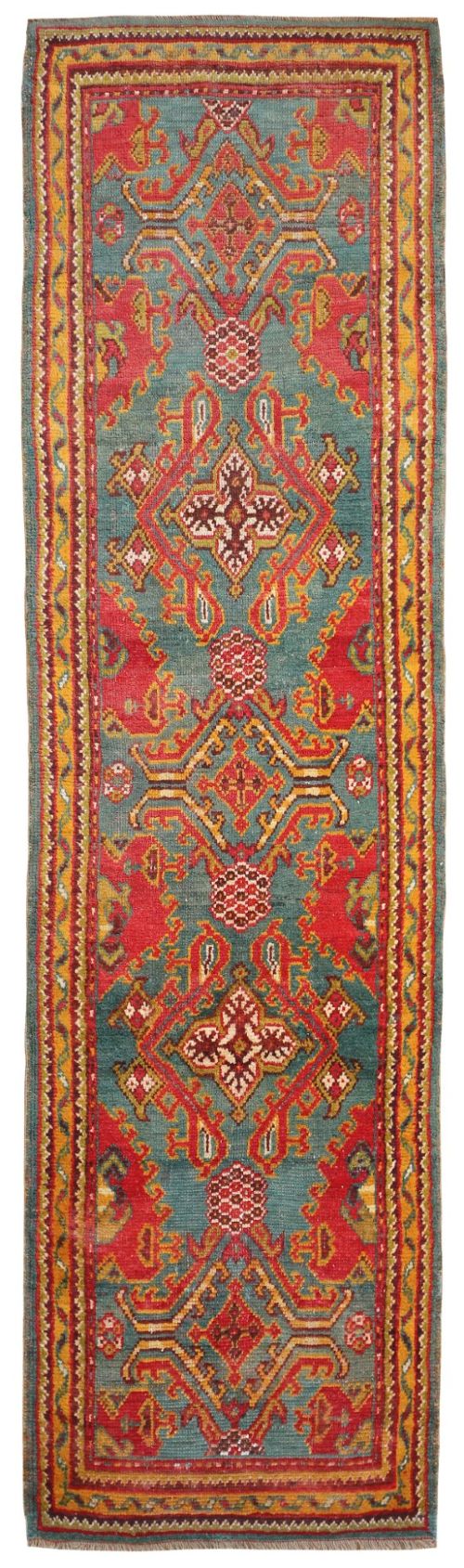
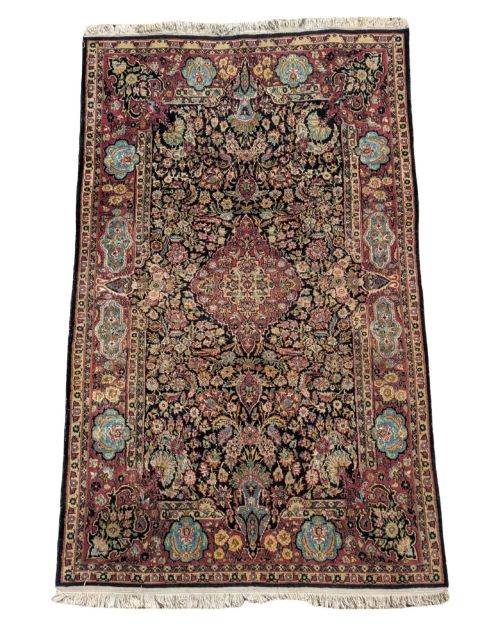
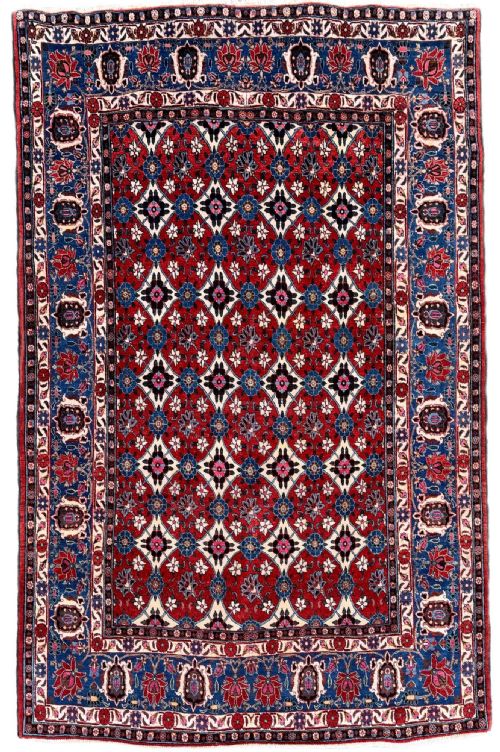
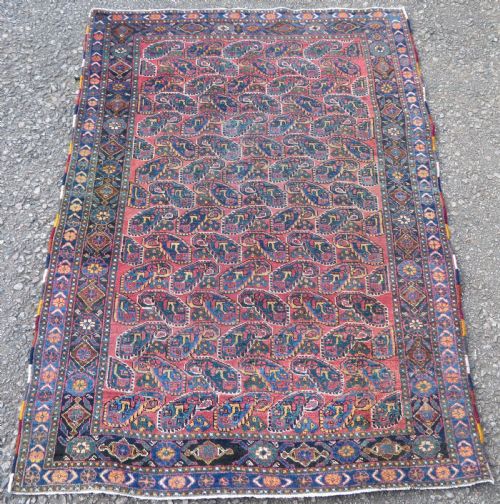
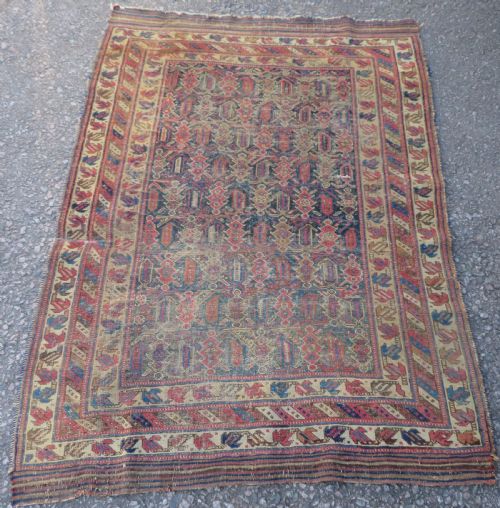
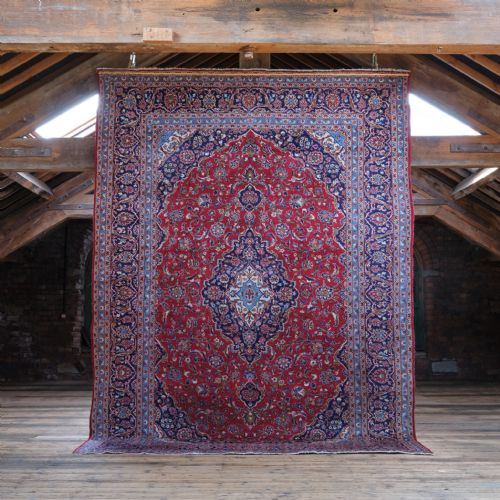
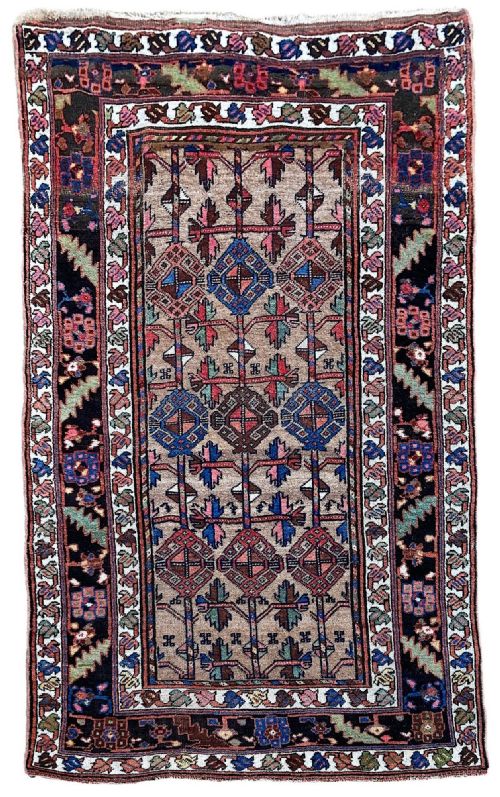
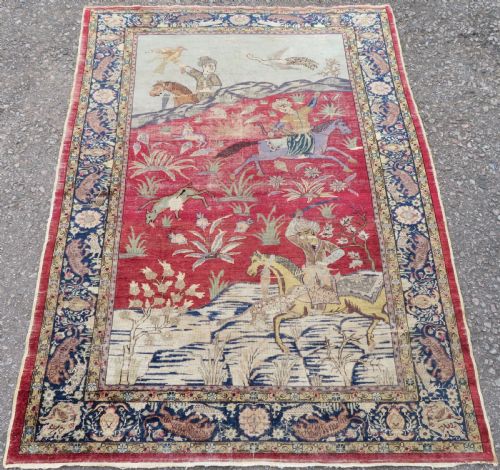
A blue patterned area rug is a woven floor covering designed to anchor a room while introducing distinct regional motifs and colour. When exploring these listings, buyers encounter pieces originating from traditional weaving centres in Persia, Turkey, and the Caucasus, spanning the late nineteenth century into the early twentieth century.
The selection ranges from large carpets suitable for principal reception rooms down to smaller scatter rugs, runner formats, and specific tribal formats such as Afshar or Kurdish pieces. These textiles often display symmetrical medallions, geometric repeats, or pictorial hunting scenes executed in deep indigo and softer shaded grounds.
Assessing quality in woven carpets
Quality rests in the precision of the knotting, the handling of the wool, and the clarity of the design layout. Finer knot counts allow complex curvilinear motifs in carpets from centres like Kashan or Isfahan to appear crisp and well-defined.
The depth and integrity of the wool also dictate longevity, where hand-spun materials retain a natural lanolin content that contributes to resilience. Additionally, balanced proportions and harmonious dye palettes distinguish finer examples from standard village productions.
Eagle-eyed observers occasionally spot small stray animal hairs embedded in older hand-spun wool, left behind by the sheep that provided the fleece.
The Blue Patterned Area Rug Glossary
- Abrash
- A natural variation in rug colour caused by changes in dye batches or hand-spun wool lots. This horizontal banding gives older textiles a characteristic depth.
- Kelleh
- A long, narrow format rug traditionally produced in Persian workshops. It sits between standard area rugs and full runners in proportion.
- Medallion
- A central ornamental design motif placed in the middle of the rug field. It is frequently surrounded by floral or geometric spandrels.
- Warp
- The stationary vertical threads stretched onto a loom before knotting begins. The visible ends often terminate in fringed borders.
- Weft
- The horizontal threads passed back and forth across the warps to lock the knots in place. Together with the warp, they form the structural grid of the textile.
Blue Patterned Area Rug: Frequently Asked Questions
Where should I place a runner rug?
Runner formats suit narrow domestic spaces such as hallways, corridors, and galleys. They protect high-traffic wooden flooring while adding pattern and colour to transitional areas.
Ensure adequate clearance for interior doors to open and close freely over the piled surface. Underlay helps prevent slipping on smooth floors.
How do I clean an antique wool rug?
Regular gentle vacuuming without a rotating brush roll removes loose dust from the pile. Professional specialist cleaning is recommended for deep washing to protect natural dyes.
Avoid soaking the cotton or wool foundation during home spot treatments. Promptly blot liquid spills with a clean cloth rather than rubbing.
What is the difference between tribal and city rugs?
Tribal rugs feature geometric motifs, memory-based designs, and rustic wool textures woven by nomadic or village groups. City rugs utilise pre-planned cartoon designs, finer knot densities, and sophisticated floral compositions.
Regional groups like the Afshar or Kurds produced tribal pieces, whereas workshops in Kashan or Heriz represented structured production.
How do I date an old rug?
Dating relies on stylistic indicators, dye characteristics, structural analysis, and material wear patterns. Late nineteenth-century pieces often display specific botanical motifs and specific synthetic or natural dye combinations.
Comparing border structures and weaving techniques against documented regional examples helps narrow the production era.