
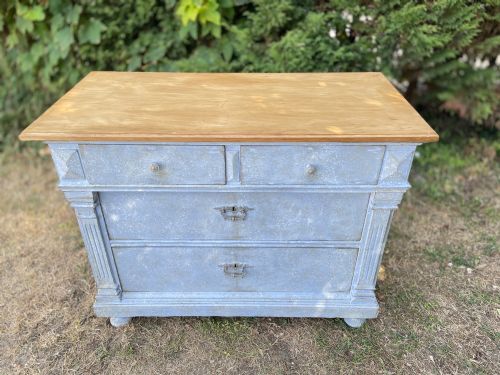

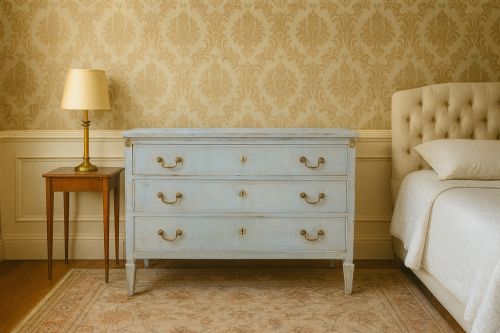


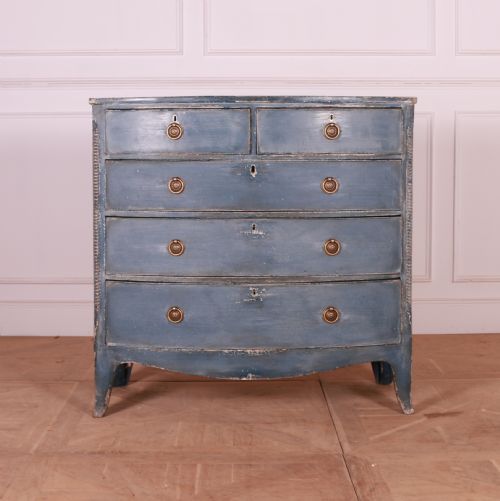

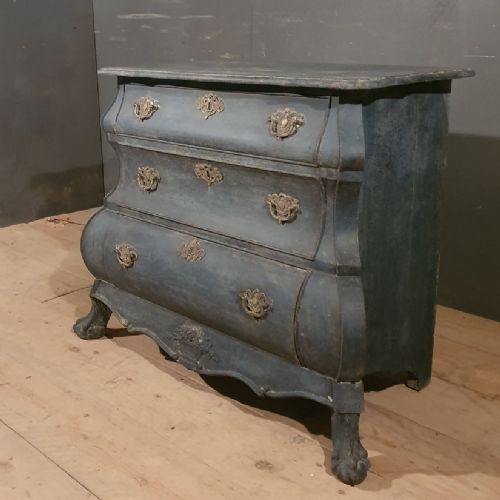

Blue Painted Wooden Commode
A blue painted wooden commode brings robust regional character and soft historic colour into a room, offering practical storage disguised as art.
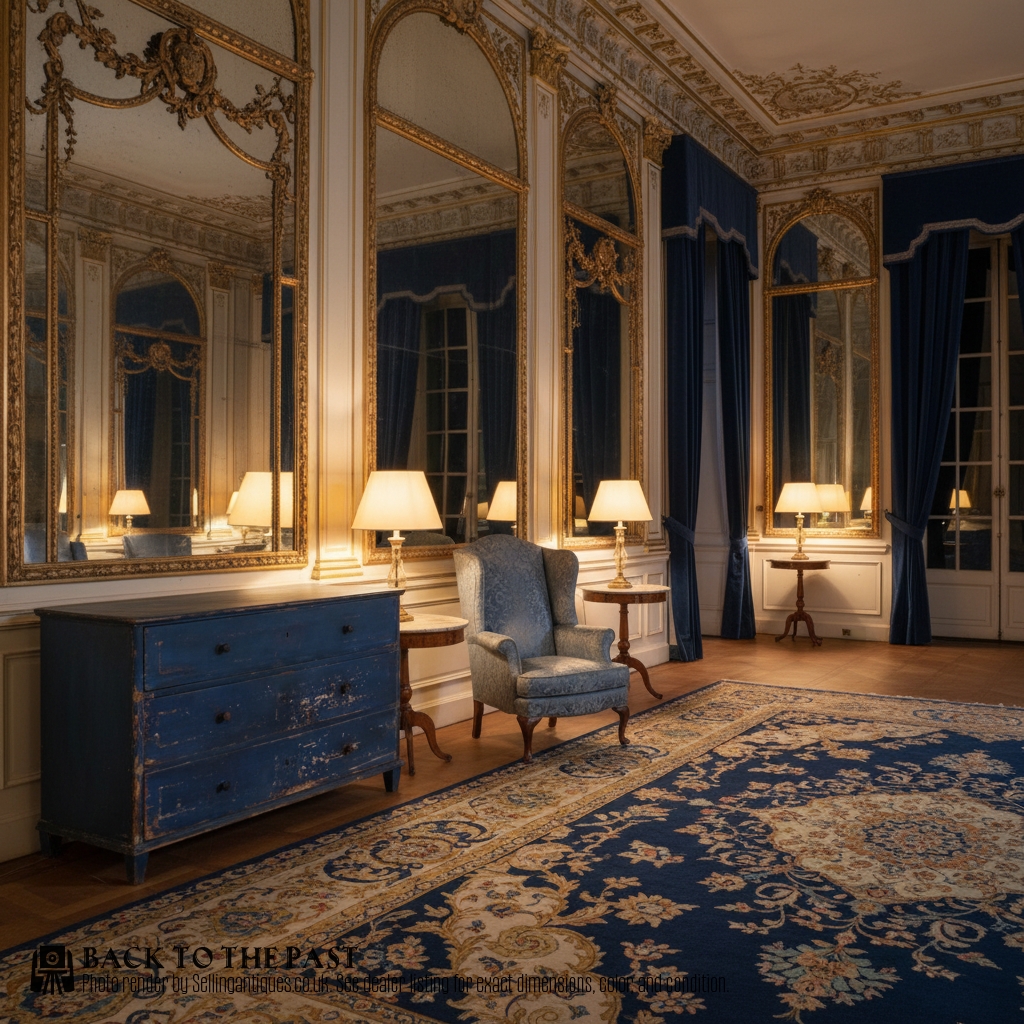
Blue Painted Wooden Commode
When you search for a blue painted wooden commode, you encounter a varied selection of European storage chests spanning several centuries. These pieces function primarily as chests of drawers, alongside occasional washstands and serpentine commodes.
The items here originate from diverse regional traditions, including Swedish Gustavian, English country, Italian, Portuguese, and Austrian folk art. On this page, you are most likely to meet nineteenth-century interpretations alongside eighteenth-century originals.
Forms range from simple pine and softwood carcases to elaborate bombe and diamond-point designs. Each chest reveals the distinct aesthetic preferences of its country of origin, combining utilitarian storage with decorative painted surfaces.
Materials and construction methods
Construction relies heavily on sturdy timbers such as pine, oak, and general softwood, often housing the drawers that define the chest's utility. Metal hardware, including brass fittings and handles, provides functional contrast to the wooden carcases.
The defining characteristic is the application of paint directly onto the wood, often layered over centuries to create weathered patination. Regional workshops utilised local pigments, resulting in distinct blue hues that define the character of each piece.
The listings span the eighteenth and nineteenth centuries, featuring pine, oak, and softwood enhanced with brass and metal hardware.
Distinctions in quality and finish
Quality reveals itself in the integrity of the wooden carcase and the handling of the painted surface rather than in mere age. Superior examples demonstrate careful joinery, well-fitted drawers, and harmonious proportions across serpentine or bombe forms.
The preservation of the original paint layer dictates much of the visual appeal. Pieces with honest, undisturbed patination and minimal modern intervention stand apart from heavily restored or later repainted surfaces.
The Blue Painted Wooden Commode Glossary
- Commode
- A low chest of drawers, typically decorative in nature. Originating in France, the term applies broadly to antique storage chests across Europe.
- Gustavian
- The Swedish neoclassical style spanning the late eighteenth and nineteenth centuries. It is characterised by restrained classical detailing and pale painted finishes.
- Serpentine
- A furniture design featuring a wavy, undulating front edge. This curved form requires accomplished woodworking skill to execute properly.
- Bombe
- A swelling, bulging chest shape associated with eighteenth-century continental furniture. It creates a pronounced convex profile on the front and sides.
- Patina
- The surface appearance acquired by materials through age, wear and use. It represents the authentic physical history of the painted wood.
Blue Painted Wooden Commode: Frequently Asked Questions
How do I date a painted commode?
Dating relies on examining the construction methods, timber types, and the composition of the paint layers.
Hand-cut joints and period-specific hardware provide reliable clues alongside the natural ageing of the pine or oak carcase.
Are these chests suitable for daily use?
These pieces were built as functional furniture and remain entirely practical for modern storage needs.
Drawer construction is generally robust, though gentle handling of historic timber and painted surfaces ensures longevity.
How do I care for antique painted wood?
Protection from direct sunlight and stable room humidity are essential for preserving both the timber and the historic paint.
Cleaning should be limited to dusting with a dry, soft cloth, avoiding harsh modern chemical polishes entirely.