
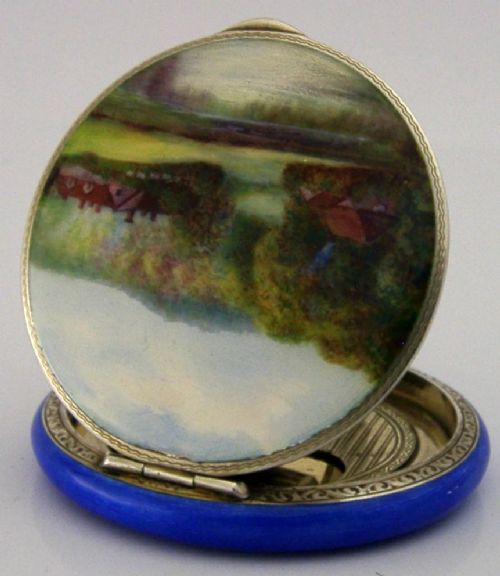
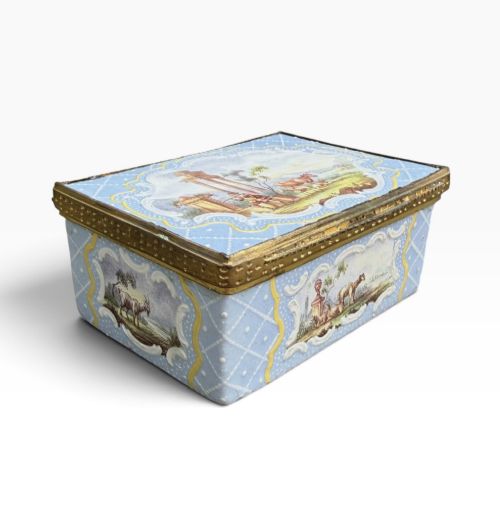
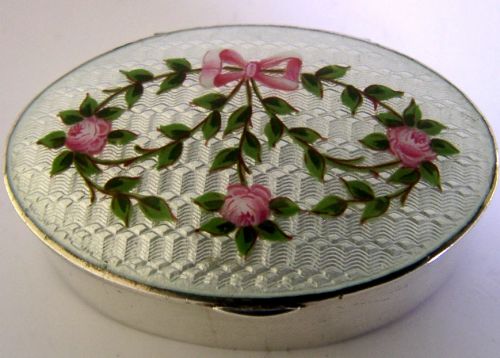

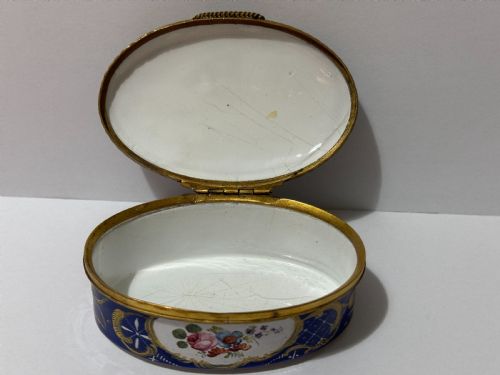


Blue Painted Enamel Box
A blue painted enamel box brings small-scale colour and delicate handwork to a desk or dressing table.
Blue Painted Enamel Box
A blue painted enamel box encompasses small receptacles designed for daily vanity or desk use, spanning patch boxes, snuff boxes, trinket containers, compacts, and dressing table jars. These pieces emerge in styles ranging from Georgian and French Rococo Revival to Art Deco and Mid-Century Italian iterations.
The most common examples on this page are eighteenth century Bilston enamel patch and snuff boxes, alongside later nineteenth century French porcelain and glass pieces and twentieth century silver compacts. Formats vary from round and oval shapes to rectangular containers and larger jewellery caskets.
Assessing quality
Quality rests in the precision of the hand-painted brushwork and the crispness of the enamel surface before firing. Finer examples display clean lines, minimal pitting in the glaze, and well-preserved gilt detailing on mounts and hinges.
The integration between the box body and its metal mount indicates superior craftsmanship, particularly in eighteenth-century Bilston pieces and later silver compacts where proper alignment ensures a secure closure.
Listings feature eighteenth-century copper-based pieces alongside twentieth-century silver compacts and nineteenth-century French porcelain.
Giuliano Spinelli
The Blue Painted Enamel Box Glossary
- Bilston enamel
- A term for eighteenth-century enamels produced in Staffordshire, typically featuring copper bases with white or coloured enamel coatings and detailed hand painting. These small containers often served as patch or snuff boxes.
- Patch box
- A small pocket container used in the eighteenth and nineteenth century to hold cosmetic patches made of silk or velvet. They frequently incorporated interior mirrors.
- Snuff box
- A small hinged receptacle designed to hold dry snuff for inhalation. These boxes often featured tight-fitting lids to preserve the contents.
- Vitreous enamel
- A material made by fusing powdered glass to a substrate by firing, usually between seven hundred and nine hundred degrees Celsius. The powder melts and flows to form a smooth, durable coating.
- Gilt metal
- Base metal treated with a thin layer of gold applied through chemical or mechanical means. It provides the appearance of solid gold mountings on boxes.
Blue Painted Enamel Box: Frequently Asked Questions
What were small enamel boxes used for?
These receptacles served practical vanity functions, holding dry snuff, small cosmetic patches, or trinkets. Their portable scale made them personal accessories for pocket or dressing table use.
Later iterations adapted the form into powder compacts, dressing table jars, and jewellery caskets for personal grooming items.
How do I date an eighteenth century Bilston box?
Eighteenth century Bilston pieces typically feature copper bases with characteristic turquoise or white counter-enamelling on the interior. The style of the hand-painted top and the mount construction provide clues to the decade of manufacture.
Georgian examples often display specific floral or motto subjects executed in polychrome over a deep blue ground.
Are these boxes made of solid silver?
Mounts and bodies vary by piece, with some utilising sterling silver or continental silver standards alongside copper, brass, and gilt metal. Enamel itself forms the primary decorative surface on a metal or porcelain substrate.
Maker marks and silver hallmarks, where present on the mounts, clarify the precise metal composition.
How should I clean an antique enamel box?
Enamel surfaces require gentle cleaning with a soft, dry or slightly damp cloth to avoid scratching the glass glaze or damaging hand-painted details. Moisture should be kept away from exposed metal edges and internal mirror foils.
Harsh chemical dips and abrasive polishes will permanently ruin the painted decoration and the gloss of the enamel.