


Blue Ochre Watercolour Artwork
Blue ochre watercolour artwork brings together expressive landscape and townscape painting across Victorian, Edwardian, and mid-century periods.
Blue Ochre Watercolour Artwork
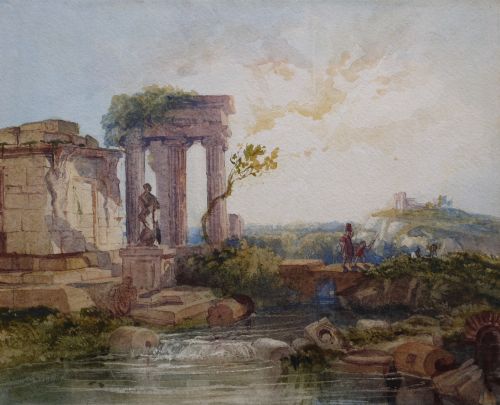
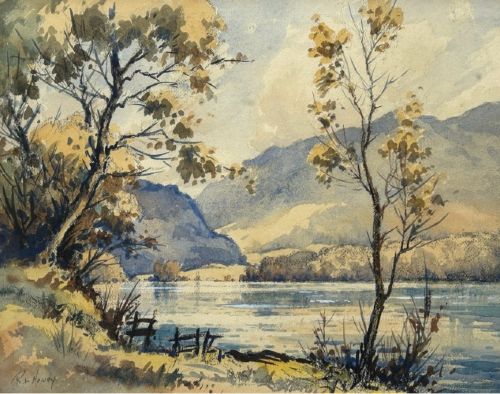
Blue ochre watercolour artwork encompasses fine art paintings created on paper using water-based pigments, ink, and pastel. These pieces span from the late nineteenth century through to the mid-twentieth century, capturing diverse subjects from maritime scenes to rural landscapes.
Buyers encounter various established traditions within this selection, including British Impressionism, Victorian Classical, and Mid-Century Modern styles. Works range from detailed topographical townscapes to expressive coastal views executed by named painters.
The objects consist primarily of framed and glazed works on paper, utilising watercolour paint and pigment to achieve tonal depth. Each piece reflects the specific handling of colour and medium characteristic of its period of production.
Materials and technique
These works are executed on paper supports using watercolour pigment and paint, frequently augmented with ink and pastel for definition and contrast. The combination of water-based media allows artists to build translucent washes alongside opaque detail.
Protection from environmental damage is provided by glass framing, which preserves the delicate paper and water-soluble pigments from moisture and handling. Artists applied washes in layers to create atmospheric effects in landscape and marine subjects.
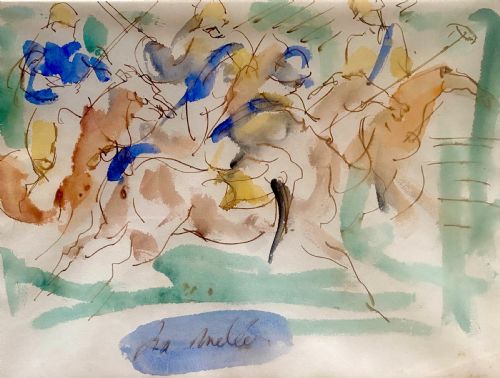
Equestrian polo matches and busy French town markets share wall space with moody Welsh valleys.
Evaluating quality and execution
Quality rests upon the sureness of the brushwork and the artist's control over pigment dilution and paper interaction. Stronger examples display confident handling of light and atmosphere, particularly in complex architectural or coastal compositions.
The preservation of the paper support and the vibrancy of the original watercolours significantly influence the overall standard of each piece. Superior works maintain their tonal contrast without excessive fading or discoloration of the pigments.
Richard Principal Leitch·Robert Leslie Howey·Gen Paul·Ernest Dade·Rowland Henry Hill·Adrian Heath·Joseph W. Milliken·Frederick Mayor·David Woodlock·Madeline Hughes·John J. Hamer·Arthur Severn·Robert Thorne Waite
The Blue Ochre Watercolour Artwork Glossary
- Watercolour
- A painting method in which the paints consist of pigments suspended in a water-based solution. This medium is traditionally applied to paper supports to achieve translucent effects.
- Pigment
- The natural or synthetic coloured powder that gives watercolour paint its hue. These materials determine the lightfastness and visual weight of the artwork.
- Gouache
- An opaque watercolour paint mixed with a binding agent and white pigment to create solid areas of colour. It is often combined with transparent watercolour for added highlights.
- Wash
- A thin, fluid layer of watercolour spread evenly across the paper to create background tones or skies. Mastering this technique requires precise control of water and pigment ratios.
- Impressionism
- A style of painting emphasising immediate visual impressions and shifting light through small, visible brushstrokes. British variants adapt these principles to local landscapes and coastal scenes.
Blue Ochre Watercolour Artwork: Frequently Asked Questions
How should I frame vintage watercolours?
Watercolours require conservation framing with acid-free mounts and UV-protective glass to prevent fading and paper degradation.
Keeping the paper separated from the glass by a mat ensures moisture does not accumulate and damage the pigment.
How do I identify Victorian watercolours?
Victorian pieces frequently display detailed realism, traditional subject matter, and precise ink or pencil underdrawing beneath the washes.
Signatures, paper watermarks, and framing styles often help determine the period of execution.
Are these works signed by the artists?
Many examples retain the original artist signature, often positioned in the lower corner of the composition.
Documented signatures help connect individual works to established mid-century and nineteenth-century painters.