







Blue Iron Red Plate
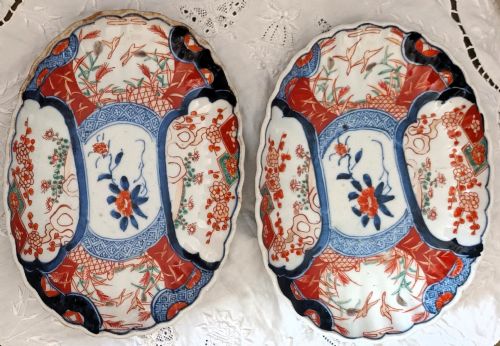
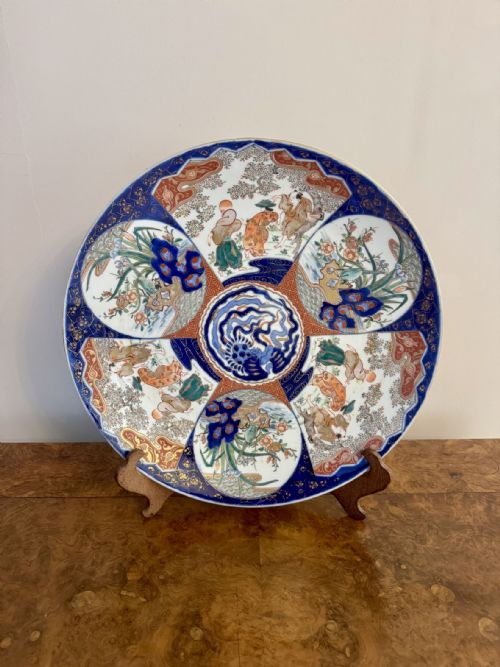
These pieces known as blue iron red plate items are decorative chargers, plates, and dishes that bring rich cobalt and iron red tones to a room.
Blue Iron Red Plate
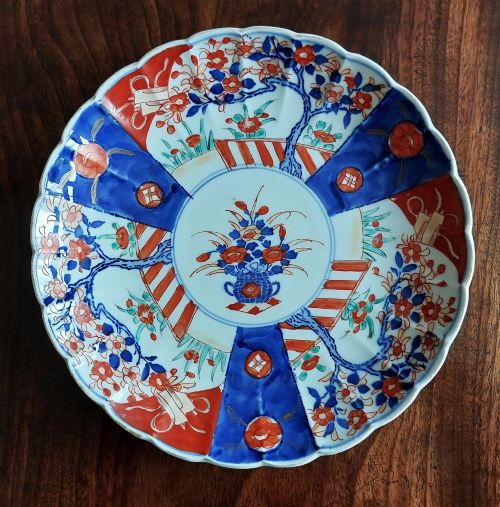
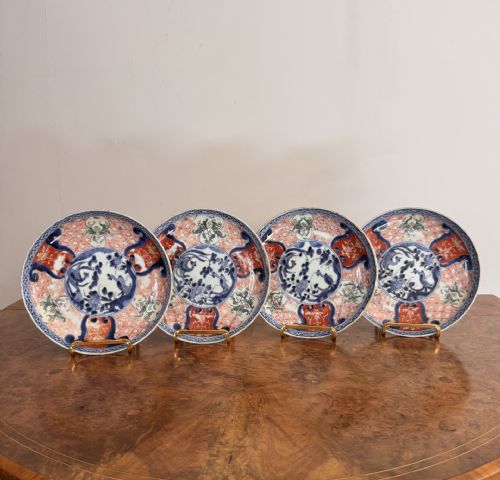
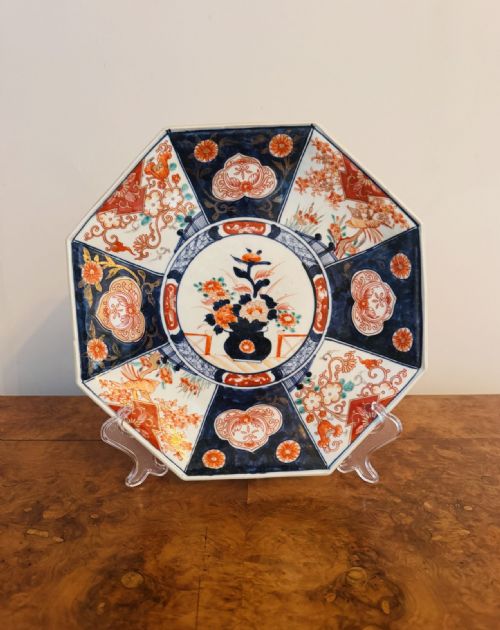
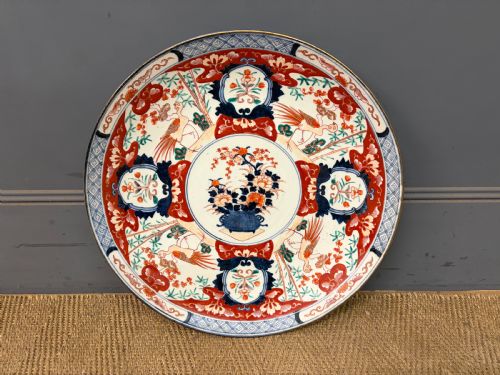
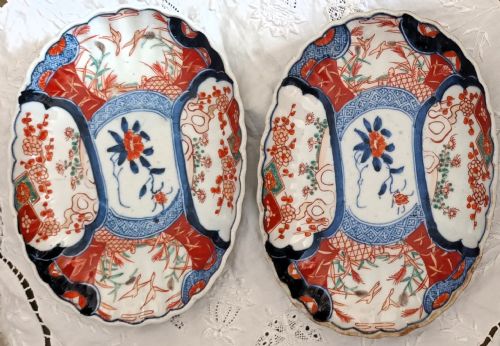
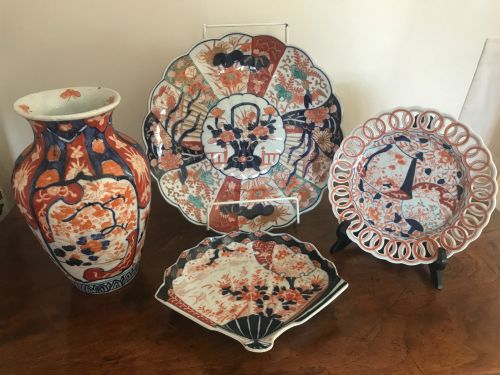
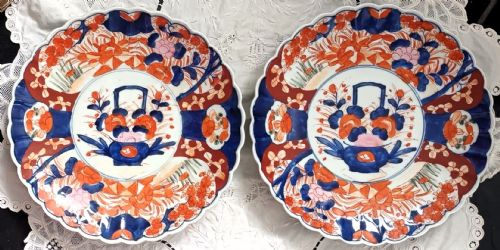
A blue iron red plate selection centres heavily on Japanese Imari porcelain from the Meiji period and the nineteenth century. Buyers encounter decorative chargers, serving dishes, and scalloped plates decorated in distinct palettes of cobalt blue and iron red. These items range from square and hexagonal forms to large display chargers depicting birds, florals, and figures.
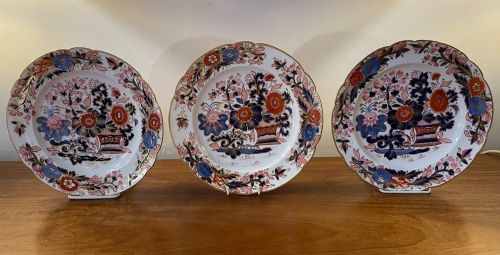
Alongside Japanese wares, the listings include British examples such as early nineteenth century Staffordshire plates and Royal Crown Derby serving dishes using the Imari pattern. These pieces translate traditional oriental palettes into domestic European ceramic forms. Most examples date from the Victorian era up to the early twentieth century.
The dominant forms are decorative plates and large chargers designed for visual impact rather than heavy daily dining use. Collectors find individual items, pairs, and matched sets sharing characteristic blue, iron red, and gilt highlights. The variety spans simple round plates to lobed, ribbon, and scalloped edges.
How they were made
The foundation of these items is hard porcelain or ceramic body shaped into plates, chargers, and serving dishes. Potters utilised cobalt underglaze to paint deep blue motifs directly onto the clay before applying a clear glaze. This created durable blue details that survived high temperature firing.
Makers applied iron red enamel and gold leaf or gilding over the glaze in subsequent low temperature firings. This layered technique produced the characteristic contrast between the underglaze blue and the bright iron red palette. Hand painting ensured that floral, bird, and figurative designs varied across individual pieces.
Edges were frequently moulded into hexagonal, square, scalloped, or lobed shapes requiring precise manual trimming before firing. Enamel and gilt highlights were carefully brushed onto the hardened surface to accentuate the borders and central motifs.
Blue Iron Red Plate Retail Price Guide 2026
Typical asking prices for blue iron red plate among the pieces listed under this phrase on Sellingantiques today, from the lower quarter to the upper quarter. They describe what is for sale here now, not the wider market.
Listings feature porcelain and ceramic materials decorated with cobalt underglaze, enamel, gold leaf, and glaze.
What varies in quality
Quality rests primarily in the crispness of the hand painting and the depth of the cobalt underglaze. Finer examples display precise brushwork on complex motifs such as exotic birds or the Seven Lucky Gods. Softer outlines and muddy glaze mixing indicate a lower tier of production.
The application of iron red enamel and gilding distinguishes standard export wares from superior items. Well preserved gold leaf and vibrant iron red tones that retain their intensity show superior workshop standards. Wear or fading across the overglaze elements alters the visual balance of the plate.
Royal Crown Derby
The Blue Iron Red Plate Glossary
- Imari
- A style of Japanese porcelain featuring a tripartite colour scheme of cobalt blue, iron red, and gold. This decorative tradition originated in the Edo period and influenced European ceramic factories.
- Charger
- A large decorative plate utilised for display or formal serving rather than individual dining. These substantial pieces provide a wide surface for complex painted scenes.
- Cobalt Underglaze
- A blue pigment applied to the raw ceramic body prior to glazing and firing. It produces a permanent blue colour beneath the shiny surface.
- Meiji Period
- A Japanese historical era spanning from 1868 to 1912. Many export ceramics found on the market originate from this time.
- Enamel
- A glass based decorative substance applied over the fired glaze. Iron red is the predominant enamel colour used in these specific palettes.
Blue Iron Red Plate: Frequently Asked Questions
How were blue iron red plate items used?
These pieces served primarily as decorative chargers, display dishes, and formal serving vessels in dining rooms and parlours. Large chargers were stood upright on shelves or mounted on walls to showcase the painted cobalt and iron red designs.
Smaller plates and dishes functioned as tableware for special occasions or formed matched sets for display. Their strong visual patterns made them centrepieces for interior decoration during the nineteenth and early twentieth centuries.
How do I care for antique Imari porcelain?
Wash these ceramic pieces gently by hand using lukewarm water and mild soap when cleaning is necessary. Avoid dishwashers, harsh scrubbers, and soaking, as overglaze iron red enamel and gold leaf can degrade over time.
Display plates securely on stable stands or wall hangers designed to support their weight. Keep them away from direct sunlight to preserve the vibrancy of the iron red and gilt surfaces.
What periods do these plates come from?
The listings span from the early nineteenth century through the Victorian era up to the 1920s. A large proportion originates from the Meiji period around 1900, representing the peak of Japanese export porcelain.
Earlier nineteenth century pieces include both Japanese items and English Staffordshire adaptations of the Imari palette. Each period brings subtle differences in form, such as scalloped edges or hexagonal shapes.