
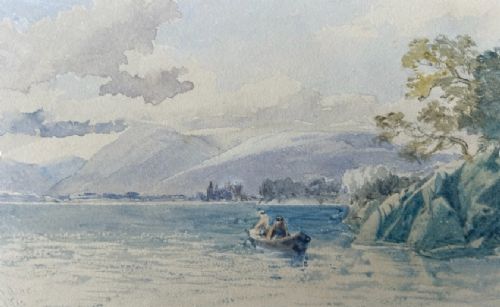
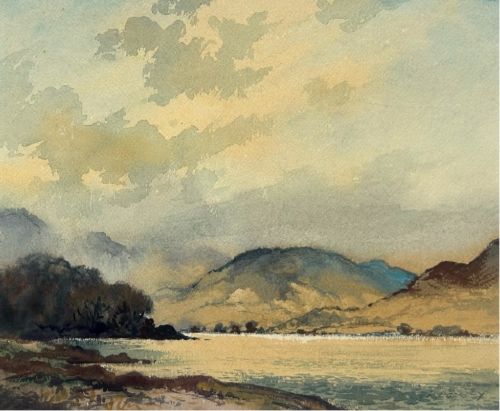
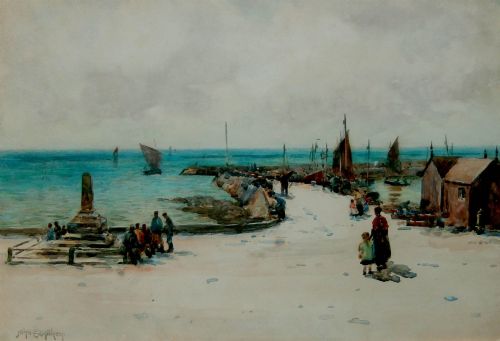
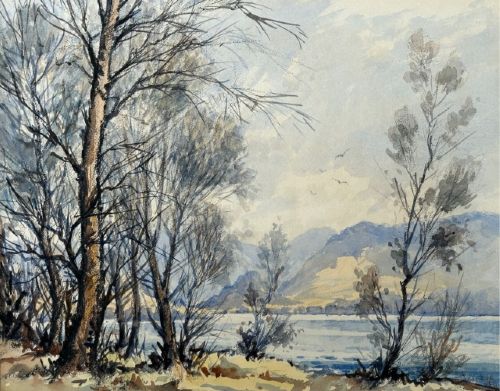


Blue Grey Watercolour Landscape
A blue grey watercolour landscape captures atmospheric vistas through restrained pigments on paper, offering subtle tonal depths that reward careful viewing.
Blue Grey Watercolour Landscape
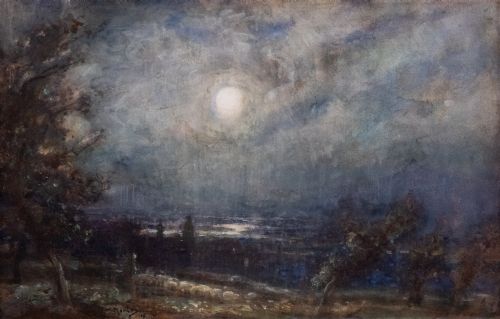
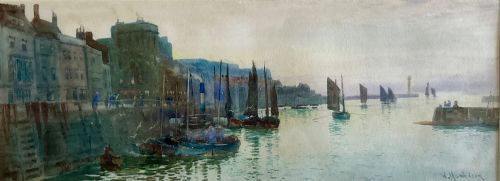
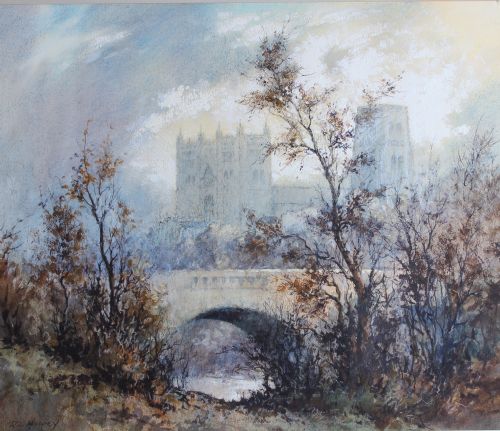
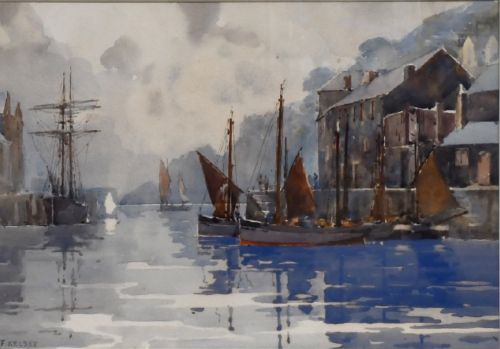
When searching for a blue grey watercolour landscape, collectors encounter original works on paper spanning the Victorian era through the mid-twentieth century. These paintings depict coastal havens, northern lakes, and river scenes created within British and European artistic traditions.
The pieces on this page heavily represent early twentieth-century British art, alongside Victorian maritime subjects and mid-century compositions. Works range from intimate architectural sketches to framed gallery paintings.
Subjects frequently centre on harbours, coastal towns, and mountainous terrain, rendered through subdued palettes that emphasise atmospheric conditions like mist, snow, and twilight.
Materials and Technique
Artists executed these works primarily using watercolour pigment and ink on paper, occasionally supported by wood and glass framing. Pigments were applied to capture light and shadow across rural and marine subjects.
The handling of watercolour wash allows tones to bleed and merge, producing the signature atmospheric skies and glassy waters characteristic of these landscapes. Detail is often added with fine ink lines to define structures and rigging.
Paper selection varied from lightweight sketchbook sheets to heavier watercolour paper, supporting both rapid plein-air recording and finished studio watercolours.
Several coastal watercolours preserve the actual grit of North Sea sand caught in the wet paint by windy nineteenth-century shores.
Distinctions in Quality
Quality rests upon the artist's command of tone and light, where restrained blue and grey washes successfully convey mood and distance. Superior works achieve luminosity without heavy-handed pigment application.
Compositional balance separates standard topographical records from accomplished artistic interpretations of weather and topography. The most effective pieces demonstrate assured brushwork that captures movement within still scenes.
Thomas Miles Richardson Jnr·Robert Leslie Howey·Thomas William Morley·William Matthison·Charles William Adderton·Edward Seago·George Hamilton Constantine·Frederick Stuart Richardson·William Kay Blacklock·Noel Harry Leaver
The Blue Grey Watercolour Landscape Glossary
- Watercolour
- A paint consisting of pigment suspended in a water-based solution, applied to paper to create translucent washes of colour.
- Monogram
- A motif made by overlapping or combining letters to form a single symbol, often used by artists to sign works on paper.
- Seascape
- A type of fine art painting that depicts the sea, coastal shores, and maritime activity.
- Plein air
- The act of painting outdoors to capture direct observations of natural light and atmosphere.
Blue Grey Watercolour Landscape: Frequently Asked Questions
How should I frame an old watercolour?
Historic watercolours require conservation framing with acid-free mountboard and UV-filtering glass to prevent pigment fading and paper degradation.
Keep the paper separated from the glass using a mat so moisture cannot cause the pigment to adhere to the surface.
Are these paintings original works?
The selections on this page consist of original hand-painted watercolours and ink drawings executed directly on paper by artists.
Prints and reproductions are clearly designated to distinguish them from unique one-off paintings.
What subjects appear most often?
Maritime scenes, northern rivers, and coastal harbours dominate the selection, reflecting the regional interests of British artists from the Victorian era onward.
Depictions of Yorkshire fishing ports and Scottish lochs recur frequently across the available inventory.
How do I date an unsigned watercolour?
Dating relies on the paper watermark, the framing materials, stylistic clues, and the artist's known working period.
Subject matter and clothing styles within figurative elements also provide reliable chronological markers.