





Blue Flatweave Rug
A blue flatweave rug brings geometric clarity and rich dyed textiles directly from nomadic and regional weaving traditions into domestic spaces.
Blue Flatweave Rug
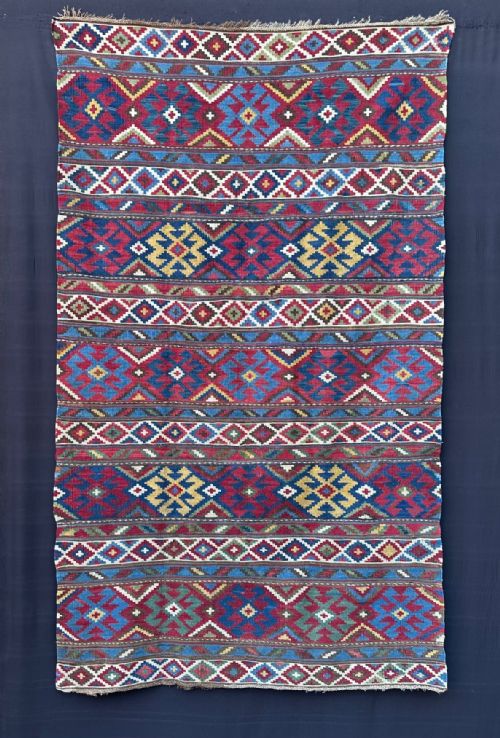
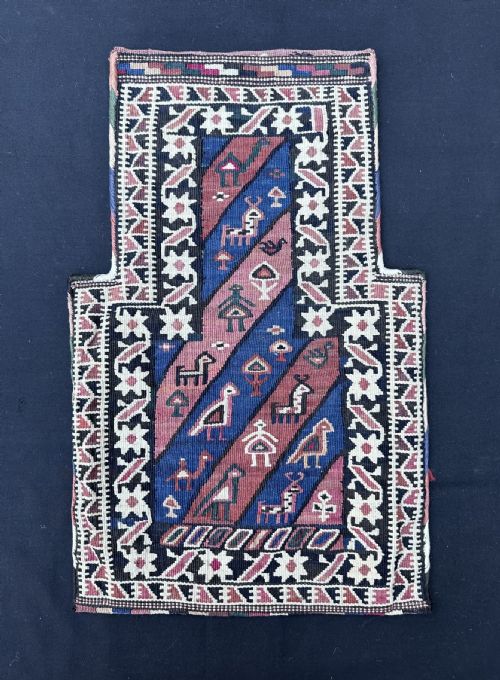
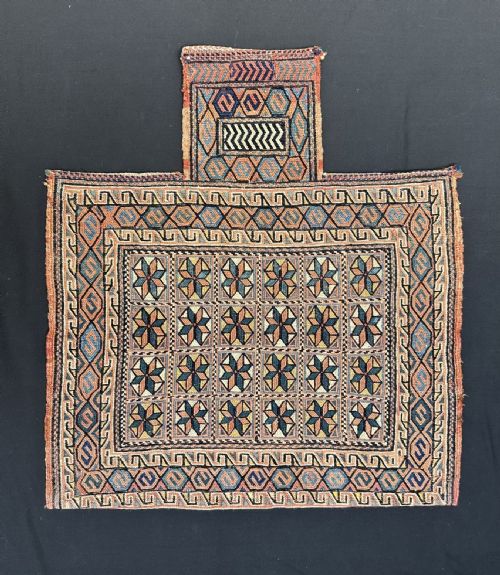
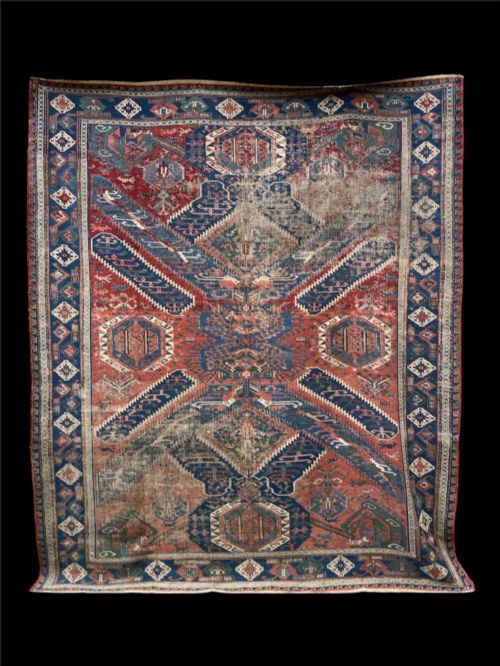
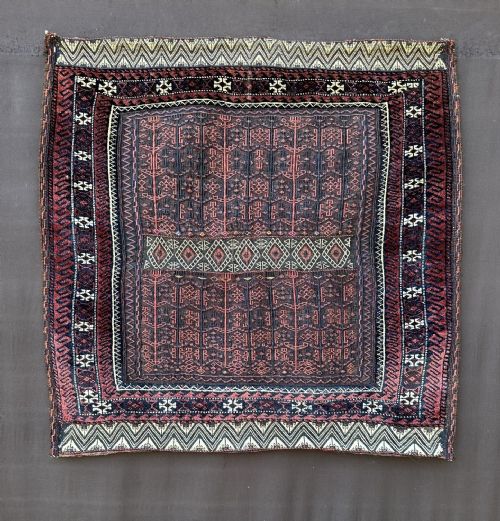
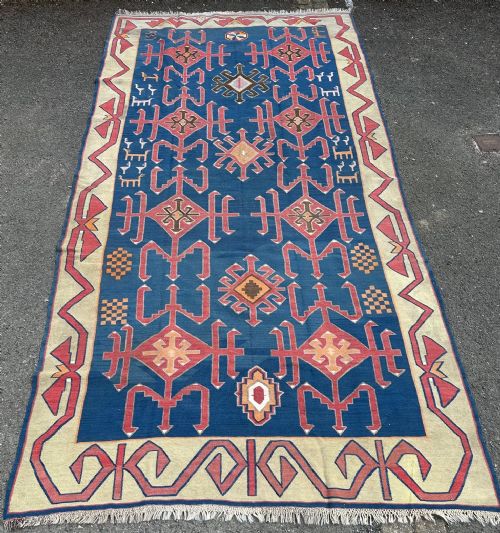
When searching for a blue flatweave rug, buyers encounter traditional tribal textiles originating from Persian, Caucasian, Turkish, and Central Asian regions. These pieces include utilitarian flatweaves, kelims, bread sofreh, saddlebags, and storage pieces created by nomadic and village weavers spanning the late nineteenth and early twentieth centuries.
The aesthetic relies on flat-faced tapestry weaves without pile, displaying geometric motifs, banded designs, medallions, and chevron patterns. Utility governed their original creation as floor coverings, grain sacks, and dining cloths, yet their structural design remains highly decorative for modern interiors.
Materials and Construction
The physical build relies predominantly on hand-spun wool and cotton foundations, occasionally incorporating goat hair for structural durability. Weavers utilised natural and vegetable dyes to achieve the deep indigo and soft blue tones that define these textiles.
Techniques range from standard slit-tapestry flatweaves to more complex soumak wrapping and multi-strip construction where panels are joined together. This warp and weft interplay creates a thin, sturdy textile capable of enduring decades of practical use.
Some antique salt-bags and bread cloths still carry traces of nomadic daily life embedded deep within their tightly packed wool foundations.
Assessing Quality and Execution
Quality rests in the tightness of the weave, the precision of the geometric design, and the depth of the dye work. Tightly packed warps and finely executed soumak work indicate skilled tribal craftsmanship.
The integrity of the original structure, the complexity of regional patterns, and the harmony of natural colour variations elevate certain examples above standard utility pieces.
The Blue Flatweave Rug Glossary
- Kilim
- An untufted, flat-woven textile produced by tightly interweaving warp and weft strands to create a flat surface. This technique forms the structural basis for most tribal rugs and utility covers.
- Sofreh
- A utilitarian cloth traditionally utilised for dining, processing bread dough, or storing food within nomadic households. These items frequently display striking geometric iconography.
- Soumak
- A brocade-like weaving technique where supplementary weft threads are wrapped around the warp threads to create a textured, durable face. This method is common in saddlebags and heavy covers.
- Warp
- The stationary vertical threads stretched across a loom that form the foundational skeleton of the textile. Weft threads are passed horizontally through these structural lines.
- Natural Dyes
- Colourants derived from organic sources such as plants, roots, and insects prior to the widespread adoption of synthetic alternatives. These dyes yield nuanced tones that age with distinct character.
Blue Flatweave Rug: Frequently Asked Questions
What is a flatweave rug?
A flatweave rug is constructed without a raised pile by interlacing warp and weft threads on a loom. This results in a lightweight, durable textile that sits flat on the floor.
Such pieces were traditionally produced across the Caucasus, Persia, and Anatolia for daily domestic utility and portability by nomadic groups.
How were tribal sofrehs used?
Tribal sofrehs functioned as eating cloths spread upon the ground or as domestic textiles for wrapping and preparing bread. Their geometric borders and central fields served protective and cultural purposes for the weaving families.
Today, these utilitarian cloths are prized as decorative floor or wall textiles due to their striking abstract designs.
How do I care for an antique flatweave?
Care requires gentle vacuuming without a rotating brush roll to protect the flat structure of the textile. Professional cleaning suited for antique wool textiles ensures the natural dyes remain stable.
Utilising a quality rug underlay prevents slipping and reduces friction between the flatweave and the floor.
How do I distinguish regional styles?
Regional attribution relies on identifying specific structural techniques, colour palettes, and characteristic geometric motifs. Caucasian pieces often display sharp, angular medallions, whereas Persian tribal works incorporate intricate borders and varied animal or plant symbols.
Examining the weave structure and material composition helps pinpoint whether a piece originates from nomadic groups in the Caucasus, Anatolia, or Persia.