

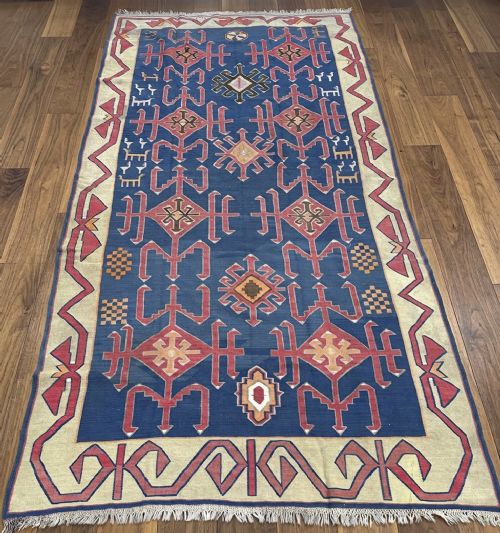


Blue Flatweave Carpet
A blue flatweave carpet brings tactile warmth and intricate geometric pattern to a floor through centuries-old textile traditions.
Blue Flatweave Carpet
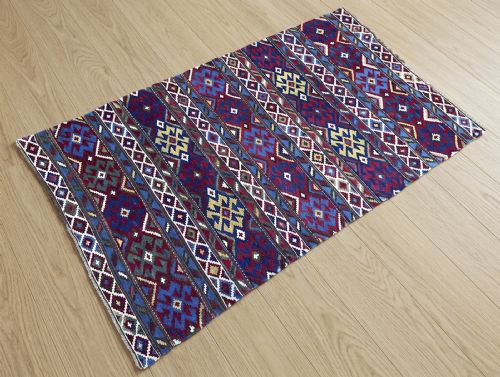
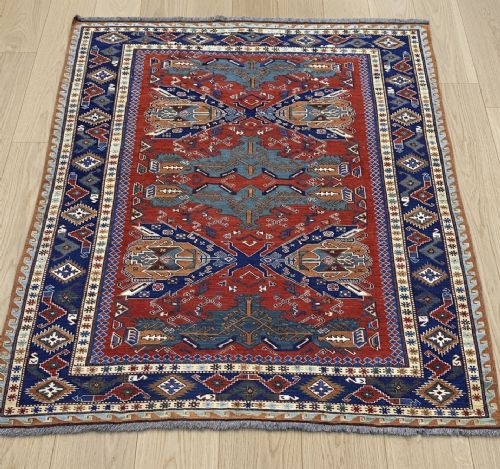
A blue flatweave carpet encompasses pileless rugs, kilims, and soumaks originating from tribal workshops across Persia, the Caucasus, Anatolia, Central Asia, and Eastern Europe. These floor coverings and utility textiles lack a knotted pile, relying instead on interlocking wefts or wrapping techniques to form flat, durable surfaces.
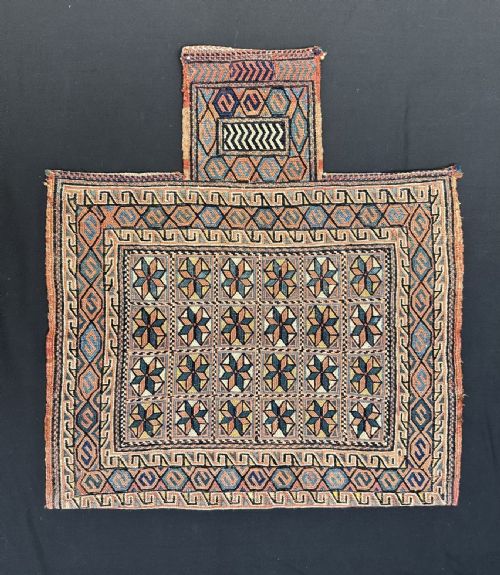
The pieces available here span from the mid-nineteenth century through the mid-twentieth century, featuring regional formats such as long runners, room-sized kilims, panel covers, and bag faces. Tribal weavers from groups such as the Shahsavan, Qashqai, Afshar, and Baluch created these textiles for domestic utility or ceremonial use.
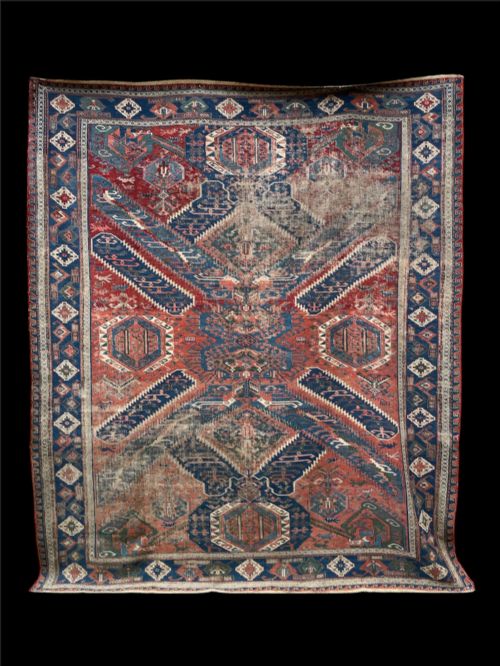
Most examples meet on this page as antique kilims and soumaks displaying traditional geometric medallions, compartment designs, and banded motifs rendered in indigo and softer vegetative tones. They offer a direct link to nomadic and village weaving heritage through organic materials and regional iconography.
How they were made
Weavers constructed these carpets predominantly from wool and cotton, often employing hand-spun wool that absorbed natural and vegetable dyes unevenly to produce rich tonal variations across the field. Natural dyestuffs yielded deep indigos, madder reds, and earthy tones that matured gracefully over decades of light and use.
Technically, the pieces divide between slit-tapostry woven kilims, where wefts reverse back at colour boundaries to create small vertical splits, and soumaks, which utilise supplementary wrap-threads to form a textured, ribbed surface on the face. Certain larger carpets and panels required multiple narrower strips stitched together symmetrically to achieve room dimensions.
Blue Flatweave Carpet Retail Price Guide 2026
Typical asking prices for blue flatweave carpet among the pieces listed under this phrase on Sellingantiques today, from the lower quarter to the upper quarter. They describe what is for sale here now, not the wider market.
Several nomadic eating cloths and saddlebag faces survive here, carrying the invisible dust of distant pastures and centuries of campfire light.
What varies in quality
Quality in a blue flatweave carpet rests upon the tightness of the weave, the crispness of the geometric drawing, and the integrity of the natural dyes. Denser foundations and finer yarn preparation result in structures that lie flat and resist distortion over generations.
Artistic execution also separates standard tribal utility pieces from exceptional village examples, discernible in the balance of the medallion layout, the complexity of subsidiary borders, and the depth achieved through varied vegetable dye baths.
The Blue Flatweave Carpet Glossary
- Kilim
- A flat-piled carpet or rug produced by tightly interweaving warp and weft strands to create a smooth, tapestry-like surface.
- Soumak
- A brocading technique where coloured weft threads wrap over and under warp threads in a herringbone pattern, adding structural weight and surface texture.
- Warp
- The stationary vertical threads stretched onto a loom that form the foundational skeleton supporting the entire textile.
- Weft
- The horizontal threads passed through the warps to build the visible design and colour fields of the carpet.
- Sofreh
- A flatwoven textile traditionally used as a spread for eating meals, kneading dough, or ritual purposes.
Blue Flatweave Carpet: Frequently Asked Questions
How do I clean a flatweave carpet?
Regular gentle vacuuming without a rotating brush roll prevents dust accumulation within the flat structure. Professional textile cleaning is necessary for deeper maintenance to protect natural wool fibres and historic dye stuffs.
Water exposure should remain strictly controlled during light spot cleaning. Allowing the textile to dry completely flat preserves its original dimensions and prevents structural distortion.
Can I place these rugs in high traffic areas?
Flatweaves possess a durable, dense structure well-suited for sustained foot traffic in hallways and living rooms. Using an appropriate underlay prevents slipping and cushions the textile against hard flooring.
Rotating the carpet periodically distributes wear evenly across the surface. This simple practice extends the active lifespan of antique wool and cotton foundations.
Why do antique tribal rugs have slight irregularities?
Nomadic and village weavers worked from memory and local tradition rather than rigid graph paper plans. Subtle shifts in symmetry and wool thickness reflect the hand of the individual artisan.
Batch dyeing with natural vegetable matter naturally caused abrash, where colour tones shift subtly across the rows. These deliberate variations confirm the organic, unmechanised origin of the textile.