






Blue Enamelled Box
A blue enamelled box brings together fine metalwork and vitreous colour, offering a tactile receptacle for trinkets, patches, or powder that sits comfortably on a dressing table.
Blue Enamelled Box
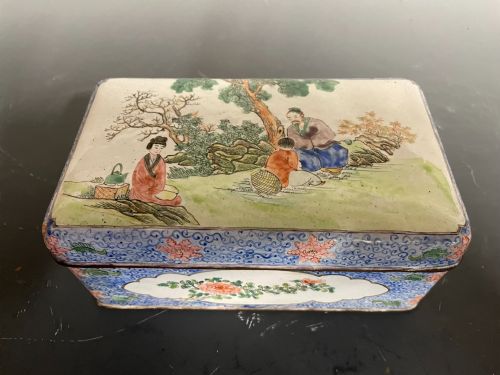
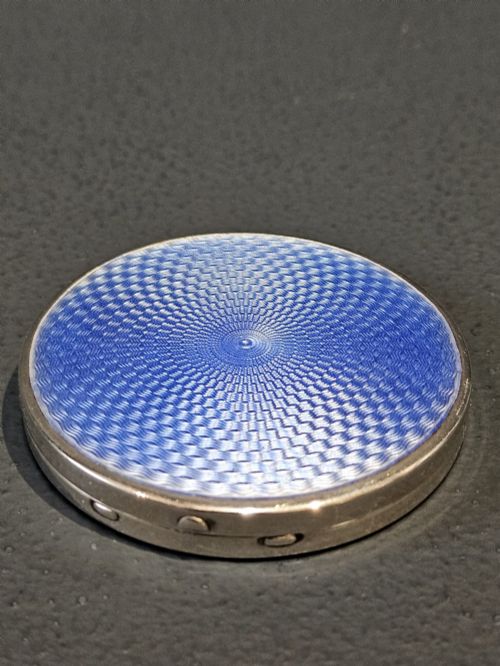
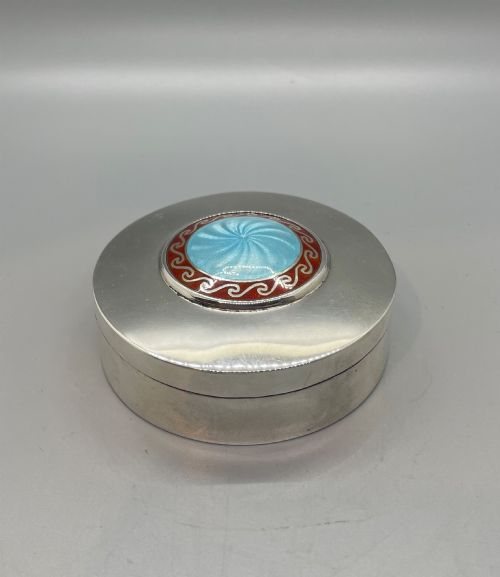
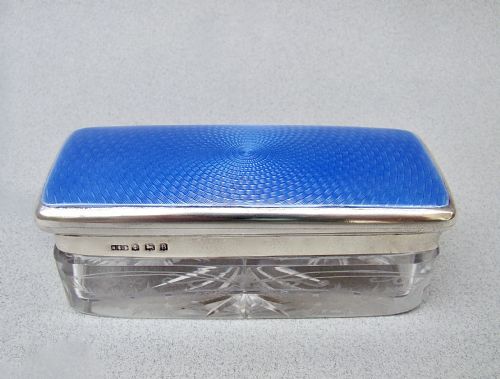
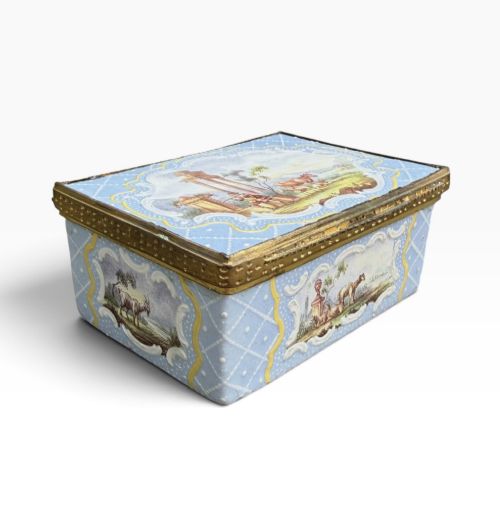
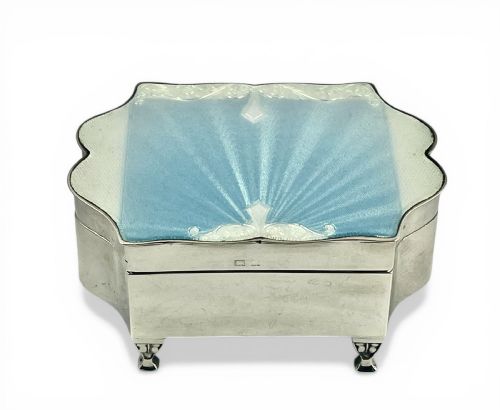
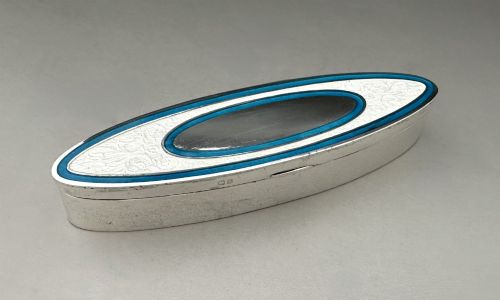
A blue enamelled box encompasses small containers designed for domestic use, ranging from Georgian pocket receptacles to twentieth-century dressing table jars. The blue enamelled box you encounter on this page most often takes the form of an Edwardian or Art Deco silver container decorated with translucent guilloche work.
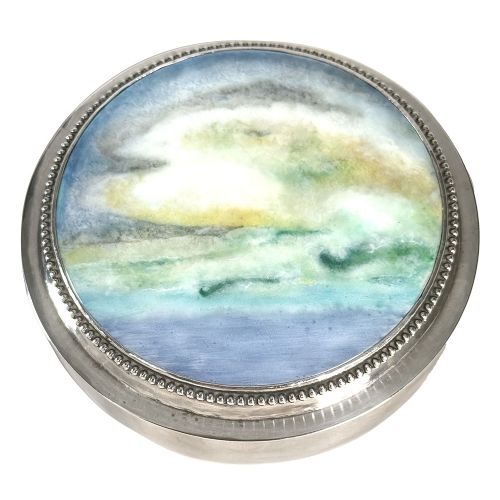
The selection spans centuries and origins, moving from eighteenth-century Staffordshire patch containers to French porcelain caskets and British sterling silver pieces. These vessels served practical roles on writing desks and dressing tables before becoming cabinet items for modern collectors.
Materials and technique
Vitreous enamel fused to metal forms the primary decorative surface, applied either as a smooth opaque layer or over machine-engraved guilloche patterns in silver. Craftsmen worked copper, sterling silver, and brass as bases, firing powdered glass at high temperatures to achieve deep cobalt and turquoise shades.
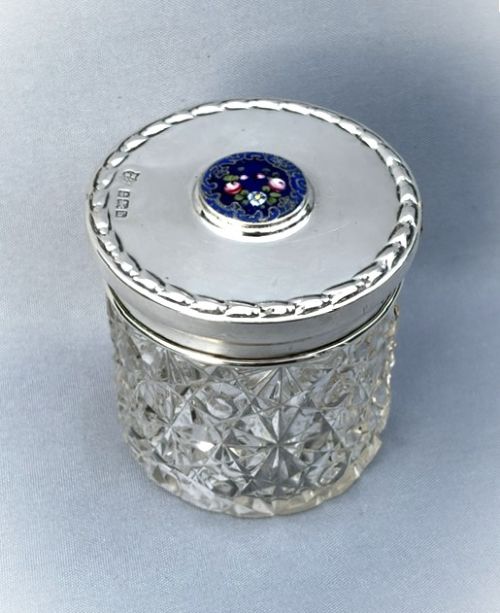
Alternative pairings include cut glass fitted with silver rims and enamel lids, alongside porcelain bodies with hand-painted motifs and gilt detailing. Metal mounts secured hinged lids to bodies of enamel, glass, or ceramic, requiring precise benchwork to maintain alignment.
Blue Enamelled Box Retail Price Guide 2026
Typical asking prices for blue enamelled box among the pieces listed under this phrase on Sellingantiques today, from the lower quarter to the upper quarter. They describe what is for sale here now, not the wider market.
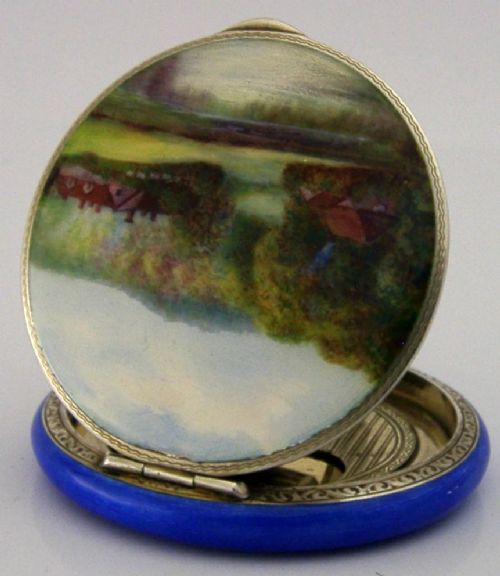
The listings show items spanning from the eighteenth century to the mid-twentieth century, utilising silver, copper, glass, and porcelain.
Distinctions in craftsmanship
The clarity and depth of the enamel layer set finer examples apart from simpler production, particularly where engine-turned patterns catch the light beneath translucent glass. Crisp hand-painting on eighteenth-century Staffordshire pieces or precise geometric engine-turning on Art Deco silver reveals the hand of a skilled workshop.
Structural integrity of the hinges and closures indicates the standard of original manufacture, as well as the survival condition of the glass surface. Pieces retaining undamaged enamelling without stress fractures demonstrate careful ownership and superior initial fusion during firing.
Guild of Handicrafts·Henry Clifford Davis·Henry Matthews·Liberty And Co·Giuliano Spinelli
The Blue Enamelled Box Glossary
- Guilloche
- A decorative technique where a mechanical lathe engraves a precise repeating geometric pattern into metal before translucent enamel is applied over the top.
- Patch box
- A small pocket container used in the eighteenth and nineteenth centuries to hold cosmetic patches made of silk or velvet.
- Vitreous enamel
- Glass powder melted and fused to a metal substrate at high heat to create a durable, coloured surface coating.
- Bilston
- A Staffordshire town renowned during the eighteenth century for the production of enamelled copper snuff and patch boxes.
- Trinket box
- A small lidded receptacle designed to hold rings, pins, or other personal jewellery on a dressing table.
Blue Enamelled Box: Frequently Asked Questions
What were small enamel boxes used for?
Georgian and Victorian boxes held cosmetic patches, snuff, or pins for daily personal grooming.
Later twentieth-century versions served on dressing tables for trinkets, powder, or rouge.
How do I date a Bilston enamel box?
Eighteenth-century examples typically feature copper bases with hand-painted enamel lids depicting landscapes or mottoes.
They lack the mechanical precision and sterling silver hallmarks found in later Edwardian and Art Deco pieces.
What is guilloche enamel?
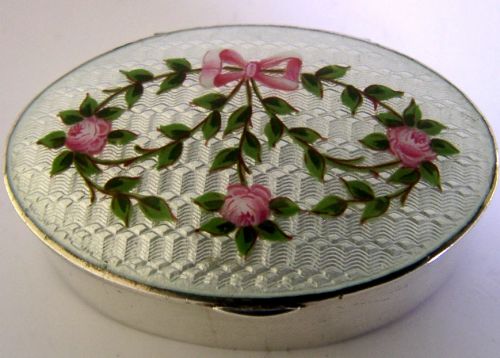
Guilloche involves engine-turning a geometric pattern into a metal surface, usually sterling silver, before applying translucent coloured enamel.
The underlying engraved lines reflect light through the glass to create depth and movement.
Are these boxes made of solid silver?
Many British pieces feature sterling silver bases and rims marked with assay office stamps and dates.
Others utilise copper, brass, or glass bodies fitted with silver or gilt mounts.