



Blue Enamel Decorative Plate
A blue enamel decorative plate brings intricate metallic work and rich colour from the nineteenth century into modern rooms.
Blue Enamel Decorative Plate
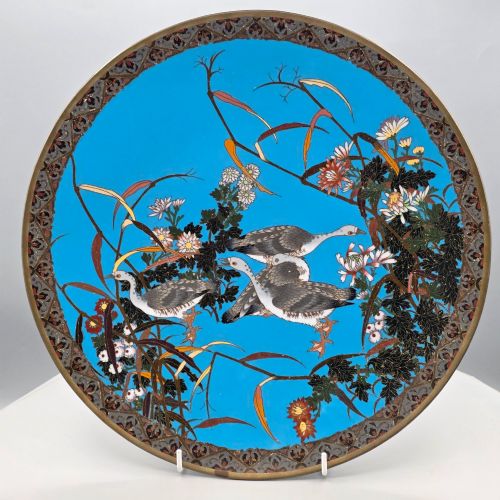
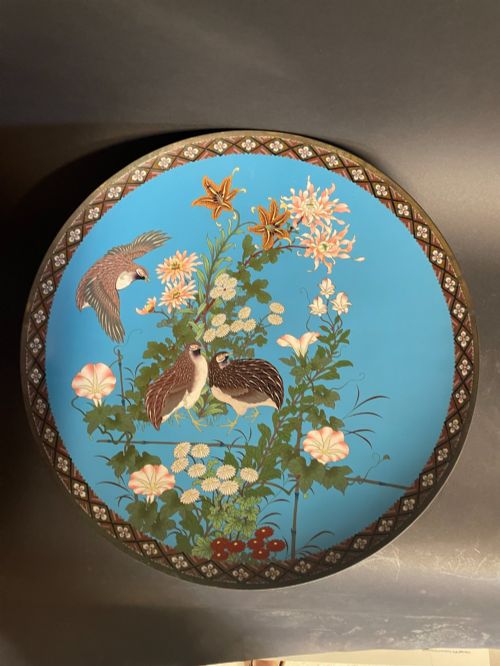
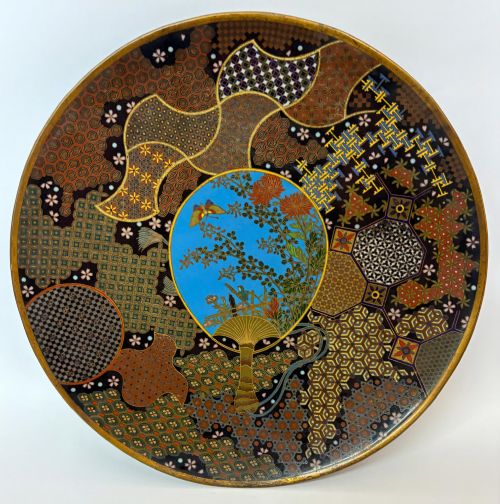
A blue enamel decorative plate is typically a charger, tray, or shallow dish originating from the nineteenth century, with strong representation from the Meiji and Edo periods of Japan. These objects serve primarily for display, taking the form of large chargers, medium plates, and plaques.
The version most commonly encountered on this page is the Japanese cloisonne plate or charger, often featuring detailed motifs of birds, dragons, koi, and botanical subjects rendered in deep blue enamel grounds. Pieces span from the eighteenth century through to 1900, incorporating porcelain and ironstone alongside traditional metalwork.
Materials and construction methods
Makers formed these plates using a metal base of copper, brass, or bronze, shaping them into deep chargers and shallow dishes. Wire made of brass or silver was bent and soldered onto the metal body to outline distinct cells, known as cloisons.
Enamel paste filled these compartments before firing in a kiln, a process repeated to build depth and smoothness. Porcelain and ironstone examples relied on ceramic potting and glazing traditions, finished with painted underglaze and overglaze enamel decoration.
A solitary frog shares space with chrysanthemums and butterflies on a nineteenth-century charger.
Distinctions in craftsmanship
Quality rests in the precision of the wirework and the control of the enamel during firing. Finer plates display microscopic cell work forming complex pictorial scenes such as landscapes, figures, and fauna without distortion in the glass paste.
Scale and ambition separate standard decorative wares from masterworks, with larger chargers measuring up to fifty centimetres requiring exceptional technical skill to prevent warping and cracking in the kiln. Signed pieces and those originating from prominent workshops demonstrate superior handling of perspective and colour gradation.
Kinkozan·Mason
The Blue Enamel Decorative Plate Glossary
- Cloisonne
- A decorative metalwork technique where fine wire is soldered to a metal body to create compartments that hold enamel paste. The piece is then fired and polished to a smooth finish.
- Charger
- A large decorative plate or dish, typically exceeding thirty centimetres in diameter, designed for display on a wall or sideboard rather than for serving food.
- Meiji Period
- The era in Japanese history lasting from 1868 to 1912, noted for a flourishing of decorative arts and international export of high-grade metalwork and ceramics.
- Imari
- A style of Japanese porcelain featuring distinct underglaze blue and overglaze iron red, gold, and secondary colours.
- Edo Period
- The period in Japanese history spanning from 1603 to 1867, preceding the Meiji era and encompassing foundational works in enamel and ceramics.
Blue Enamel Decorative Plate: Frequently Asked Questions
How do I hang a heavy charger safely?
Large chargers require robust, adjustable wire display hangers that distribute the weight evenly across the rim without putting pressure on the enamel surface. Ensure the wall fixing is secured directly into a stud or uses a heavy-duty anchor.
For very large pieces exceeding forty centimetres, a dedicated wall bracket or shallow wooden display ledge provides superior physical support compared to standard spring clips alone.
Can these plates be used for food?
These decorative plates and chargers are intended strictly for display and visual appreciation rather than culinary use. The materials and historical manufacturing techniques mean they are unsuited for contact with wet or acidic foods.
Using them as tableware risks scratching the delicate enamel surfaces and exposing the underlying copper, brass, or bronze body to moisture and tarnishing.
How should I clean my enamel plate?
Dust the surface regularly with a soft, dry microfibre cloth to prevent the accumulation of particles in the wire cells. Avoid chemical cleaners, abrasive cloths, and immersion in water, which can damage the metal and enamel.
If the piece requires deeper cleaning, consult a specialist conservator to avoid stripping the aged patina from the copper, brass, or bronze elements.