

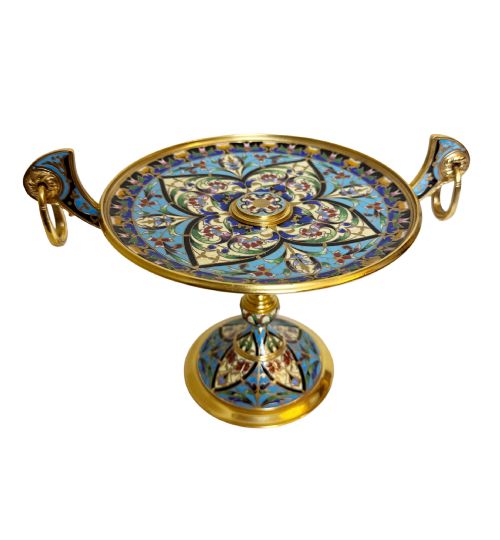
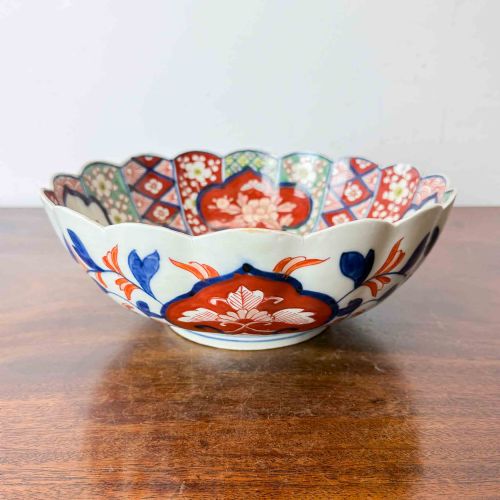


Blue Enamel Centerpiece Bowl
A blue enamel centerpiece bowl anchors a dining table or sideboard with colour and presence, drawing the eye through rich cobalt motifs and lustrous metalwork.
Blue Enamel Centerpiece Bowl
The objects originate from distinct design traditions, including French Belle Epoque works, Arts and Crafts creations, and Japanese Meiji period pieces. French examples often pair champleve enamel and ormolu with onyx, whilst Japanese pieces showcase intricate cloisonne work depicting birds and peonies. Chinese export items contribute hand-painted cobalt blue porcelain bowls and heavy bronze vessels to the grouping.
How they were made
The construction of these vessels relies on the fusion of vitreous enamel to metal bases such as copper, bronze, and brass, often finished with gilt bronze or ormolu mounts. Cloisonne and champleve techniques require precise wirework or excavated channels to hold coloured glass pastes before firing and polishing. Porcelain pieces utilise traditional throwing and hand-painting methods, applying cobalt blue motifs beneath or over the glaze before high-temperature kiln firing.
Support structures incorporate carved natural stone elements like onyx alongside cast metal pedestals and scalloped porcelain edges. Artisans combined metalwork, ceramic production, and enamel glazing to achieve durable and visually rich decorative objects intended for formal display.
Blue Enamel Centerpiece Bowl Retail Price Guide 2026
Typical asking prices for blue enamel centerpiece bowl among the pieces listed under this phrase on Sellingantiques today, from the lower quarter to the upper quarter. They describe what is for sale here now, not the wider market.
Materials recur across copper, porcelain, onyx, and bronze, paired with champleve and cloisonne enamelling techniques.
What varies in quality
The refinement of the enamel work dictates much of the visual success of a piece, distinguishing meticulous cloisonne cells and smooth champleve surfaces from simpler applications. The weight and casting quality of the supporting ormolu, gilt bronze, or copper mounts reveal the level of craftsmanship invested in the frame. Hand-painted ceramic elements show variation in the depth of cobalt blue pigments and the precision of the brushwork across the surface.
The integration of mixed materials, such as the fitting of onyx bases or the alignment of scalloped porcelain edges, indicates the maker's technical skill. Pieces that balance substantial metal framing with crisp enamel detailing demonstrate superior execution across all periods represented.
The Blue Enamel Centerpiece Bowl Glossary
- Champleve enamel
- An enamelling technique where troughs or cells are carved or etched into the surface of a metal object and filled with vitreous enamel paste before firing. This method creates bold fields of colour bounded by raised metal lines.
- Cloisonne
- A decorative work in which enamel, glass, or gemstones are separated by strips of flattened wire placed upright on a metal backing. The resulting compartments are filled with coloured paste and fired.
- Ormolu
- A golden-coloured alloy of copper, zinc, and sometimes tin used as a surface finish for furniture mounts and decorative objects. It provides a rich metallic lustre similar to high-grade gold gilding.
- Tazza
- A shallow bowl or saucer mounted on a stem and foot, designed for serving or display. These pieces elevate the central vessel above the table surface.
- Imari porcelain
- A style of Japanese export porcelain characterised by underglaze blue and overglaze red, gold, and other colours. It gained significant popularity in European interiors during the nineteenth century.
Blue Enamel Centerpiece Bowl: Frequently Asked Questions
How are these bowls cleaned?
Dusting with a dry, soft cloth is generally sufficient to maintain the surface without risking the enamel or metal mounts.
Moisture and harsh cleaning agents should be avoided to protect exposed copper, bronze, and delicate ceramic glazes.
Can I use them for food?
Most antique decorative bowls are intended for display rather than culinary service due to the age of the materials and potential lead content in older enamels.
Utilising them as dry display pieces preserves the interior decoration and structural integrity.
How do I date an enamel bowl?
Dating relies on stylistic markers, such as the characteristic motifs of the Meiji period or the ornamental mounts of the French Belle Epoque.
Material combinations and manufacturing techniques also provide clues to whether a piece originates from the late nineteenth century or the early twentieth century.
Where should I place a centerpiece?
These vessels suit dining tables, sideboards, or open console surfaces where their colour and form can be viewed from multiple angles.
Placing them away from direct, harsh sunlight prevents the fading of delicate enamel hues over time.