

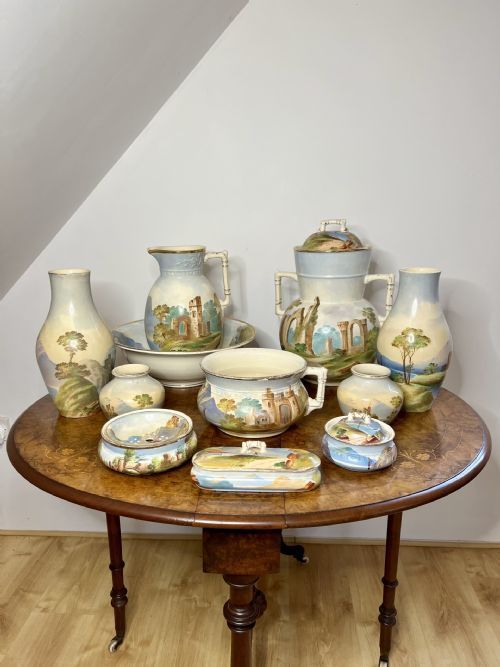


Blue Earthenware Basin
A blue earthenware basin brings utilitarian utility and striking blue decoration to a room, ranging from early tin-glazed vessels to large footbaths.
Blue Earthenware Basin
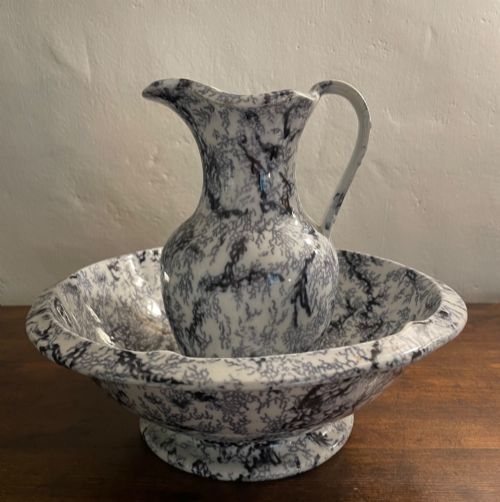
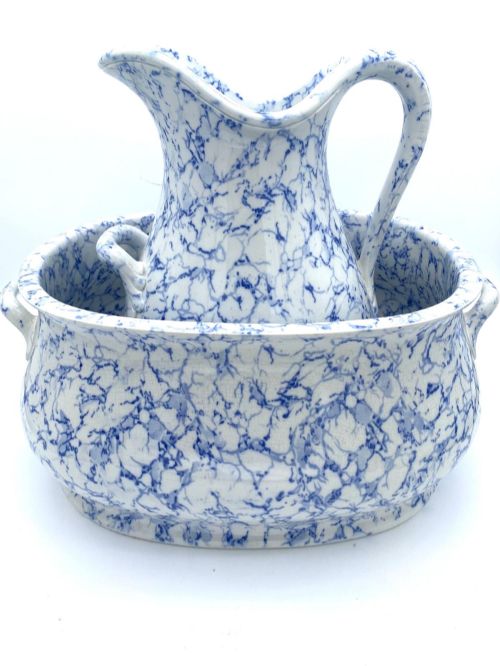
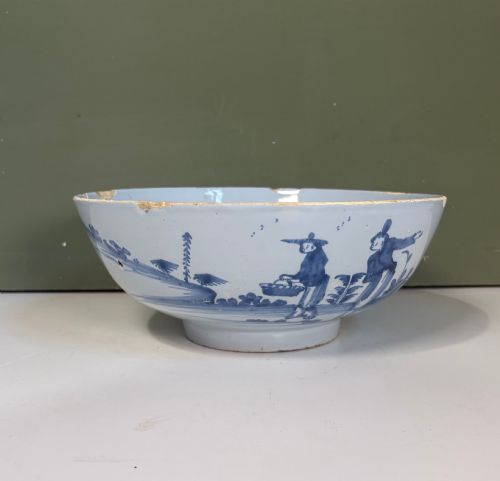
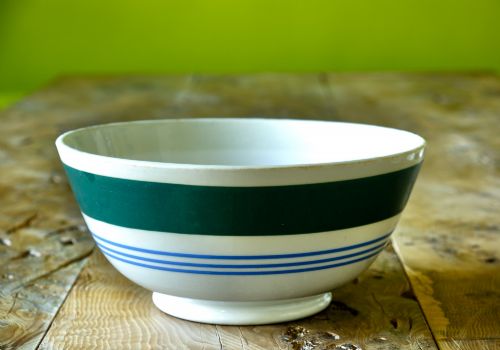
A blue earthenware basin encompasses a variety of ceramic vessels, including large footbaths, toilet basins, mixing bowls, and wash set components. Buyers searching for a blue earthenware basin encounter pieces ranging from eighteenth-century delftware to nineteenth-century Staffordshire transferware and Edwardian wash sets.
The selection includes specialised forms such as footbaths, liners, and mess bowls, alongside traditional wash set basins. Many items originate from nineteenth-century English potteries, supplemented by continental faience and Japanese export ware.
Most examples display blue and white transfer printing, flow blue decoration, or tin glazing. These pieces serve decorative display functions or retain their original utilitarian forms for washing and mixing.
How they were made
Potters shaped these vessels using earthenware clay bodies, applying glazes that include tin glaze, standard ceramic glaze, and pearlware finishes. Many nineteenth-century items utilise transfer printing techniques to transfer intricate blue patterns onto the ceramic surface before firing.
Certain vessels incorporate hand-painted details or embellishments such as enamel and gold leaf. Firing took place in traditional kilns, resulting in variations in glaze coverage and pigment spread characteristic of period earthenware production.
Listings feature earthenware basins from the eighteenth, nineteenth, and twentieth centuries, incorporating tin glaze, pearlware, and transfer-printed decoration.
What varies in quality
Quality in a blue earthenware basin relates to the crispness of the transfer print and the depth of the blue pigment. Potteries such as Minton and Ridgway achieved particularly sharp detail and well-balanced forms.
The weight, wall thickness, and presence of specialist decoration like gold leaf or enamel distinguish standard utilitarian kitchen or washware from monumental footbaths and exhibition pieces. Preservation of the glaze surface and clarity of pattern execution determine the distinction between ordinary and exceptional examples.
Minton·T G Green Pottery·Ridgway·Heathcote·Spode·Kinkozan Kyoto
The Blue Earthenware Basin Glossary
- Earthenware
- Porous pottery fired at lower temperatures than stoneware or porcelain. It requires a glaze to become impermeable to water.
- Flow Blue
- A nineteenth-century transfer printing style where the cobalt blue pigment intentionally blurred into the white glaze during firing.
- Tin Glaze
- An opaque white glaze containing tin oxide, used on delftware and faience to provide a smooth surface for painting.
- Footbath
- A large, deep basin designed for washing feet, often fitted with handles and produced in substantial earthenware formats.
- Transferware
- Pottery decorated by pressing a printed paper design from an engraved copper plate onto the unglazed or bisque ceramic body.
Blue Earthenware Basin: Frequently Asked Questions
What was a blue earthenware basin used for?
These basins served diverse domestic and institutional functions, ranging from personal washing in bedrooms to food preparation and large-scale bathing.
Footbaths accommodated washing needs in substantial households, while smaller bowls functioned as mess gear or general kitchen mixing vessels.
How do I date a blue earthenware basin?
Dating relies on examining the ceramic body, glaze characteristics, and decorative style, such as transfer printing or tin glazing.
Maker marks, registration numbers, and stylistic cues from periods like the Georgian or Victorian eras provide precise chronological markers.
Are these basins safe for daily use?
Historic earthenware requires careful handling due to the porous nature of older ceramic bodies and potential fragility in the glaze.
Most buyers choose to display these pieces rather than use them for active food preparation or daily washing.