
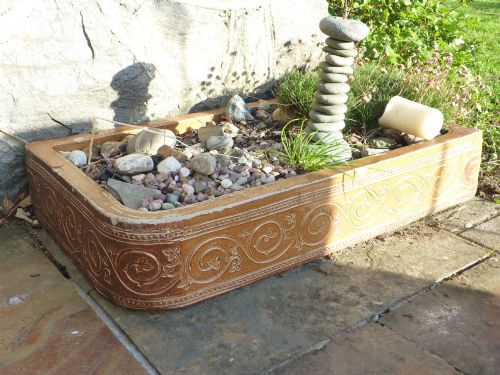


Antique Ceramic Trough Planter
An antique ceramic trough planter brings organic form and historic weight to a room, holding greenery with quiet utility.
Antique Ceramic Trough Planter
An antique ceramic trough planter serves primarily as a vessel for botanical displays, taking elongated rectangular or oval shapes designed for windowsills, tables, or garden walls. When you search for an antique ceramic trough planter, you encounter pieces spanning the eighteenth century through to the early twentieth century, taking forms from salt-glazed stoneware to delicate porcelain.
The objects listed range from French salt-glazed window troughs and Scottish majolica-taste jardinières to Chinese export porcelain and Arts and Crafts bonsai planters. These vessels function equally well housing indoor ferns or standing alone as centrepieces, reflecting the domestic and horticultural tastes of periods like the Victorian era and the Arts and Crafts movement.
Materials and construction methods
Potters shaped these troughs using earthenware, porcelain, and stoneware, often applying rich glazes or salt-glazing techniques to seal the porous clay. Surface decoration frequently involved hand-painted enamels, gilding with gold leaf, or moulded relief work characteristic of styles such as French Art Nouveau, Rococo Revival, and Italian Renaissance Revival.
Larger utility vessels like garden pancheons and heavy troughs required robust firing to withstand damp conditions, while decorative centrepiece bowls and export porcelain utilised refined pastes and detailed cobalt or Imari palettes.
Materials span porcelain, earthenware, salt-glazed stoneware, and enamel, alongside decorative applications of gold leaf.
Assessing quality and craftsmanship
Quality rests in the crispness of the moulded relief, the depth and stability of the glaze, and the preservation of hand-painted details. A superior piece displays controlled kiln work without excessive warping, alongside clean application of enamels or gold leaf.
The distinction between utilitarian garden vessels and high-status interior jardinières lies in the refinement of the ceramic body and the ambition of the stylistic ornament, whether following strict Georgian symmetry or fluid Art Nouveau lines.
Royal Doulton·Royal Dux
The Antique Ceramic Trough Planter Glossary
- Jardinière
- An ornamental pot or trough for holding plants or flowers. These large vessels often feature decorative glazed surfaces intended for interior display.
- Majolica
- A type of earthenware decorated with opaque coloured glazes over a calcareous clay body. This technique produced vivid green, brown, and ochre tones popular during the Victorian period.
- Salt-Glazed Stoneware
- Pottery finished by throwing common salt into the kiln during high-temperature firing, creating a durable textured surface resembling orange peel. This finish provided excellent weather resistance for early window troughs.
- Pancheon
- A broad, shallow earthenware vessel traditionally used in dairies or domestic work. In horticultural contexts, these robust circular pans served as wide planters.
- Chinoiserie
- European artistic style reflecting Chinese motifs and techniques, frequently seen on export porcelain bowls and troughs from the eighteenth century.
Antique Ceramic Trough Planter: Frequently Asked Questions
What plants suit an antique trough?
Shade-loving ferns, succulents, and small potted arrangements fit well within the shallow confines of these troughs. Placing a plastic or metal liner inside protects the historic ceramic from moisture damage.
Heavier salt-glazed or earthenware troughs accommodate small evergreens and bonsai trees, particularly pieces associated with the Arts and Crafts movement.
How do I date these planters?
Dating relies on stylistic clues, paste composition, and factory marks where present. Pieces exhibiting floral enamels and Imari palettes often point to eighteenth-century export traditions.
Victorian and Edwardian examples frequently display moulded majolica glazes or distinct model numbers corresponding to late nineteenth-century production records.
Can I use them outdoors?
Salt-glazed stoneware and heavy utility pancheons handle outdoor environments well due to their dense, vitrified bodies. These fired clays withstand regular watering and moderate weather conditions.
Porcelain and fine majolica pieces benefit from indoor placement, as frost and extreme temperature shifts risk cracking historic glazes and delicate bodies.
How were footbaths repurposed?
Large ceramic footbaths found new life as deep planter troughs and garden centrepieces due to their generous oval proportions and watertight glazes. Makers originally designed them for personal hygiene in Georgian and Victorian households.
Their substantial handles and decorative rims made them ideal for displaying trailing foliage and heavy floral arrangements once retired from washing duties.