




Blue Dress Watercolour Portrait
A blue dress watercolour portrait captures a subject in fine pigment on paper, prized for intimate detail and delicate colour.
Blue Dress Watercolour Portrait
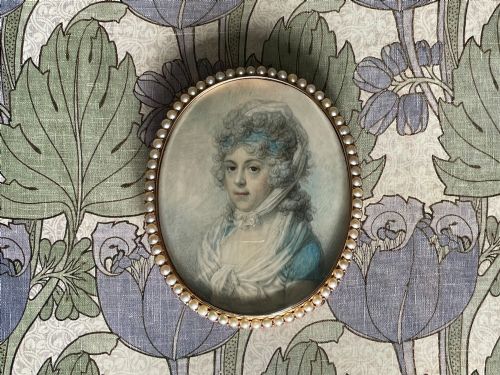
A blue dress watercolour portrait brings together delicate painting on paper and intimate miniature or cabinet formats. These works span the eighteenth century, the Regency era, the Victorian period, and into the Edwardian years.
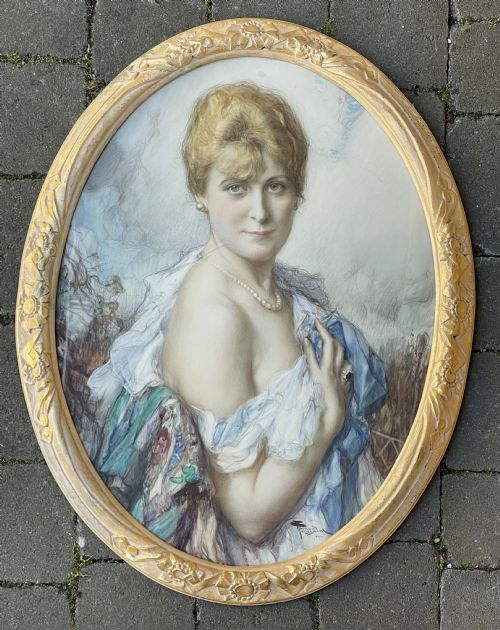
The subjects range from children and young girls in sashes to ladies in costume and historical figures like Queen Victoria. Miniature paintings and framed works show subjects dressed in distinct blues, often preserved behind glass in period frames.
Collectors encounter pieces produced across British, French, and Belgian schools, reflecting changing portraiture conventions from the Georgian era through to the early twentieth century.
Materials and technique
Finished works received protection beneath glass and were housed in frames constructed from gilt metal, giltwood, maple, or ebonised wood. Many miniatures incorporated gold elements within the painted surface or the surrounding mount.
Several portraits capture sitters posing alongside King Charles spaniels and tethered ponies.
Distinctions in quality
The standard of a portrait rests upon the precision of the facial likeness and the fluency of the brushwork in capturing fabric and expression. Finer examples display meticulous control over pigment density, achieving depth in the fabric of a blue dress.
The integrity of the original housing also influences the piece, with period frames of gilt metal, maple, or ebonised wood preserving the work as intended by the maker.
Richard Cosway·William Egley·Susie Lassam·Fernand Toussaint·Robert Kemp·Charles Edward Wilson·Frederick Tayler·Elisabeth Vigee Le Brun·William Lee Hankey·Alexander Melville
The Blue Dress Watercolour Portrait Glossary
- Watercolour pigment
- The finely ground colour medium mixed with a water-soluble binder used on paper supports. This material allows for translucent layers.
- Portrait miniature
- A small-scale painting executed with intense detail, often housed in a protective case or frame. These works were historically kept as personal mementoes.
- Giltwood
- Wood that has been coated with a thin layer of gold leaf or gilt finish. This framing material provides a decorative border for works on paper.
- Ebonised frame
- Wood treated to imitate the dark, dense appearance of ebony. These dark frames offer a distinct contrast to nineteenth-century works.
Blue Dress Watercolour Portrait: Frequently Asked Questions
What periods do these portraits come from?
The available works span the eighteenth century, the Regency period, the Victorian era, and the Edwardian years. Painters produced these watercolours across diverse European schools.
Dates range from the seventeen-fifties through to the early twentieth century, encompassing Georgian, Regency, and Belle Epoque styles.
How were these portraits framed historically?
Makers housed these works in a variety of surrounds, including gilt metal cases, maple wood frames, and ebonised timber mouldings. Many incorporated glass to protect the delicate pigment on paper.
Miniatures often featured small formats designed to sit on a desk or hang closely on a wall, while larger watercolours utilised traditional wooden framing.
How do I identify a portrait miniature?
A portrait miniature is defined by its small scale, meticulous brushwork, and intimate subject matter. These pieces focus closely on the sitter, often depicting head and shoulder profiles.
Artists utilised fine watercolours on paper, frequently sealed behind glass with gilt metal mounts or small wooden frames.
Where were these artists working?
The creators of these works include British, French, and Belgian artists active in portraiture and genre scenes. Painters exhibited in major centres and worked within established artistic circles.
Signatures and attributions link pieces to notable figures such as Richard Cosway, William Egley, and Fernand Toussaint.