



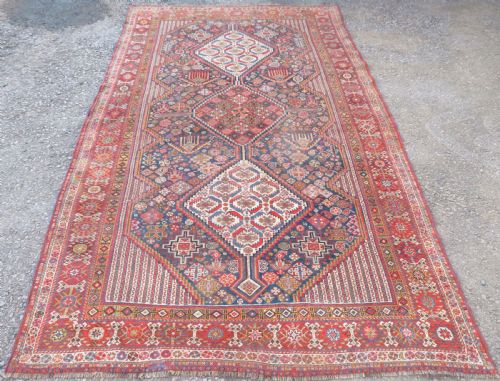


Blue Diamond Medallion Rug
A blue diamond medallion rug brings tribal geometry and saturated dyes to a floor, offering durable wool construction.
Blue Diamond Medallion Rug
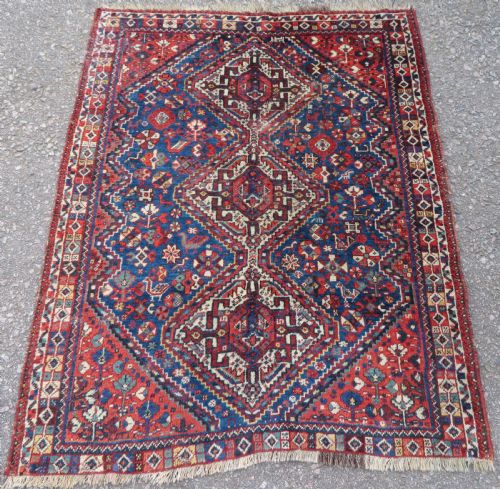
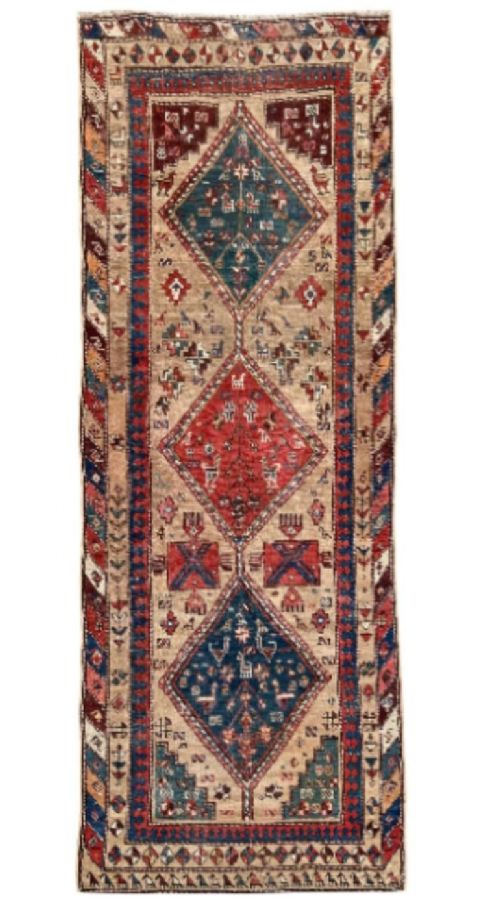
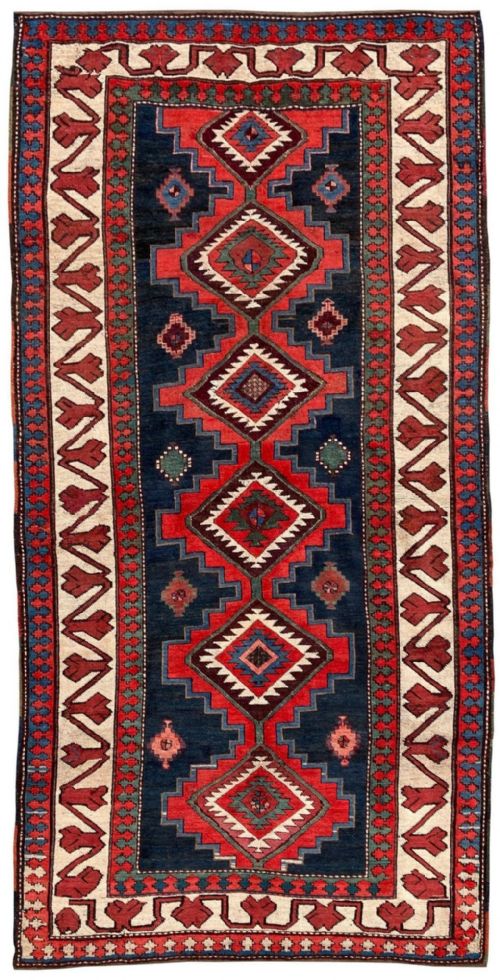
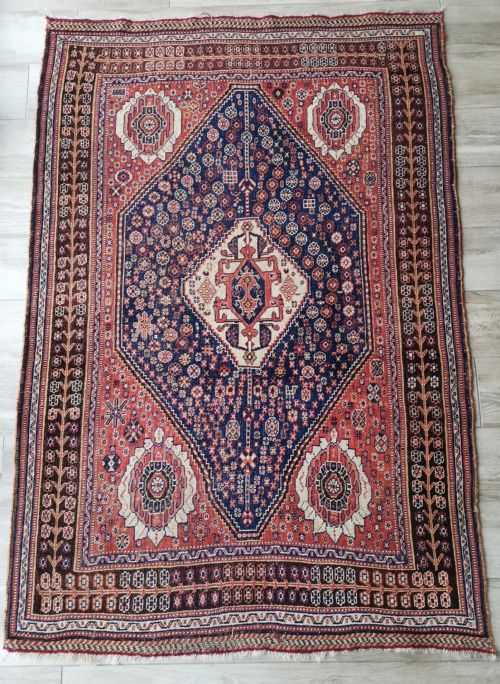
A blue diamond medallion rug centres its design on a prominent central geometric motif executed in various shades of blue. These floor coverings emerge from Persian, Caucasian, and Anatolian weaving traditions spanning the nineteenth and twentieth centuries.
Buyers encounter formats ranging from square area rugs to long runners and large tribal carpets. The listings here comprise pieces originating from workshops and nomadic groups across the Middle East.
Designs incorporate traditional motifs such as boteh, birds, and secondary medallions surrounding the primary focal point. Village weavers and nomadic tribes created these textiles for daily domestic use and ceremonial purposes.
Materials and construction methods
Weavers constructed these carpets using natural wool for the pile and foundation yarns, sometimes supplemented by cotton foundations in specific regional types. Hand-spun wool absorbs natural dyestuffs deeply, creating rich colour variations across the surface.
Tightly knotted pile constructions give these floor coverings durability and resilience under foot traffic. Warp and weft threads interlace manually on vertical or horizontal looms set up in nomadic camps and village workshops.
Blue Diamond Medallion Rug Retail Price Guide 2026
Typical asking prices for blue diamond medallion rug among the pieces listed under this phrase on Sellingantiques today, from the lower quarter to the upper quarter. They describe what is for sale here now, not the wider market.
Nomadic weavers occasionally included small wandering chickens and peacocks among the geometric diamonds of their carpets.
Assessing quality in regional carpets
Knot density and structural tightness determine the crispness of the geometric diamond lines and the longevity of the pile. Finer knotting permits intricate detailing within the border systems and secondary motifs.
The complexity of the dye palette and the condition of the wool pile dictate the visual impact of the piece. Uniform wear and intact original selvedges indicate careful preservation over generations.
The Blue Diamond Medallion Rug Glossary
- Medallion
- A central ornamental design motif placed in the middle of the carpet field. It usually takes a geometric or floral shape.
- Runner
- A long, narrow carpet format designed for hallways, corridors, or alongside furniture. These pieces measure significantly longer than they are wide.
- Kilim
- A flat-weave carpet produced without a pile by tightly interweaving warp and weft strands. This technique creates a smooth, reversible textile.
- Boteh
- A traditional teardrop or paisley motif representing a floral spray or cypress tree. Weavers scatter these symbols throughout the field and borders.
- Selvedge
- The reinforced outer edge of a rug formed by wrapping lateral cords. This finish prevents the side threads from fraying.
Blue Diamond Medallion Rug: Frequently Asked Questions
Where were these carpets made?
These textiles originate from regions across Persia, the Caucasus, and Anatolia. Nomadic tribes and village communities produced them on traditional looms.
Specific weaving groups include the Qashqai, Khamseh, Kurdish, and Kazak weavers. Each group employed distinct colour palettes and border patterns.
How do I care for an old wool rug?
Vacuum the carpet gently using suction only, avoiding beater bars that can damage old wool pile. Keep the rug out of direct sunlight to prevent natural dyes from fading.
Rotate the piece periodically to ensure even wear across the surface. Professional cleaning by a specialist in antique textiles is recommended when necessary.
Are these rugs suitable for heavy traffic?
Wool possesses natural lanolin that resists dirt and provides high durability under normal foot traffic. Tightly knotted village and tribal rugs withstand daily domestic use remarkably well.
Placing a quality underlay beneath the carpet prevents slipping and reduces friction against hard floors. This simple step extends the working life of the textile.
How do I date an antique rug?
Dating relies on examining the wool quality, the chemical or natural composition of the dyes, and structural characteristics. Stylistic motifs and specific weave structures also point to particular decades.
Comparison with documented examples from nineteenth and twentieth-century traditions helps narrow down the period of manufacture. Natural dyes generally indicate production prior to the widespread adoption of synthetic colours.