
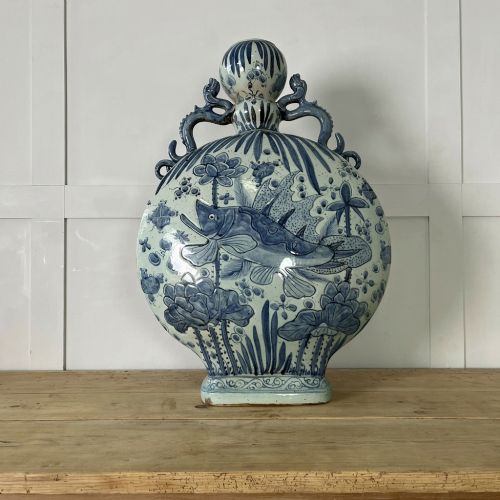


Blue Ceramic Bottle Vase
A blue ceramic bottle vase brings vibrant cobalt and crisp white into a room through centuries of global pottery traditions.
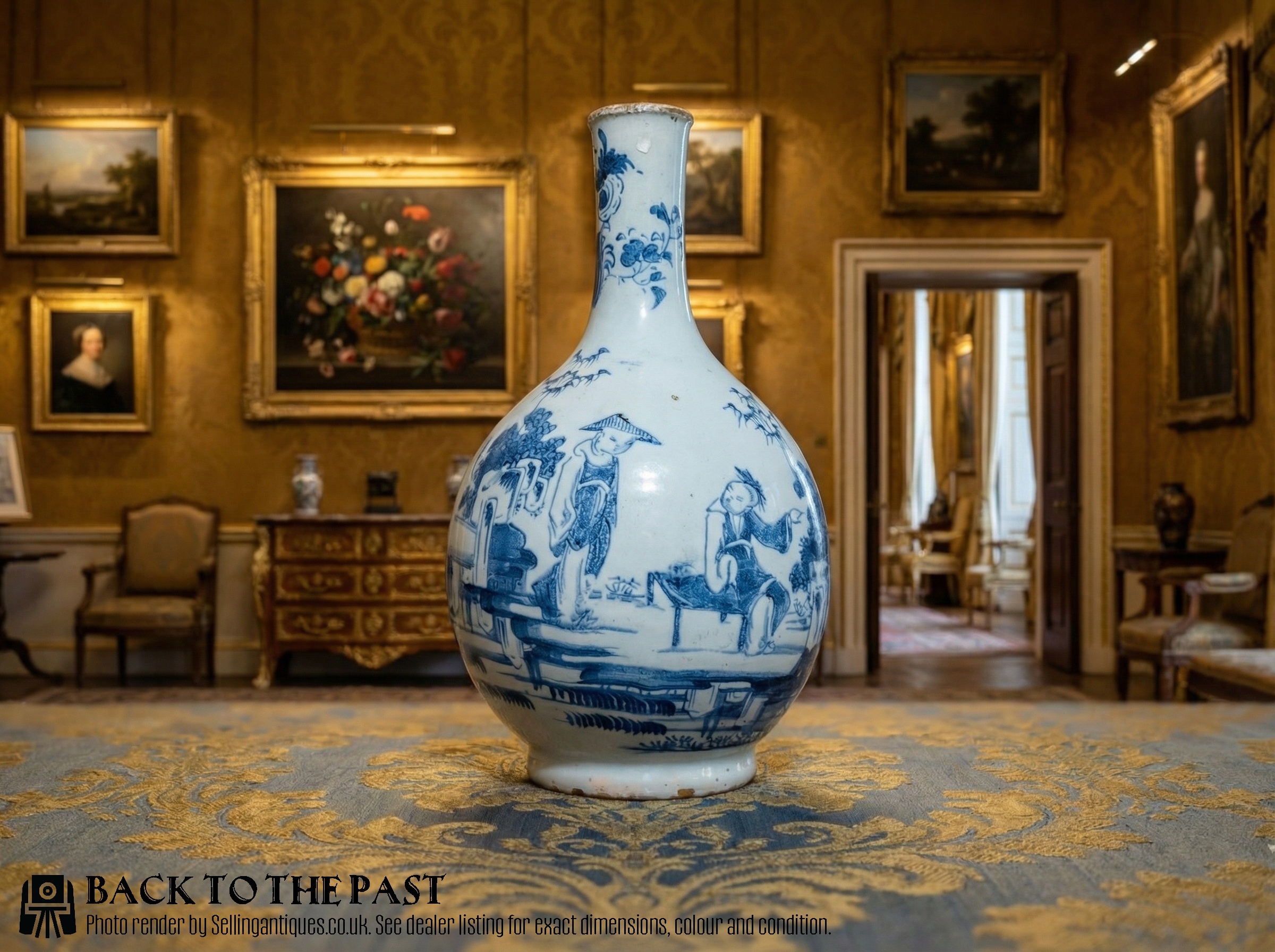
Blue Ceramic Bottle Vase
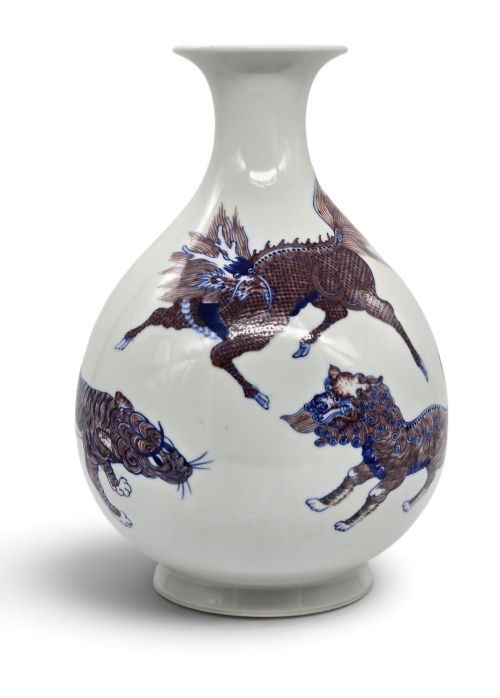
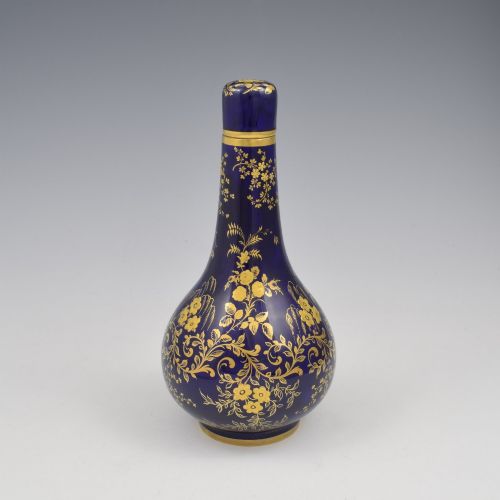
A blue ceramic bottle vase is a slender-necked vessel designed to hold single stems or stand alone as a decorative object. When you search for this phrase, you encounter forms ranging from miniature scent bottles and drug jars to substantial garniture sets and moon flasks.
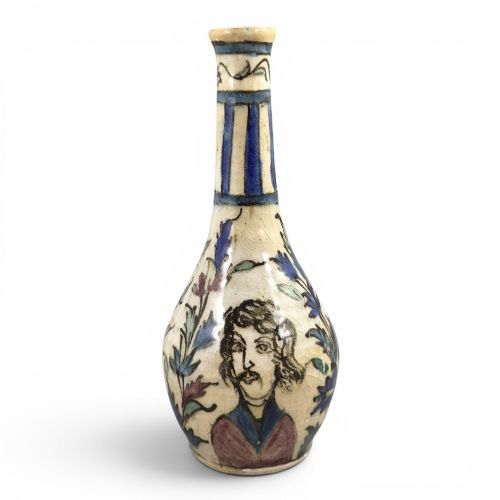
The pieces span periods from the seventeenth century through the 1930s, drawing on English, Dutch, Italian, Persian, and East Asian origins. The versions most commonly met on this page combine blue and white porcelain with cobalt glazes, tin-glazed earthenware, and intricate Japanese Imari patterns.
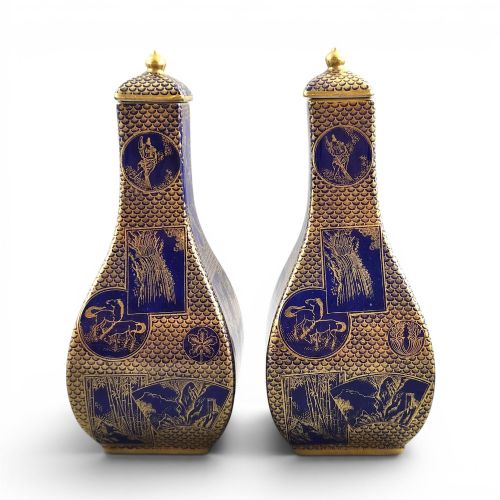
Forms vary from double-gourd silhouettes and garlic-mouth openings to traditional apothecary jars and slender wine bottles. Each object reflects the specific ceramic traditions of its maker, whether produced in Staffordshire, Delft, or the kilns of Arita and Jingdezhen.
How They Were Made
Makers shaped these vessels using ceramic, porcelain, ironstone, and earthenware, often applying a tin glaze or cobalt pigment directly to the clay body before firing. Many examples incorporate underglaze blue painting, sometimes accented with gold leaf, copper-red, or enamel details.
Techniques range from hand-thrown earthenware dipped in white opacified glaze to high-fired porcelain decorated with intricate dragons, floral motifs, and landscape scenes. Potters utilised specialised seals, cobalt washes, and incised carving to achieve the distinctive surface textures seen across the centuries.
Some nineteenth-century Chinese snuff bottles tucked away inside these listings conceal surprisingly vivid erotic paintings beneath their miniature exteriors.
What Varies in Quality
Quality rests upon the precision of the brushwork and the clarity of the cobalt pigment against the white ground. Finer examples display controlled underglaze painting, crisp potting, and well-balanced proportions that reveal the hand of a skilled artisan.
The depth of the glaze and the complexity of the decorative scheme distinguish standard production wares from exceptional pieces. Superior items maintain integrity in their form and glaze application, whether produced in European potteries or East Asian imperial kilns.
Derby Porcelain·Mason's Patent Ironstone·Crown Staffordshire·Doulton Lambeth·Flight Barr And Barr·Minton
The Blue Ceramic Bottle Vase Glossary
- Cobalt Glaze
- A deep blue mineral pigment applied to ceramics before firing to create rich, permanent blue decoration. It remains stable at high kiln temperatures.
- Tin-Glazed Earthenware
- Pottery coated with a lead glaze made opaque by the addition of tin oxide. This technique provides a white surface suitable for painted decoration.
- Imari
- A style of Japanese porcelain featuring underglaze blue and overglaze iron red, gold, and supplementary colours. The style originated in Arita and gained popularity in Europe.
- Garniture
- A set of three or more matching vases or jars designed to be displayed together on a mantelpiece or cabinet. These sets often combine different heights and cover variations.
- Albarello
- A type of majolica earthenware jar used by apothecaries to hold drugs and ointments. The waisted shape allowed pharmacists to grip the jar easily with hands wrapped in cloths.
Blue Ceramic Bottle Vase: Frequently Asked Questions
How do I date a blue ceramic bottle vase?
Dating relies on stylistic markers, clay bodies, glaze characteristics, and any reign marks or seals stamped on the base. Comparing the potting technique and pigment style to known examples helps narrow down the period.
Changes in ceramic technology and trade patterns across the seventeenth, eighteenth, and nineteenth centuries provide a reliable framework for establishing age.
Were these vases used for flowers?
While many bottle vases accommodated single stems or floral arrangements, others served entirely decorative or utilitarian purposes. Apothecary jars and snuff bottles held medicines and powders, while large garniture sets were purely ornamental.
The narrow necks of bottle vases naturally supported individual stems rather than large bouquets.
How should I display my bottle vase?
Display these vessels where adequate lighting highlights the depth of the cobalt glaze and the detail of the painted surface. Placing them on stable surfaces away from high-traffic edges ensures their safety.
Grouping pieces of varying heights or pairing them with complementary ceramics creates a balanced arrangement.
What is the difference between porcelain and earthenware?
Porcelain is fired at high temperatures using kaolin clay, resulting in a dense, non-porous body that often rings when struck. Earthenware is fired at lower temperatures, producing a more porous body that requires a glaze to hold liquids.
Tin-glazed earthenware and ironstone represent intermediate steps in ceramic development.