


Blue Cabinet Plate
When you search for a blue cabinet plate, you are looking at porcelain and ceramic display pieces decorated in cobalt and rich blue palettes intended for visual appreciation rather than daily dining.
Blue Cabinet Plate
A blue cabinet plate is a decorative ceramic or porcelain dish designed primarily for display on a sideboard, wall, or within a glazed cabinet rather than for practical table use. These pieces span centuries of production, appearing in diverse regional traditions from traditional English factories to continental European porcelain houses and Japanese workshops.
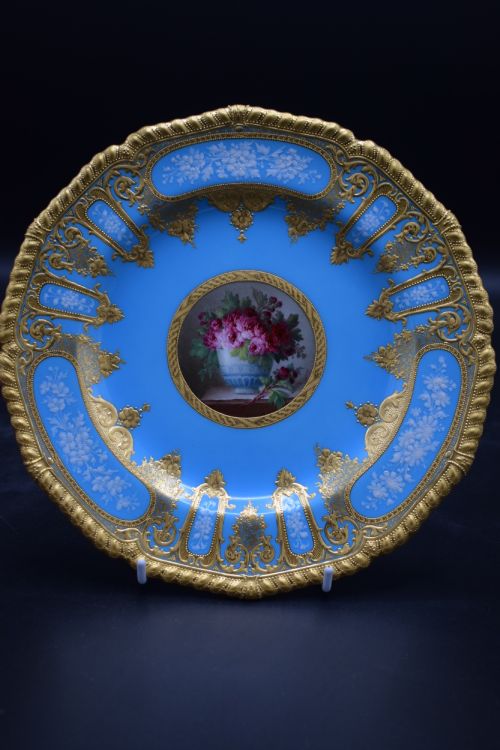
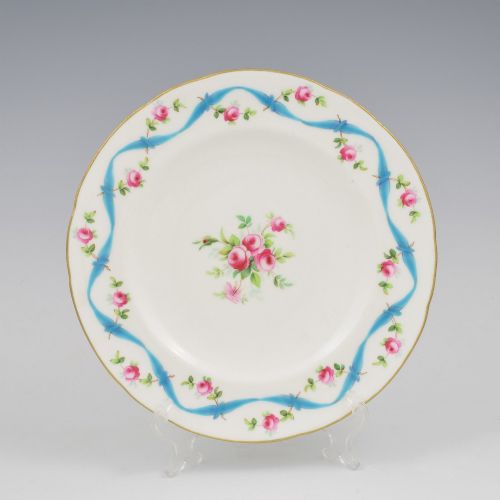
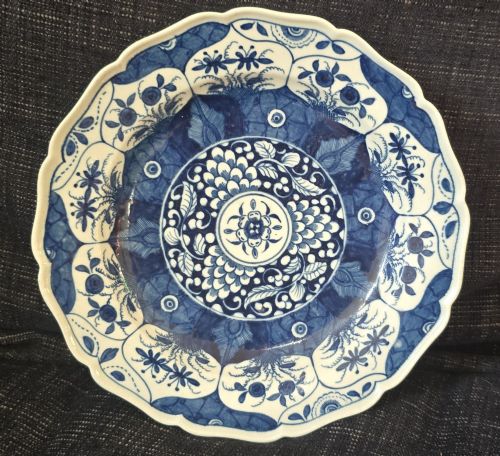
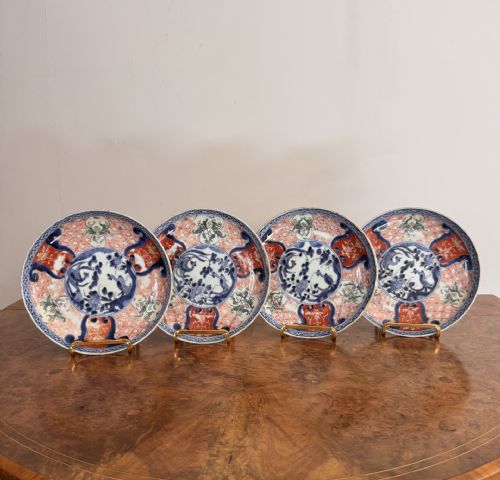
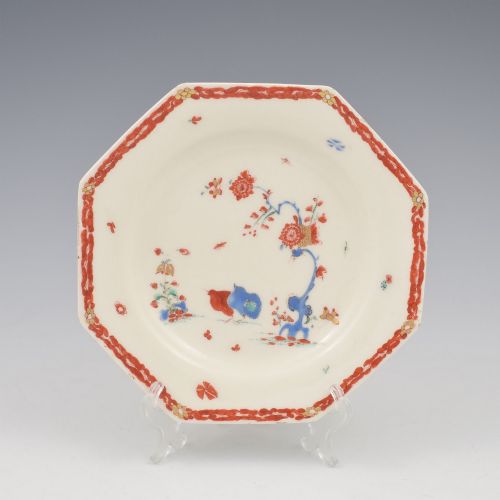
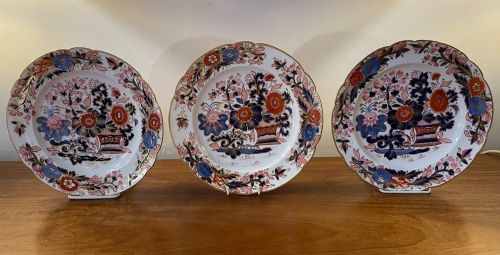
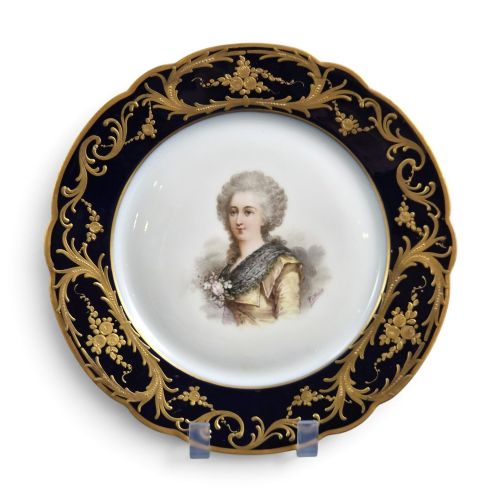
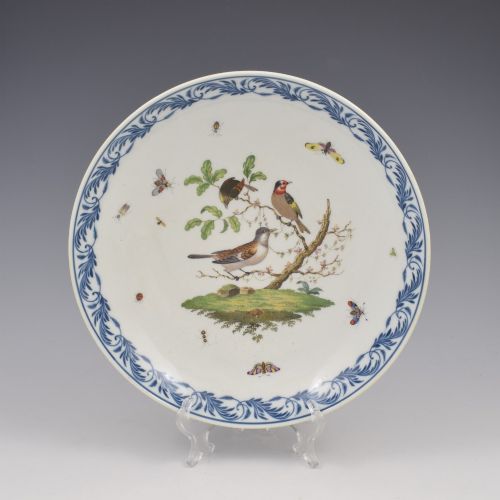
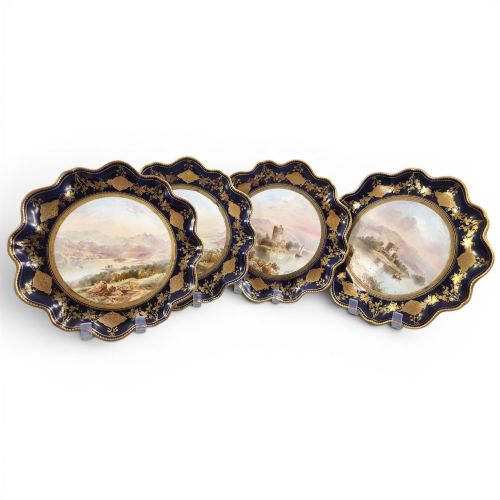
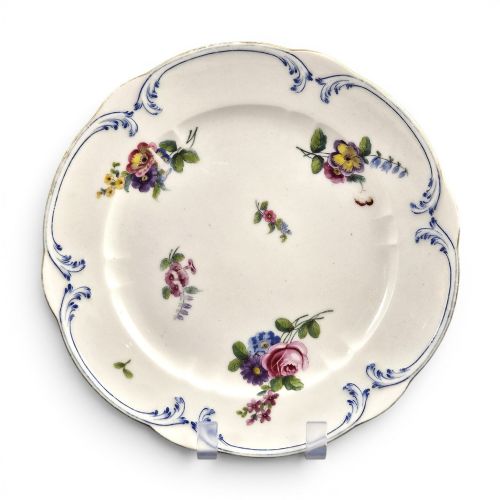
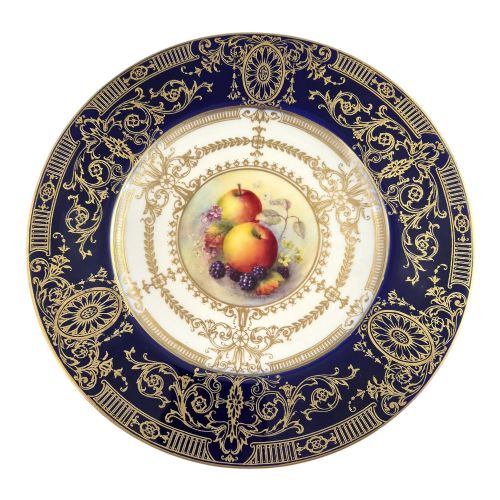
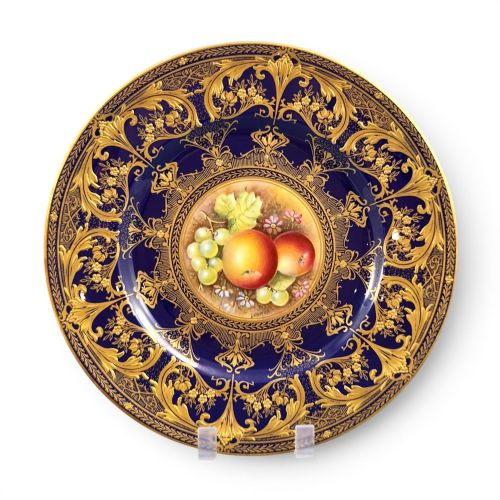
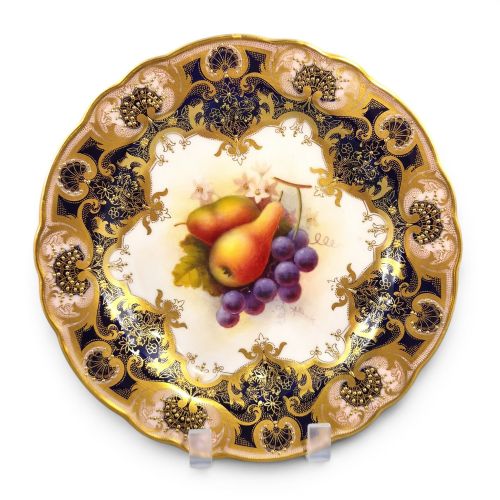
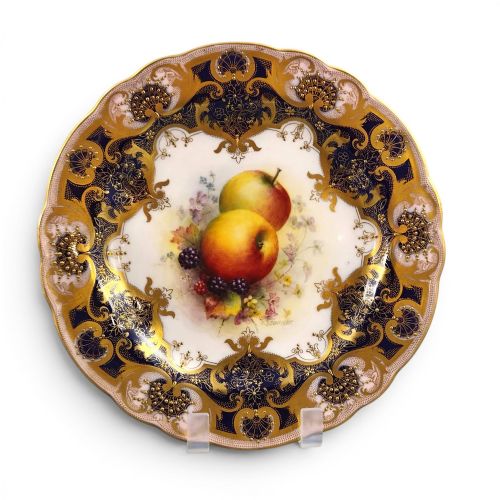
The objects on this page encompass various forms including shallow dessert dishes, octagonal plates, lobed serving dishes, and pictorial cabinet plates. Styles range from Georgian ironstone and Regency designs to Victorian interpretations, Japanese Imari patterns, and later twentieth-century painted fruit compositions.
Buyers seeking a blue cabinet plate encounter works featuring cobalt transfer prints, hand-painted botanical studies, armorial crests, and ornithological subjects. The predominant aesthetic relies on deep blue cobalt grounds, sometimes augmented with gilding or contrasting enamel highlights.
How they were made
Makers utilised fine porcelain, bone china, and ironstone as the ceramic body for these plates, shaping them either by throwing on a wheel or by pressing clay into moulds to achieve specific lobed, hexagonal, or octagonal geometries. The raw or biscuit ware received its primary decoration, often cobalt oxide painting applied directly to the porous body before glazing.
Glazing involved coating the decorated ceramic in a liquid glass mixture and firing it at high temperatures to vitrify the surface and fix the cobalt blue under the protective clear layer. Overglaze enamels and gold leaf or gilding were frequently added in subsequent, lower-temperature firing stages to introduce metallic lustre and secondary colours.
Blue Cabinet Plate Retail Price Guide 2026
Typical asking prices for blue cabinet plate among the pieces listed under this phrase on Sellingantiques today, from the lower quarter to the upper quarter. They describe what is for sale here now, not the wider market.
Listings feature porcelain, ironstone, and bone china enhanced with gold leaf, enamel, and glaze across the eighteenth, nineteenth, and twentieth centuries.
What varies in quality
Quality in a blue cabinet plate rests principally upon the precision and ambition of the decoration, distinguishing standard factory output from pieces painted by recognised studio artists. Hand-painted botanical studies, ornithological scenes, and named views demonstrate superior brushwork compared to mass-produced transfer-printed equivalents.
The crispness of the cobalt blue application and the integrity of any accompanying gilding or enamel work define the upper tier of production. Refinement in the porcelain body itself, visible in thinness, translucency, and the flawless execution of moulded forms like fluting or gadrooning, marks the difference between ordinary utilitarian wares and high-status cabinet pieces.
Royal Crown Derby·Royal Worcester·H and R Daniel·Coalport·John Davenport·Aynsley·Copeland·John Ridgway
The Blue Cabinet Plate Glossary
- Cobalt
- A metallic oxide used to produce a deep, stable blue colour on ceramics under high kiln temperatures. It remains the defining pigment for underglaze blue decoration across European and Asian porcelain.
- Imari
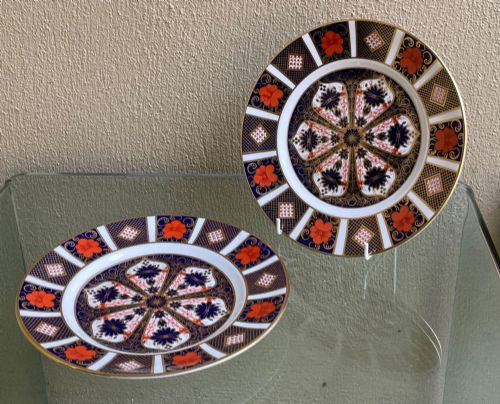
- A style of Japanese export porcelain characterised by a palette of cobalt blue, iron red, and gold. European factories frequently imitated these striking patterns on their own cabinet plates.
- Bone china
- A type of soft-paste porcelain incorporating bone ash, developed in England to create a whiter, more translucent body. It provided an ideal smooth surface for detailed hand-painted scenes.
- Armorial
- A ceramic design featuring a family crest, coat of arms, or heraldic badge. These plates were custom-ordered by landed families and prominent households.
- Enamel
- Opaque coloured glass fused to the surface of fired porcelain during a secondary low-temperature kiln run. It allowed makers to add vibrant secondary hues over the top of the glaze.
Blue Cabinet Plate: Frequently Asked Questions
What is a blue cabinet plate?
A blue cabinet plate is a decorative ceramic or porcelain dish made for display rather than dining. They were often produced to showcase the painting skill of a factory or individual artist.
These pieces typically feature cobalt blue as the dominant colour, sometimes enhanced with gold leaf or enamel details. Collectors prize them for their visual impact and craftsmanship.
Were these plates used for dining?
Most cabinet plates were created expressly for ornamental display on sideboards, walls, or inside glass-fronted furniture. Their intricate enamel work and delicate gilding made them unsuitable for everyday meals.
Some forms originated as part of larger dessert or dessert service sets meant for formal dining, but over time many survived precisely because they transitioned to display roles.
How do I identify the period?
Dating a blue cabinet plate involves examining the factory marks stamped or painted on the reverse, along with the characteristics of the ceramic body. Different eras favoured specific paste compositions, glaze tones, and decorative motifs.
Stylistic cues such as Regency shapes, Victorian floral arrangements, or Art Deco geometry also help narrow down the decade of manufacture.
What subjects appear on these plates?
Makers decorated these plates with a wide array of subjects including hand-painted fruit, botanical studies, and ornithological bird portraits. Named topographical views and armorial family crests were also common.
Japanese-influenced Imari patterns featuring cobalt blue and iron red are frequently encountered alongside classical European scenes and cobalt scale grounds.