




Blue Buttoned Armchair
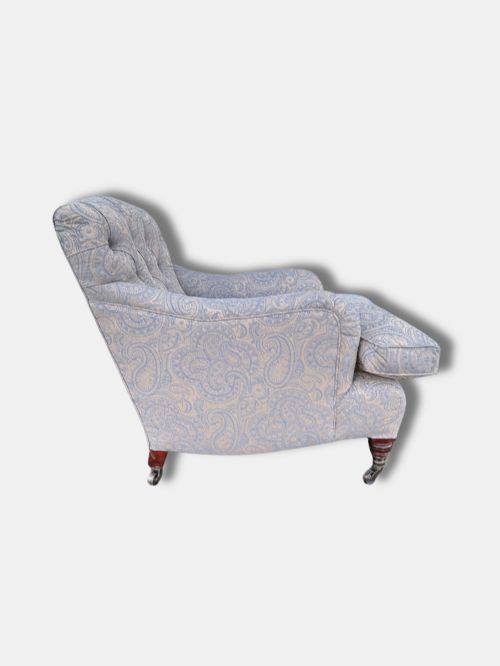
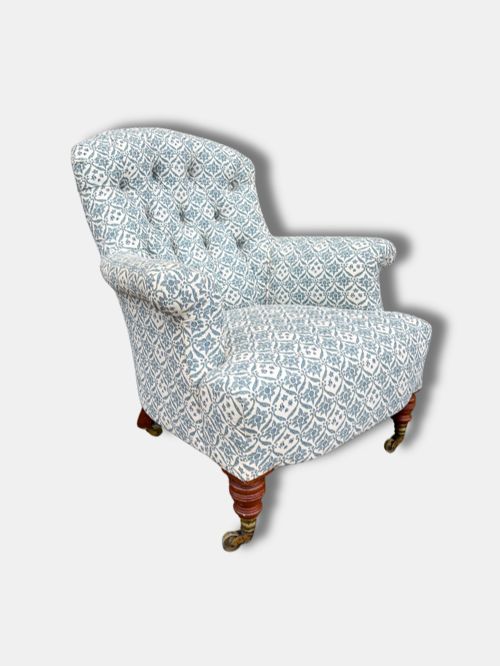
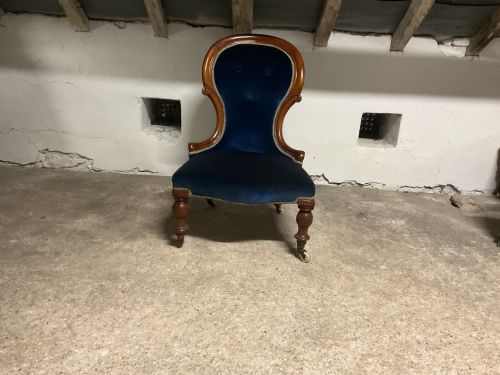
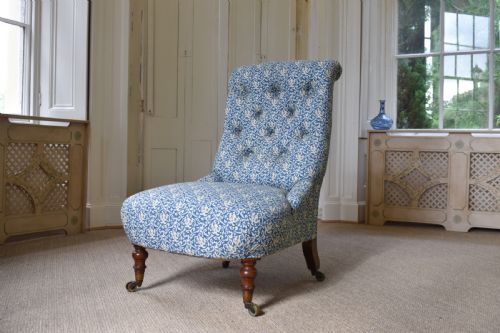
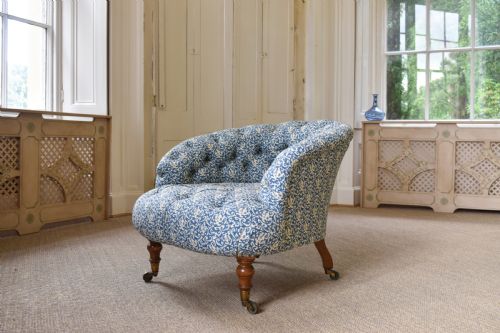
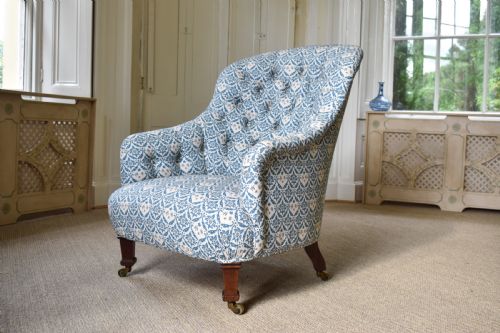
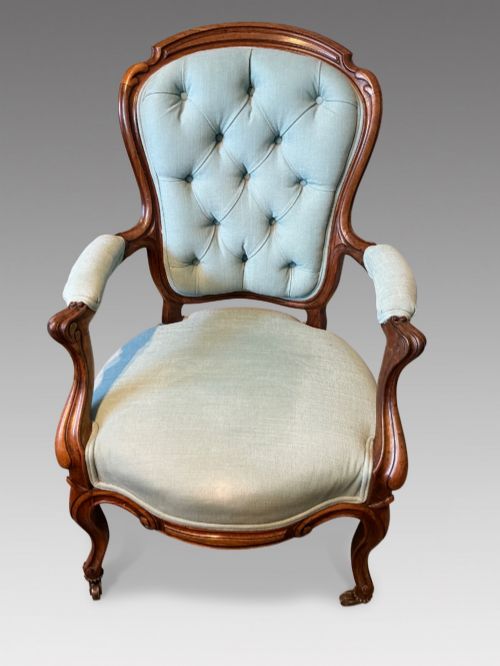
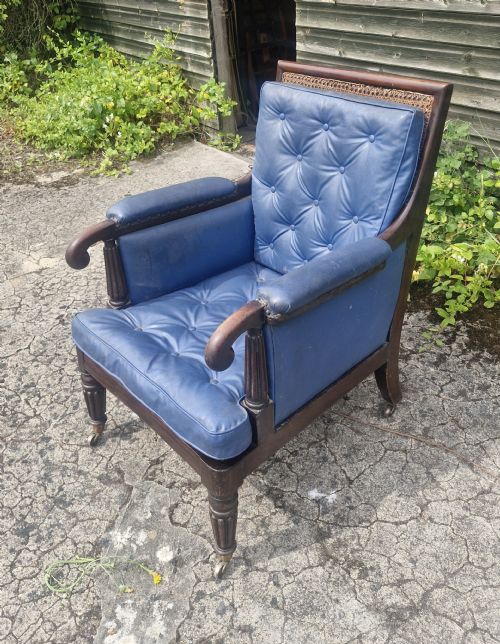
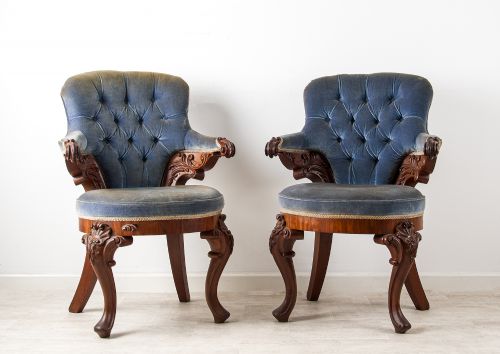
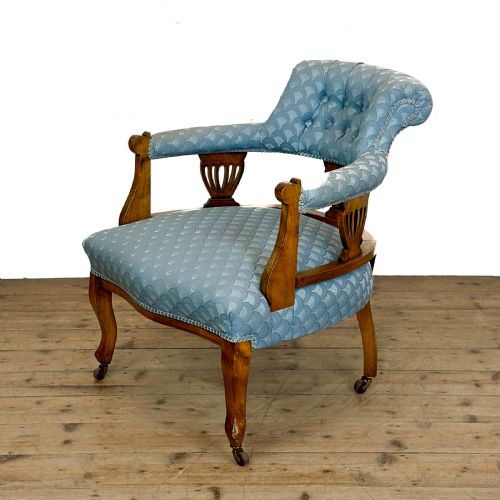
A blue buttoned armchair brings deep seat comfort and rich nineteenth century upholstery into a room.
Blue Buttoned Armchair
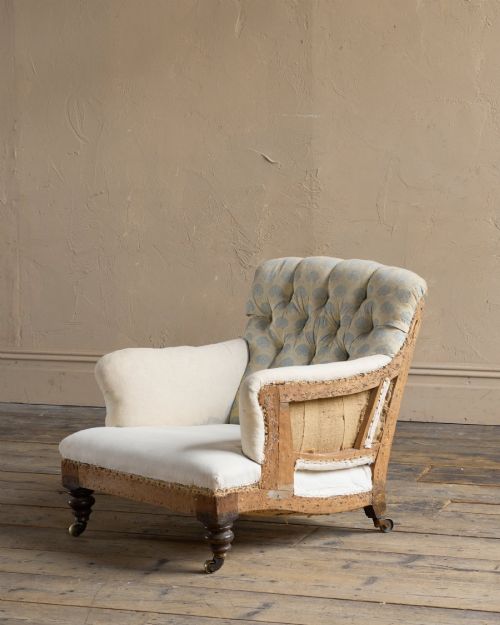
A blue buttoned armchair is a seated piece defined by tufted upholstery and low frames, spanning Victorian, Edwardian and Regency periods. The forms include low bedroom chairs, nursing chairs, slipper chairs, and library armchairs constructed in wood such as mahogany, walnut and rosewood.
Makers such as Howard & Sons and Gregory & Co produced significant examples during the nineteenth century. These pieces serve as functional fireside or lounge seating with distinct buttoned backs.
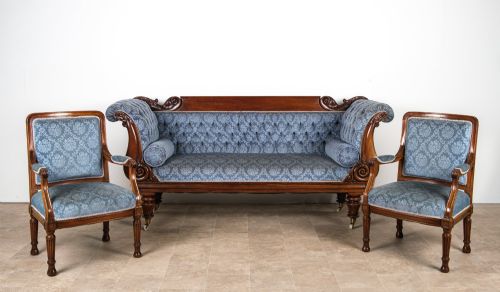
The prevalent variations on this page include nineteenth century button back armchairs, low fireside seats, and salon suites upholstered in blue fabrics, velvet, damask, and cotton.
Construction and materials
Frames are built from solid hardwoods including mahogany, walnut, rosewood, and ebonised bentwood, joined with traditional woodworking techniques. Brass components and iron supports appear in specific desk and library chairs.
Upholstery relies on heavy textile coverings such as velvet, damask, cotton, and traditional ticking. Deep buttoning secures the fabric to the internal padding to create the characteristic tufted surface.
Blue Buttoned Armchair Retail Price Guide 2026
Typical asking prices for blue buttoned armchair among the pieces listed under this phrase on Sellingantiques today, from the lower quarter to the upper quarter. They describe what is for sale here now, not the wider market.
Listings span the nineteenth century and Edwardian eras, utilising mahogany, walnut, rosewood, brass, and iron alongside velvet, damask, and cotton.
Factors of quality
Quality rests in the integrity of the hardwood frame and the precision of the carving on walnut and mahogany show-wood. Maker attribution, particularly to firms like Howard & Sons, elevates the standing of an armchair.
The execution of the buttoning and the choice of textile, from damask to velvet, mark the distinction between standard domestic seating and top tier library or salon pieces.
Howard & Sons·Gregory & Co
The Blue Buttoned Armchair Glossary
- Buttonback
- Upholstery pulled deep with buttons to form a diamond tufted pattern. This technique secures the internal stuffing and creates a textured surface.
- Bergere
- An enclosed wooden framed armchair with woven cane panels on the back and sides. It originated in France and appeared in nineteenth century British seating.
- Damask
- A reversible figured fabric woven on a jacquard loom with patterns formed by contrasting warps and wefts. It appears frequently on nineteenth century salon suites.
- Slipper chair
- A low-seated bedroom chair designed originally for ladies to wear their shoes in comfort. These pieces have short legs and deep seats.
- Ticking
- A strong, tightly woven cotton or linen fabric used traditionally as a durable undercover for upholstery. Howard & Sons often stamped their ticking with maker details.
Blue Buttoned Armchair: Frequently Asked Questions
What is a blue buttoned armchair?
A blue buttoned armchair is a nineteenth century or Edwardian seat featuring tufted upholstery in blue fabric, velvet, or damask. These pieces include low fireside chairs, library armchairs, and bedroom seats.
They combine wooden frames of mahogany, walnut, or rosewood with deep buttoning designed for comfort and reception rooms.
Who made these armchairs?
Notable makers recorded on this page include Howard & Sons and Gregory & Co. These firms produced chairs notable for deep upholstery and structural integrity.
Many other pieces originate from nineteenth century British workshops without recorded maker marks, reflecting period craftsmanship.
Where were these chairs used?
These chairs served multiple domestic spaces, from formal libraries and drawing rooms to private bedrooms and firesides. Low variants like nursing chairs and slipper chairs functioned in domestic chambers.
Heavier library and desk chairs suited studies and reading rooms where prolonged seating was required.
How do I identify the period?
Dating relies on stylistic markers, timber choices, and upholstery methods spanning the Regency, Victorian, and Edwardian eras. Mahogany and rosewood point to nineteenth century production.
Details such as ebonised bentwood, carved walnut frames, and specific maker stamps help place the armchair in its proper decade.