



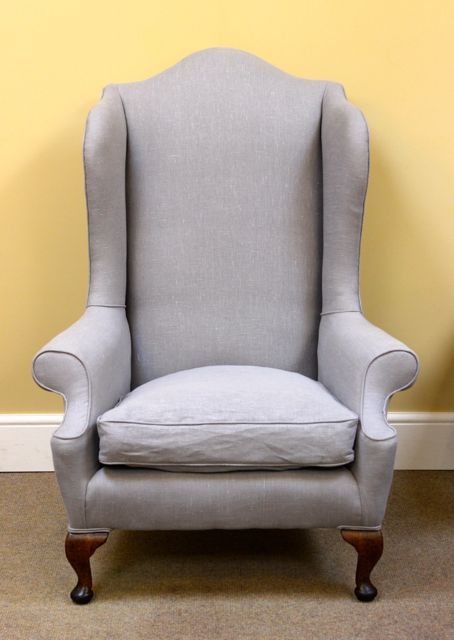

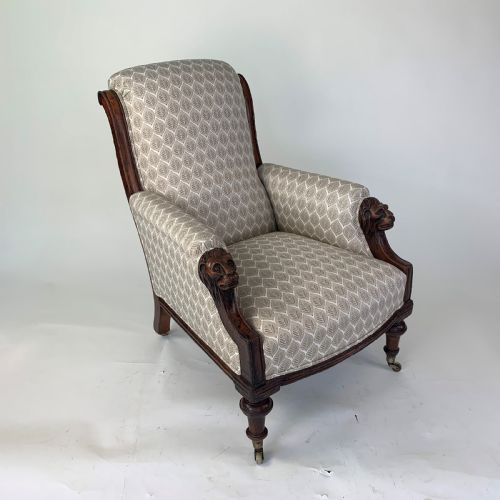
Late Victorian Lounge Chair
A late victorian lounge chair brings deep-buttoned comfort and rich wood frames into a sitting room.
Late Victorian Lounge Chair
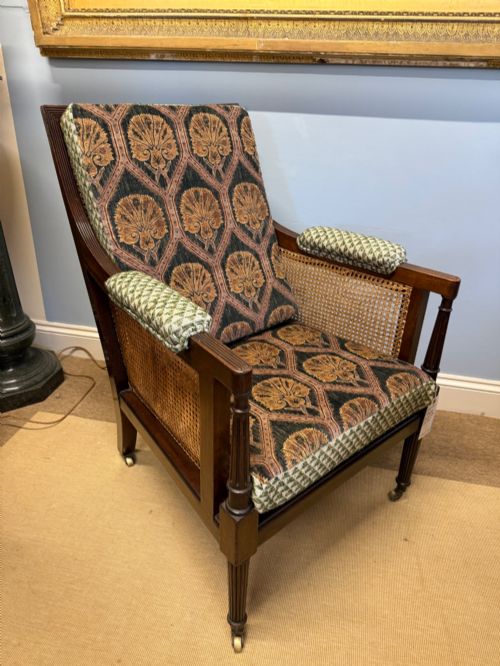
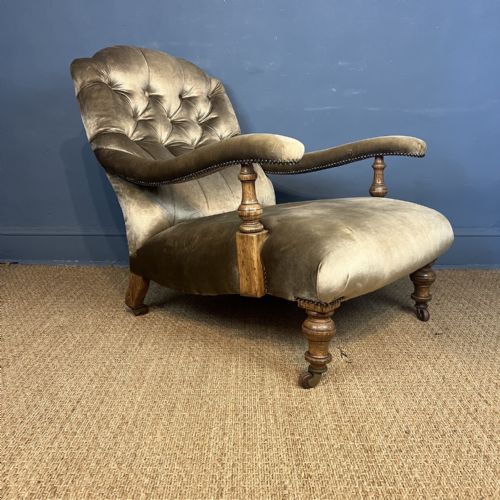
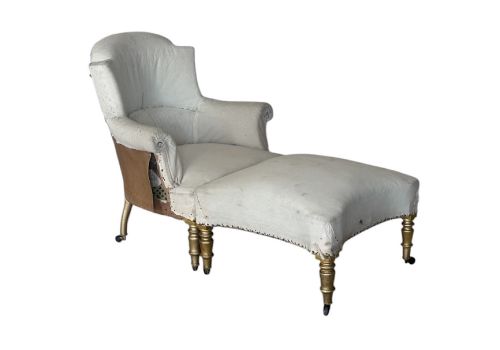
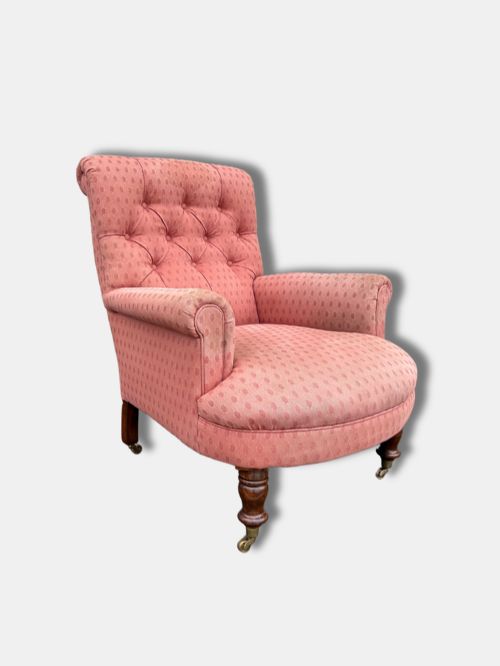
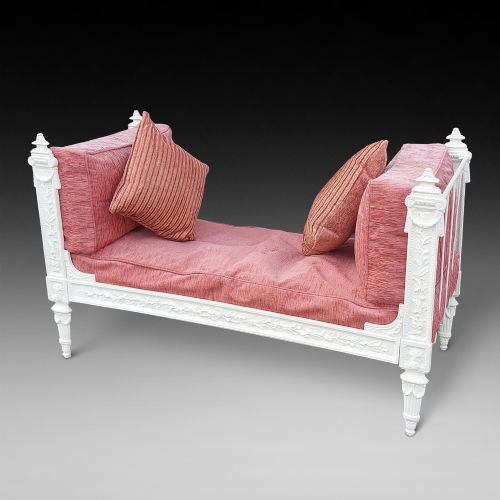
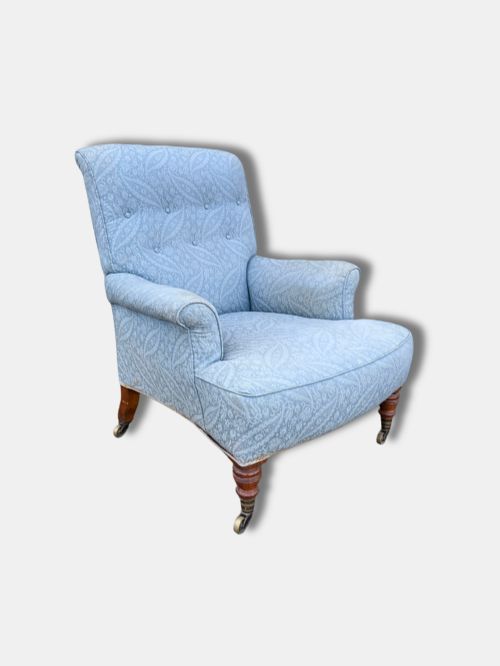
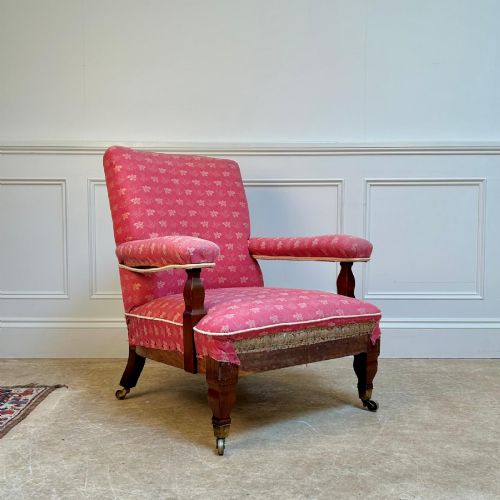
When you search for a late victorian lounge chair, you encounter a variety of upholstered seating designed for relaxation during the late nineteenth century. The examples on this page span several forms, including armchairs, wing backs, daybeds, and chaise longues.
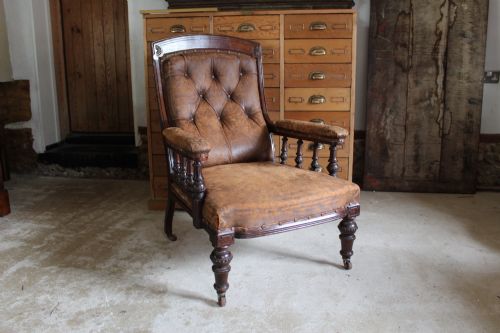
Most pieces date around eighteen eighty, reflecting the tastes of the Victorian period alongside revival styles such as Queen Anne and Arts and Crafts. You will frequently find walnut and mahogany frames, often paired with button backs, velvet, fabric, or leather upholstery.
Makers and workshops of the era produced both robust oak open armchairs and elegant French-influenced tub seats or daybed sets. These pieces served as the centrepiece of comfortable domestic spaces, prioritising generous proportions and padded support.
How they were made
Frames rely on sturdy timbers like mahogany, walnut, oak, and beech to provide structural support for the upholstered body. Wood components are frequently carved or turned, supporting padded seats and backs covered in textiles, velvet, or leather.
Metal elements such as brass or cast iron appear on specific forms, while traditional stuffing and button-back techniques create the characteristic deep contours. Joinery and upholstery methods reflect the standard workshop practices of late nineteenth-century British and French cabinet makers.
Listings feature periods from eighteen sixty to nineteen hundred, showcasing wood, brass, fabric, and velvet across armchairs and daybeds.
What varies in quality
The distinction between standard and superior pieces rests on the precision of the timber framing and the integrity of the original woodwork. Walnut and mahogany frames with refined carving demonstrate a higher grade of craftsmanship than simpler utility pieces.
Upholstery execution also defines quality, particularly the symmetry of buttoning, the tautness of the fabric, and the selection of materials like quality leather or velvet. The presence of documented workshop designs further elevates a piece within the range.
Howard & Sons·George Jack·Morris & Co
The Late Victorian Lounge Chair Glossary
- Bergere
- An enclosed armchair with a wooden frame and cane or upholstered sides. This form became popular during revival periods in the nineteenth century.
- Chaise Longue
- An elongated chair or daybed designed for reclining. These pieces combine a chair back with an extended seat for resting.
- Button Back
- An upholstery style where depressions are formed in the padding by pulling buttons deep into the stuffing. It creates a tufted surface common in Victorian seating.
- Wing Armchair
- A fireside chair featuring side panels attached to the back. These wings were originally designed to shield the sitter from drafts.
- Tub Seat
- A chair with a rounded, curved back that encircles the user like a tub. French examples of this type often appear in late nineteenth-century inventories.
Late Victorian Lounge Chair: Frequently Asked Questions
How do I identify a late Victorian lounge chair?
Look for characteristic materials like walnut, mahogany, and heavy upholstery fabrics combined with nineteenth-century forms such as button backs or tub seats. Dates cluster around eighteen eighty, aligning with the height of the Victorian era.
Examine the construction of the frame and the style of revival ornament, which often references Queen Anne or French nineteenth-century design.
Were these chairs used in bedrooms or sitting rooms?
While many served as primary seating in parlours and drawing rooms, specific smaller variants were designated as bedroom chairs. Their comfortable proportions suited private dressing spaces as well as main reception rooms.
Daybeds and chaise longues fulfilled a similar dual purpose for resting during the day in various domestic quarters.
How should I care for antique upholstery and wood?
Protect fabric, velvet, and leather surfaces from direct sunlight to prevent fading and drying. Regular gentle dusting preserves the integrity of the textile.
Feed wooden frames made of walnut or mahogany with appropriate polish to maintain the finish without harming the historic timber.