


Blue Border Carpet
A blue border carpet brings warmth to a floor through enduring motifs and rich, natural dye work.
Blue Border Carpet
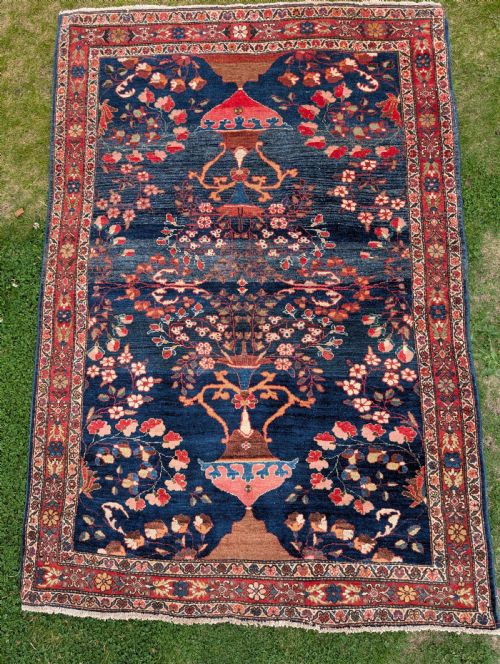
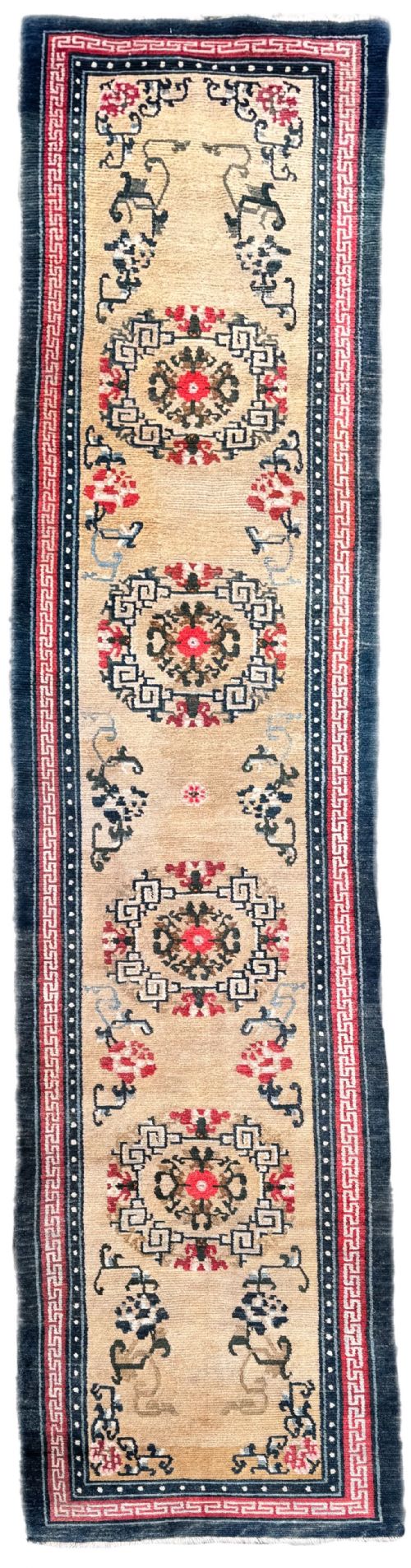
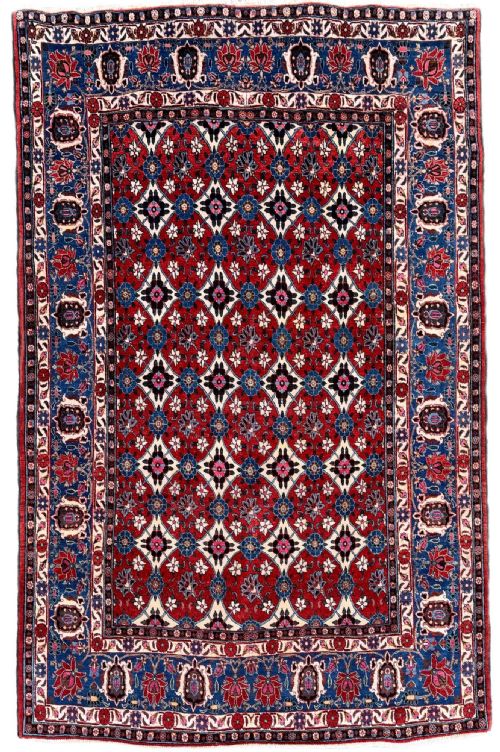
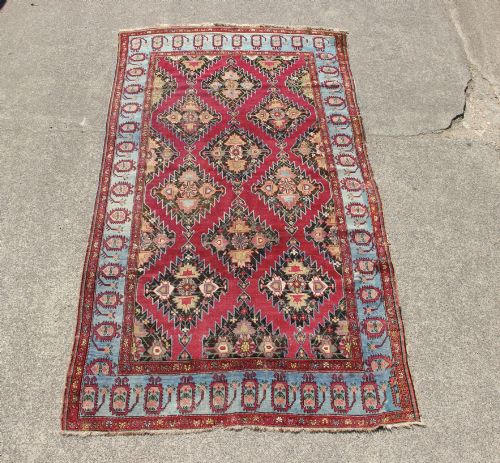
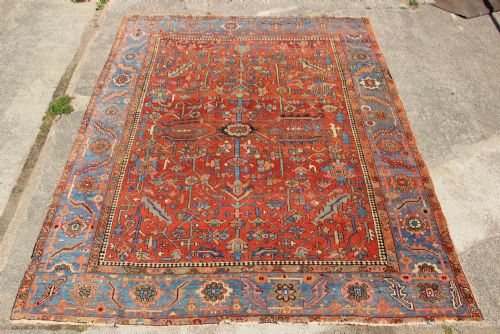
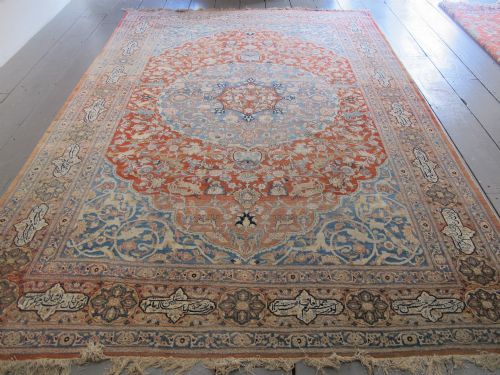
A blue border carpet encompasses hand-woven rugs and large carpets originating largely from Persian, Caucasian, Tibetan, and Chinese workshops dating from the mid-nineteenth century to the early twentieth century. Buyers seeking this style will encounter diverse regional forms, ranging from room-sized Heriz and Sultanabad carpets to runner rugs and saddle covers.
The inventory demonstrates a strong representation of Persian stylistic traditions, including Heriz, Tabriz, and Kashan weaving centres, alongside Caucasian and Anatolian pieces. These floor coverings bridge utility and art, grounding traditional and modern spaces alike with robust construction.
Materials and construction
These carpets are constructed primarily from wool, cotton, and occasional variations involving silk, angora wool, or hand-spun yarn. Artisans knotted these fibres onto cotton or wool foundations using traditional hand-weaving techniques.
Dyers utilised natural materials to achieve deep indigo and blue tones for the defining borders, contrasting with varied field colours created from plant and insect extracts.
Listings span periods from 1850 to 1930, utilising wool, cotton, silk, and angora wool across Persian, Caucasian, and Chinese styles.
Assessing quality and execution
Quality separates in the precision of the knot density and the crispness of the border drawing, which dictates how sharply the motifs read against the background. Finer wool selections yield a more pliable handle and a richer tactile depth.
The complexity of the regional design, such as intricate Heriz geometry or detailed floral work in Tabriz and Kashan pieces, reflects the skill and time invested by the original weaver.
Haji Jalili
The Blue Border Carpet Glossary
- Knot density
- The measure of individual knots per square unit on the reverse of the carpet. Higher counts often permit greater intricacy in pattern design.
- Warp
- The vertical foundation threads stretched tightly on the loom before weaving commences. Wefts are then beaten against these stationary elements.
- Weft
- The horizontal threads passed across the warp to lock the rows of knots into place. They give the carpet body and structural stability.
- Pile
- The upright cut ends of the knotted yarn that form the usable surface of the carpet. Its length influences how light plays across the wool.
- Runner
- A long, narrow carpet format designed specifically for hallways, corridors, or alongside furniture. Proportions typically exceed standard area rug dimensions.
Blue Border Carpet: Frequently Asked Questions
How do I clean an antique carpet?
Professional specialist cleaning is essential to protect natural wool fibres and historic dye structures from damage.
Regular gentle surface vacuuming without a beating attachment prevents dust accumulation between washes.
Can I place these rugs in sunny rooms?
Direct, prolonged sunlight causes natural dyes to fade over many years, altering the balance of the border and field.
Utilising UV-filtering window treatments or rotating the carpet periodically helps mitigate uneven sun exposure.
What underlay should I use?
A breathable, high-friction rug pad prevents slipping and stops the foundation from wearing against hard flooring.
Choose natural rubber or felt compositions rather than synthetic mesh options that can trap moisture.
How do I identify the weaving origin?
Structural characteristics like knot type, fringe finish, and border palette point directly to specific regional workshops.
Motif vocabulary, such as Heriz geometry or medallion placement, provides further clues to the geographic source.