
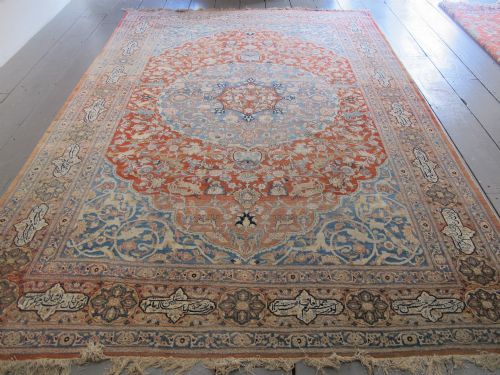


Blue Border Area Rug
A blue border area rug brings grounding pattern and substantial texture to a room, drawing the eye with traditional motifs.
Blue Border Area Rug
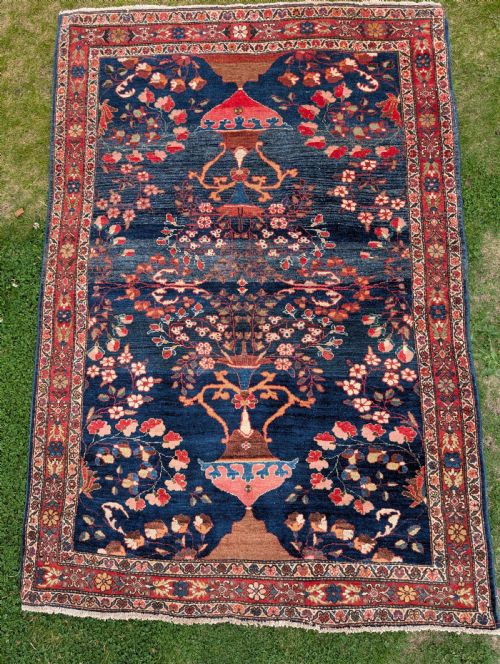
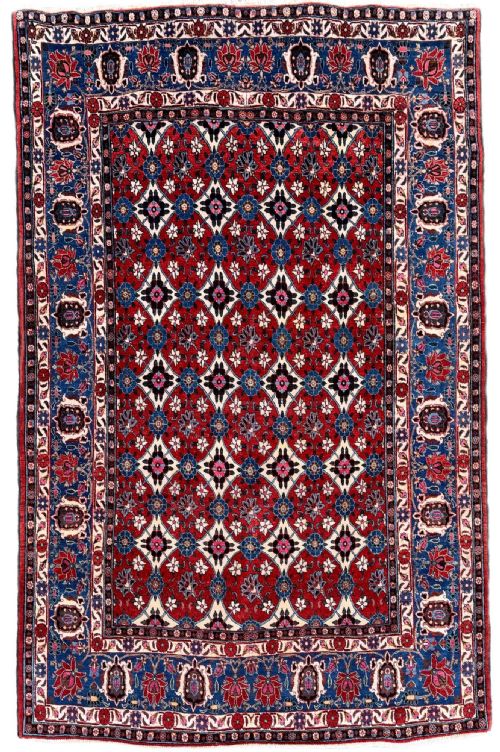
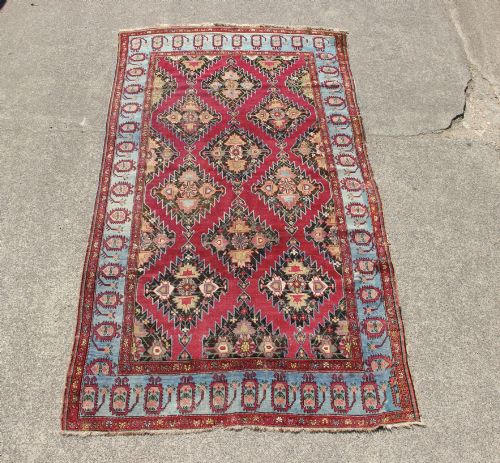
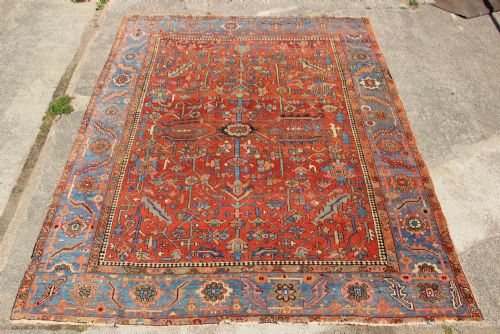
A blue border area rug encompasses hand-woven floor coverings featuring a distinct perimeter field in shades of blue. When searching for a blue border area rug, collectors encounter pieces originating primarily from Persian and Caucasian weaving traditions.
The selection on this page centres on late nineteenth-century and early twentieth-century examples, spanning periods from eighteen seventy to nineteen thirty. Common regional types include Heriz, Sultanabad, Tabriz, and Ushak carpets, alongside tribal pieces such as Qashqai and Khamseh.
Most entries are classified as rugs and carpets, ranging in size from compact scatter formats to large room-scale room carpets exceeding five metres in length. Traditional patterns dominate the selection, often incorporating central medallions, floral sprays, or geometric border arrangements framed by that defining blue edge.
How they were made
These floor coverings are constructed using traditional hand-weaving techniques with foundations of cotton or wool. The pile materials consist predominantly of wool, hand-spun wool, and angora wool, occasionally complemented by silk in finer urban workshops.
Dyers utilised natural materials to achieve the rich tones found in the wool pile, securing deep shades for the perimeter framing. Weavers knotted the pile by hand onto warp and weft threads, creating durable structures designed to withstand decades of foot traffic.
Some tribal carpets incorporate unexpected small figures, including peacocks and unusual birds nestled within their borders.
What varies in quality
Quality in these floor coverings rests upon the fineness of the knotting and the handling of the wool. Tighter knot counts allow for sharper delineation of motifs within both the field and the defining perimeter.
The choice of wool material also influences the handle and durability of the piece, with hand-spun and angora varieties offering distinct tactile depth. Furthermore, the nuance and saturation of the natural dyes used in the blue border separate standard examples from superior works.
Haji Jalili
The Blue Border Area Rug Glossary
- Pile
- The vertical tufts of wool, cotton, or silk that form the soft surface of the rug. This upper layer absorbs wear and displays the woven design.
- Warp
- The stationary vertical threads stretched tightly on the loom before weaving begins. The fringe of a rug is typically formed by the exposed ends of these threads.
- Weft
- The horizontal threads passed alternately over and under the warp threads to bind the knots in place. Together with the warp, it forms the foundational grid of the textile.
- Medallion
- A symmetrical ornamental motif placed at the centre of the rug field. It often dictates the geometric or floral composition of the surrounding design.
- Kilim
- A flat-woven carpet produced without a raised pile. These textiles rely on tightly packed horizontal weft threads pulled closely over the vertical warps to create the pattern.
Blue Border Area Rug: Frequently Asked Questions
How do I style a blue border area rug?
Place the piece in a living room, dining room, or study where the perimeter framing can anchor the furniture arrangement. Allow the surrounding floorboards or neutral flooring to create a margin around the edge.
Coordinate soft furnishings with the tones found in the border to tie the room together. Keep larger items positioned so the central field remains visible.
How do I clean a wool rug safely?
Vacuum the surface gently using suction only, avoiding rotating brush heads that can catch the wool pile. Address spills immediately by blotting with a clean, dry cloth rather than rubbing.
Consult a professional textile specialist experienced in antique carpets for periodic washing. Avoid harsh chemical cleaners and excessive water saturation.
What is the difference between a Heriz and a Tabriz rug?
Heriz rugs originate from a region known for bold, geometric medallion designs and robust wool construction. Their patterns tend to be architectural and structured.
Tabriz rugs typically emerge from urban workshops featuring finer knot counts and elaborate floral or pictorial compositions. They often display more intricate curvilinear details across the field.
How can I tell the age of an antique carpet?
Examine the materials used in the foundation, noting whether the warps and wefts consist of hand-spun cotton or wool. Irregularities in the weave and variations in natural dye batches often point to earlier production.
Compare the stylistic motifs and border structures against documented examples from specific periods. Wear patterns across the pile also indicate the passage of time.