

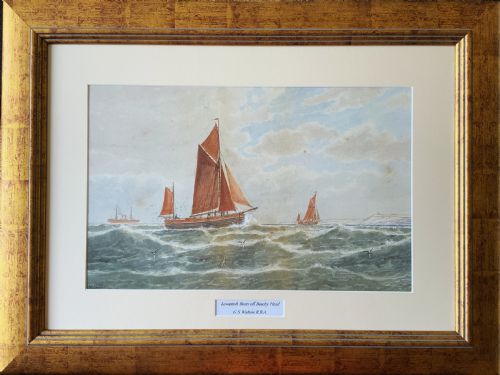
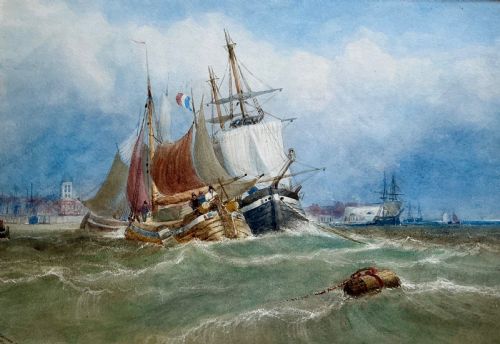


Blue Boat Watercolour
A blue boat watercolour brings the atmosphere of the nineteenth and twentieth-century coast straight onto the wall.
Blue Boat Watercolour
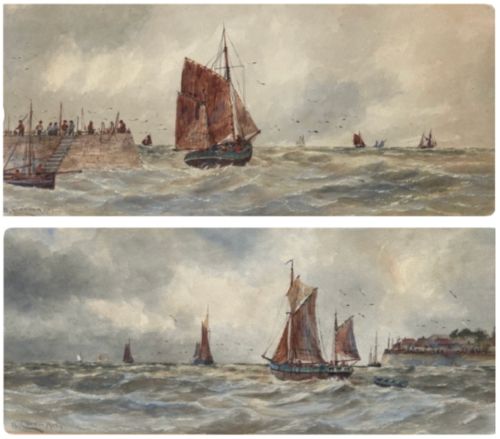
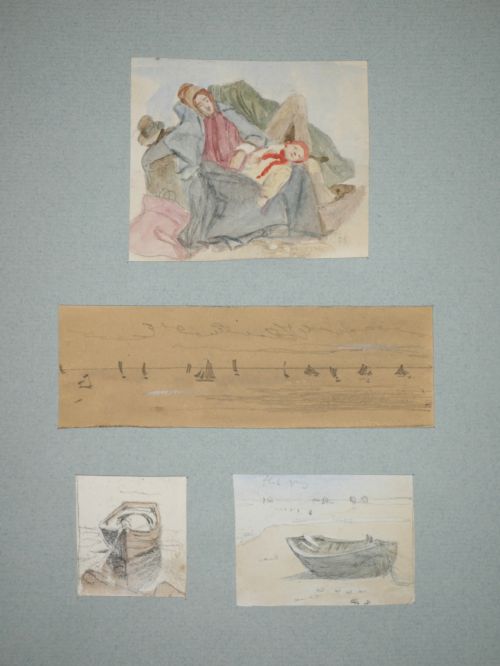
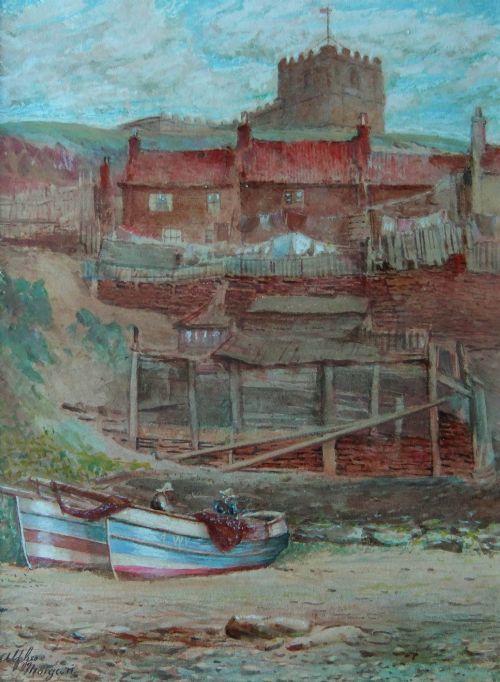
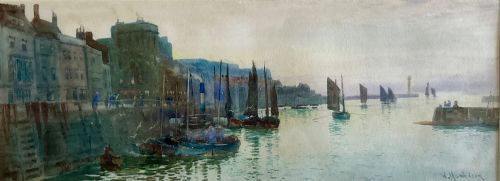
A blue boat watercolour captures maritime life, harbours, and coastal scenes through pigment on paper. These works document fishing vessels, coastal towns, and open seas from the Victorian era into the mid-twentieth century.
The most common pieces on this page are framed works on paper created by British and European painters working in impressionist and marine styles. They depict specific ports and coastal locations from Whitby and St Ives to Venice and Holland.
Materials and construction
Artists applied watercolour pigments onto paper supports, often building translucent washes alongside opaque bodycolour for highlights. Works are typically housed behind glass within wooden frames, sometimes finished with gilt or ebonised surfaces.
The technique relies on the natural luminosity of the paper showing through thin layers of pigment to capture the shifting light of water and sky.
Listings span the nineteenth and twentieth centuries, incorporating Victorian, Edwardian, and post-war periods with a strong focus on British coastal views.
Factors determining quality
Quality rests in the sureness of the brushwork and the artist's ability to convey movement in water and weather without overworking the paper. Strong compositions balance architectural elements of harbours with open areas of sea and sky.
The sensitivity of the tonal handling and the preservation of the pigment against fading distinguish superior paintings from more formulaic topographical records.
James Orrock·William Cannon·James Smetham·Alfred G Morgan·William Matthison·George Stanfield Walters·Henry Barlow Carter·Paul Delvaux·William Lee Hankey·Edward Seago·Thomas Bush Hardy·Tom Clough·William Tuck·Frank H Mason·Frederick William Hattersley·Ernest F Hill·Frank Wasley·Fred Mayor·Thomas Clavering Alder·Walter Sweet·Lennard Lewis·Robert Anderson·Frank Rousse·Fred Lawson·Frances E Nesbitt
The Blue Boat Watercolour Glossary
- Watercolour
- A painting method in which the paints are made of pigments suspended in a water-based solution. Paper serves as the primary support for these translucent applications.
- Works on paper
- A collective category encompassing drawings, watercolours, and prints created on paper substrates. These pieces require protection behind glass to prevent environmental damage.
- Marine art
- Artistic representations of the sea, ships, beaches, and harbour scenes. This genre spans detailed vessel portraits and broader atmospheric coastal views.
- Bodycolour
- Watercolour paint mixed with a white pigment to make it opaque rather than transparent. Artists utilise this technique to create solid highlights on sails and foam.
- Gilt wood
- Wood framing treated with a thin layer of gold leaf or metallic gilding. It provides a traditional decorative border for historic works on paper.
Blue Boat Watercolour: Frequently Asked Questions
How should I display a vintage watercolour?
Hang these works away from direct sunlight to prevent the watercolour pigments from fading over time. Maintaining a stable indoor environment protects both the paper support and the surrounding frame.
Ensure the painting is glazed with protective glass and kept away from damp walls. Proper framing preserves the integrity of the paper for years to come.
What subjects appear in these marine paintings?
The paintings record bustling fishing harbours, coastal towns, and open seas with masted ships and steam vessels. Many works focus on specific British ports such as Whitby, Scarborough, and St Ives.
Other pieces venture further afield to continental locations including Venice, Holland, and the French Riviera. Each scene captures the daily maritime activity of its period.
How do I date a nineteenth-century watercolour?
Dating relies on artist signatures, framing styles, and archival records associated with the specific view. Costume details on figures and the types of vessels depicted provide additional historical clues.
Many works include artist inscriptions or gallery labels on the reverse that confirm the exact period of creation.
What is British Impressionism in watercolours?
This style involves capturing transient effects of light, weather, and atmosphere through rapid, expressive brushstrokes. Artists prioritized mood and tone over rigid topographical accuracy.
In marine subjects, this approach translates to shimmering water and atmospheric skies rendered with fluid washes of colour.