




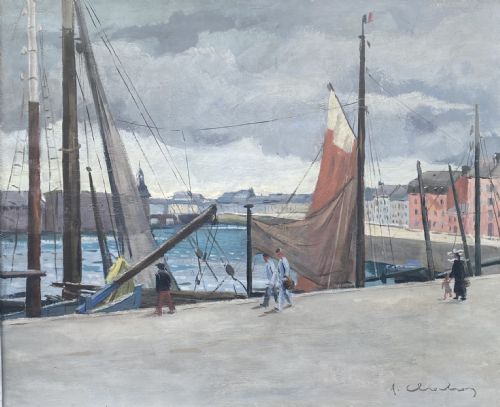
Blue Boat Harbour Painting
When you search for a blue boat harbour painting, you enter a world of coastal watercolours and maritime oils capturing vessels at rest.
Blue Boat Harbour Painting
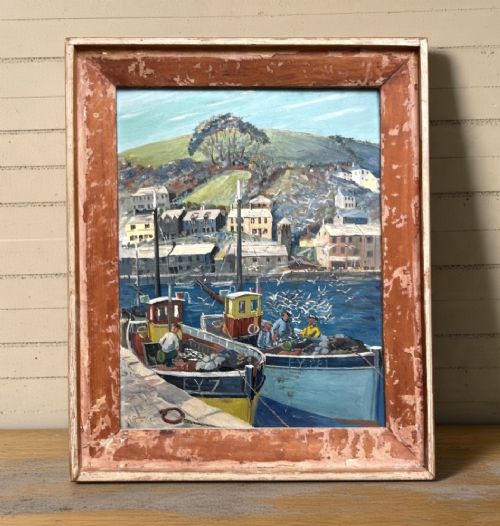
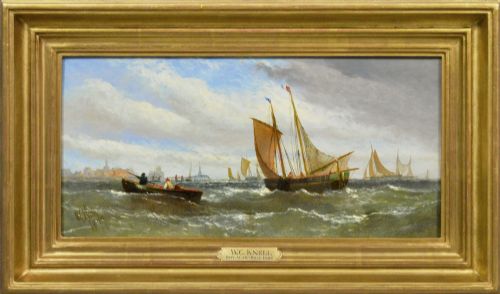
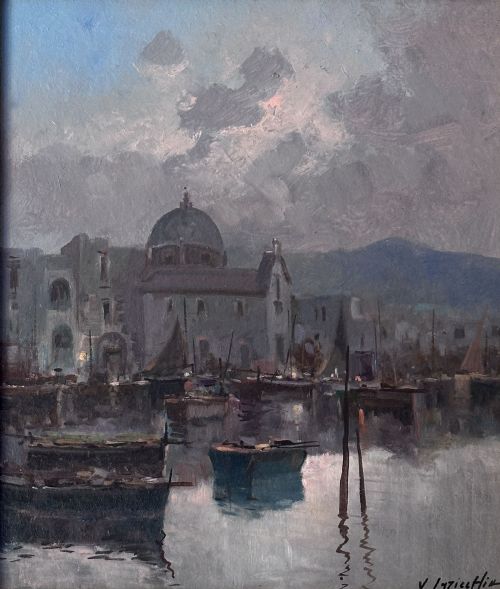
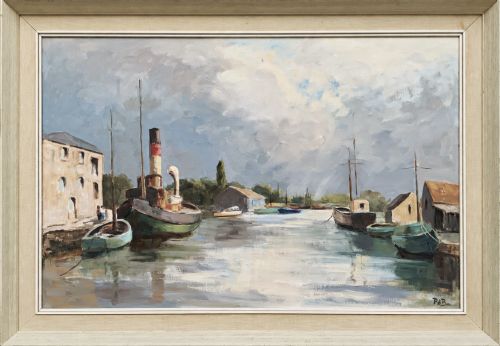
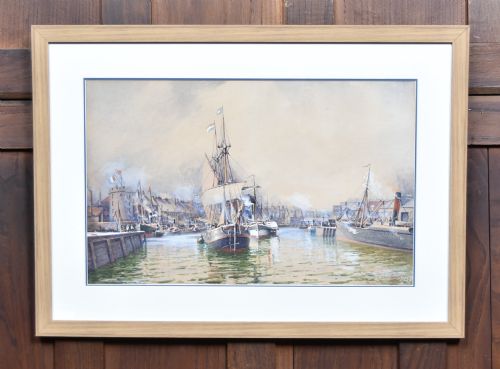
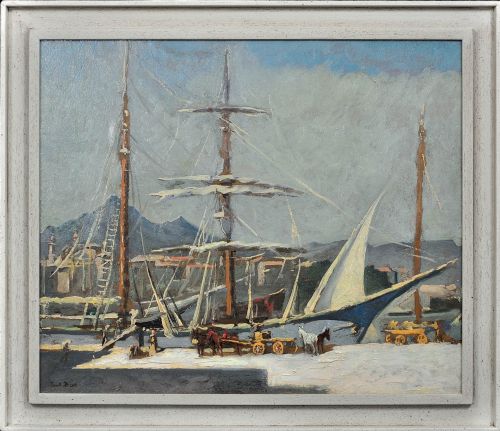
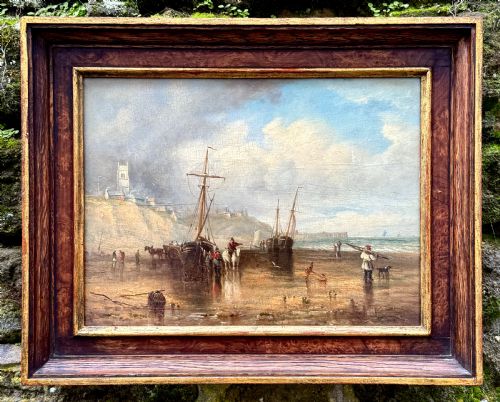
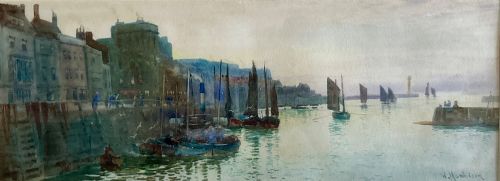
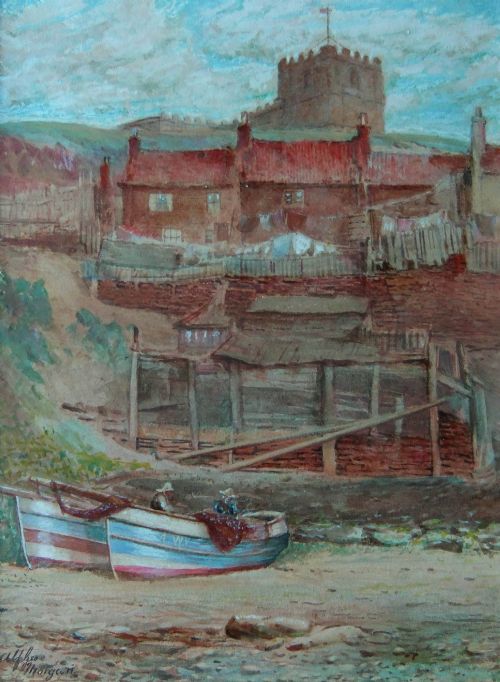
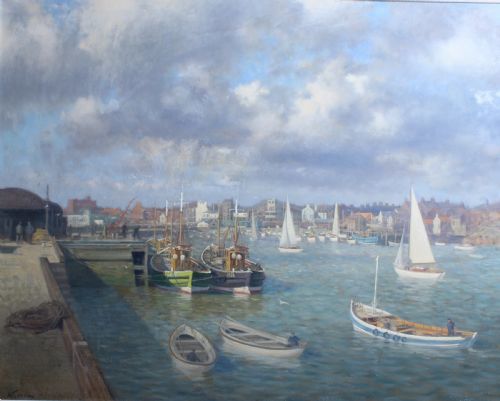
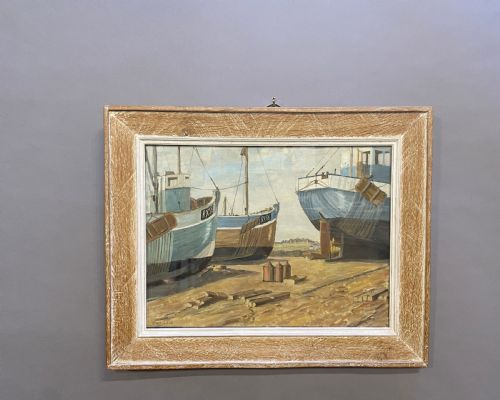
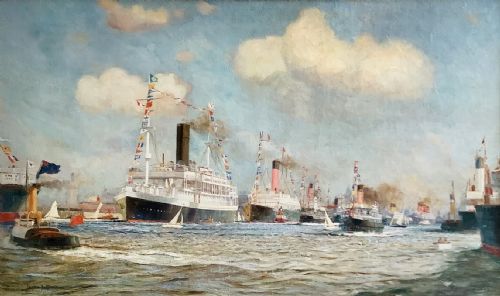
A blue boat harbour painting brings together maritime scenes, coastal watercolours, and coastal townscapes from the nineteenth and twentieth centuries. These artworks focus on fishing vessels, ports, and quaysides rendered in oil or watercolour.
You will most frequently encounter works from the Edwardian and Victorian eras through to the mid-twentieth century, including pieces tied to British coastal locations like Whitby, St Ives, and Mevagissey.
The subjects range from tranquil depictions of boats in calm waters to bustling scenes of unloading ships in international ports, executed by regional and continental artists alike.
Materials and methods
Artists working on these maritime scenes relied primarily on oil paint, oil on canvas, or watercolour pigment applied to paper or canvas supports. Watercolours often utilised washes to capture shifting light on water, while oils built up texture on canvas or board.
Framed watercolours typically required protective glass to preserve delicate pigments, whereas oil paintings on canvas or board offered greater durability for capturing heavy seas and atmospheric coastal skies.
Blue Boat Harbour Painting Retail Price Guide 2026
Typical asking prices for blue boat harbour painting among the pieces listed under this phrase on Sellingantiques today, from the lower quarter to the upper quarter. They describe what is for sale here now, not the wider market.
Ernest F. Hill clearly possessed a soft spot for Cornish destinations, signing multiple marine watercolours across St Ives and Mevagissey.
What separates the best examples
Quality in these coastal works rests on the artist's ability to render light, atmosphere, and the specific movement of water around vessels. Stronger examples display confident brushwork and a balanced composition that anchors the boats within the harbour setting.
The handling of pigment, whether the transparent fluidity of a watercolour or the rich impasto of an oil painting, dictates the visual depth and enduring appeal of the piece.
Bob Quixley·William Calcott Knell·Peggy de Brett·William Woolard·Paul Bret·Thomas Creswick·Alfred G. Morgan·William Matthison·Walter Goodin·Paul Delvaux·Edward Matthew Elliott·Jean-Baptiste Olive·William Lee Hankey·Tom Clough·Ernest F. Hill·William Lambert Bell·Owen Bowen·Antonio Godoy·Fred Mayor·Edward Henry Holder·Thomas Clavering Alder·Walter Sweet·Lennard Lewis·Robert Anderson·Henri Ottman
The Blue Boat Harbour Painting Glossary
- Watercolour
- A paint consisting of colour suspended in a water-soluble vehicle, traditionally applied to paper.
- Impasto
- The process or technique of laying on paint thickly so that it stands out from a surface.
- Seascape
- A type of artwork that depicts the sea, typically including ships, boats, and coastal views.
- Provenance
- The chronology of the ownership or location of a historical work of art.
Blue Boat Harbour Painting: Frequently Asked Questions
What periods do these paintings cover?
The works span from the nineteenth century through the 1960s, encompassing Victorian, Edwardian, and mid-century modern movements.
Most pieces date from the early 1900s to the mid-twentieth century, reflecting various regional schools of painting.
How do I care for a watercolour?
Watercolours require placement away from direct sunlight to prevent the fading of delicate pigments on paper.
Keeping them behind protective glass in stable humidity environments helps preserve the integrity of the work.
Where were these harbour scenes painted?
Artists painted coastal scenes across British fishing ports like Whitby, St Ives, Mousehole, and Mevagissey.
Others travelled to international locations, capturing ports in France, Italy, Belgium, and Sicily.
What is the difference between oil and watercolour?
Oil paints use a drying oil binder, allowing for rich textures and deep colour layering on canvas or board.
Watercolours use water-soluble binders on paper, creating translucent washes and luminous light effects.