
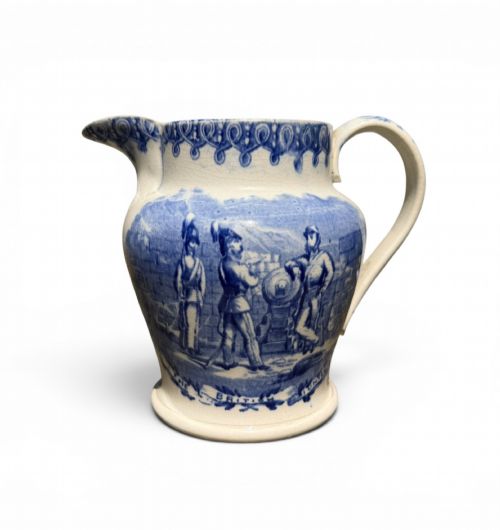
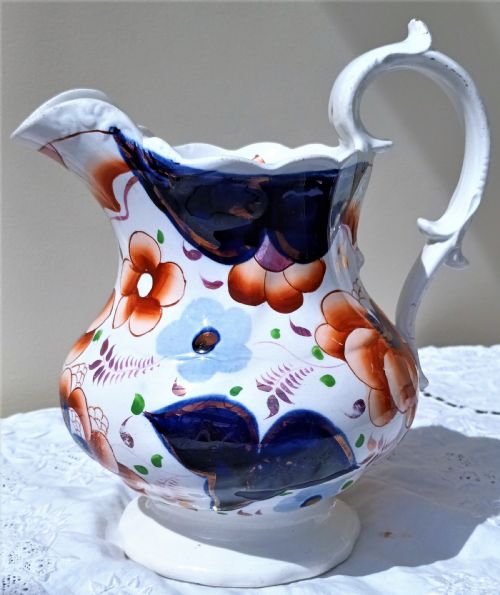
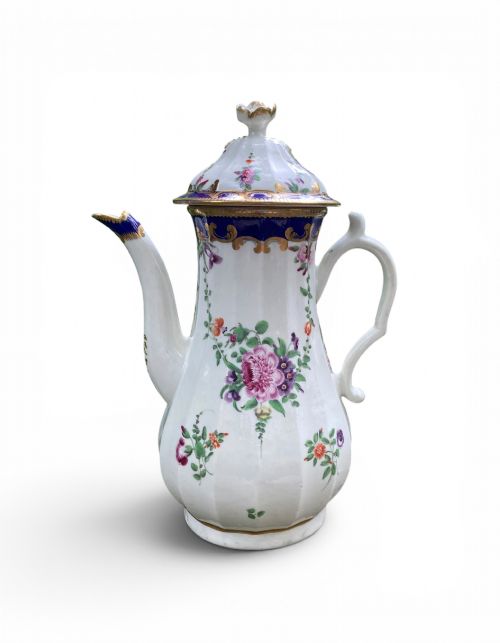
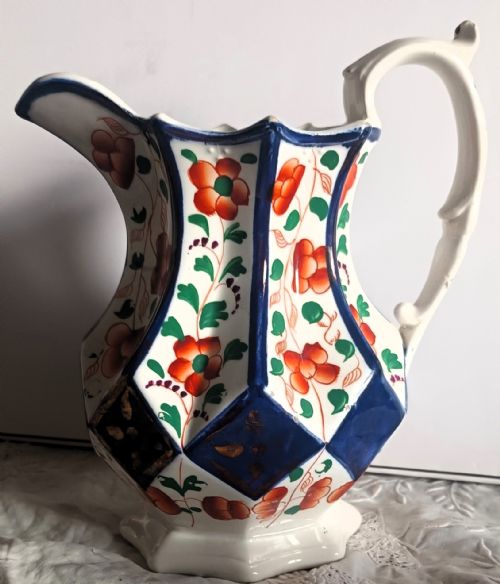
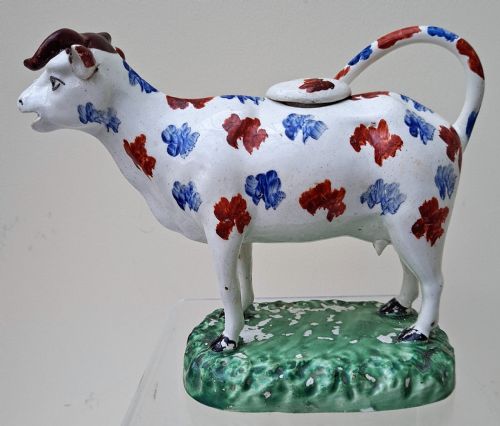
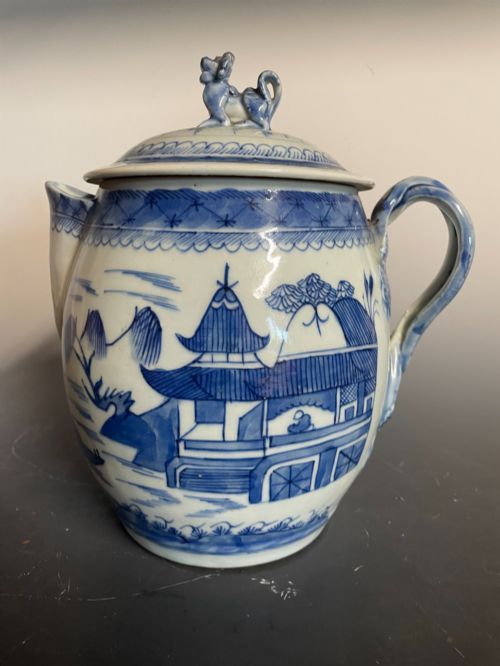


Blue and White Ceramic Pitcher
These pieces of blue and white ceramic pitcher serve practical and decorative roles across several centuries, offering strong cobalt decoration on earthenware, porcelain, and tin glaze.
Blue and White Ceramic Pitcher
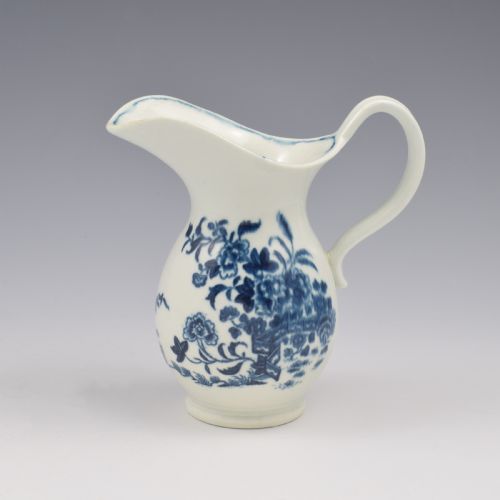
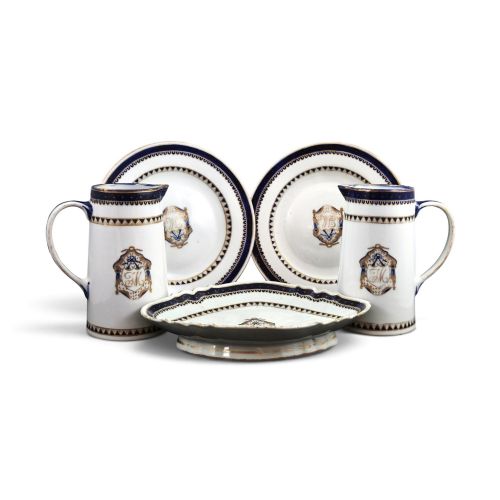
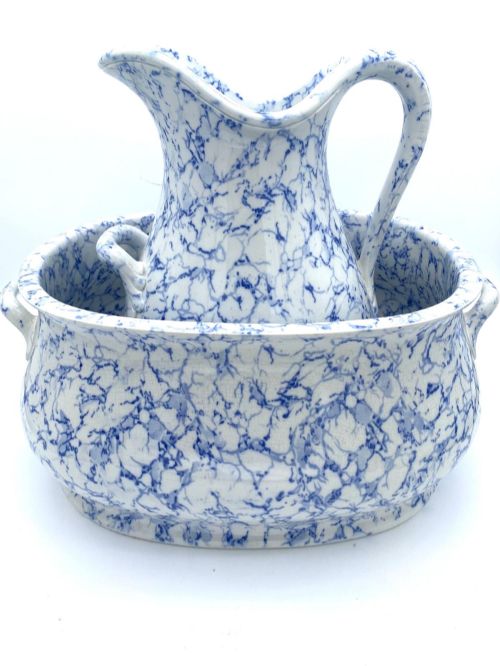
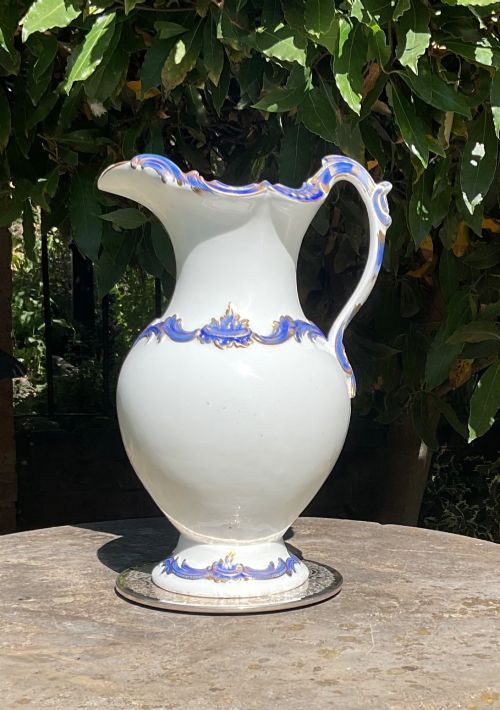
A blue and white ceramic pitcher serves as a functional vessel for liquids or forms part of a larger washstand set, originating from English potteries, European factories, and Asian export kilns. The selection spans earthenware, ironstone, and porcelain forms produced from the seventeenth century through to the Edwardian period.
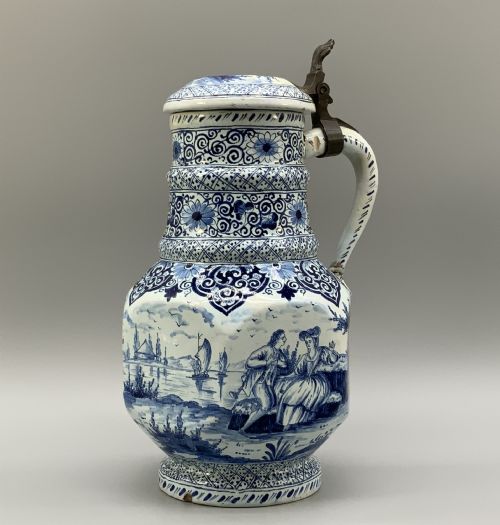
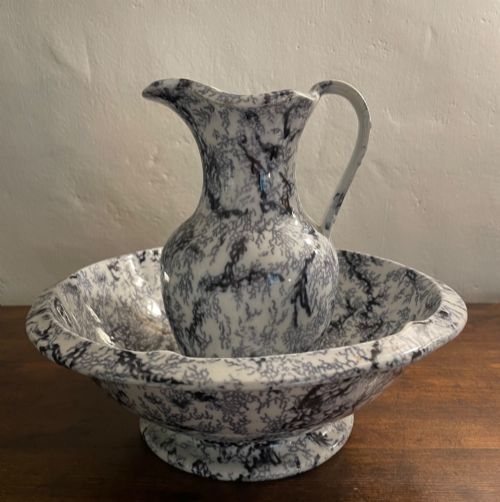
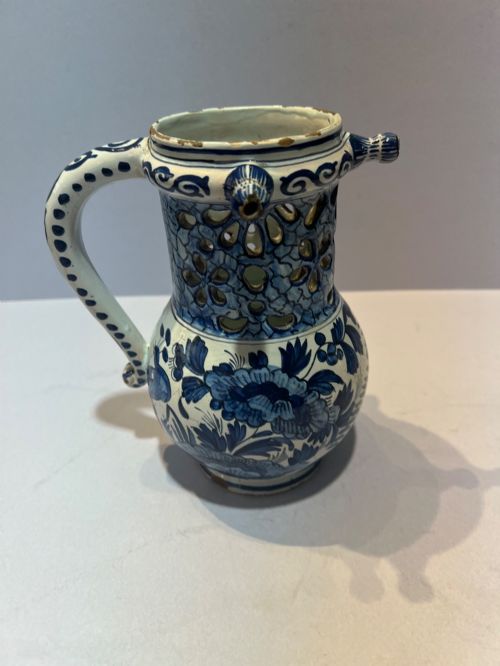
Makers ranged from Staffordshire potteries and Delft workshops to major English manufacturers like Minton, Doulton, and Worcester. Domestic pitchers, large water ewers, and washstand sets dominate the selection, alongside specialised puzzle jugs and Toby jugs.
Materials and technique
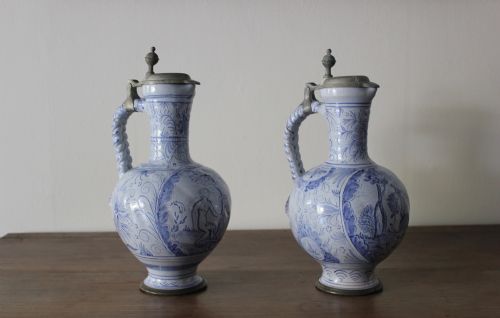
Potters shaped these vessels using earthenware, ironstone, and porcelain, frequently applying a tin glaze or transparent lead glaze over the body. Cobalt blue pigment provides the characteristic underglaze decoration, sometimes supplemented by enamel colours or gilt accents.
Firing techniques varied from early earthenware kilns utilising pewter lids and tin glazes to nineteenth-century transfer printing methods on ironstone and porcelain. Artisans also employed hand-painting in Chinoiserie and floral patterns, shaping ewers and mask head jugs with applied handles and moulded details.
The listings span earthenware, porcelain, and tin-glazed vessels produced across the seventeenth, eighteenth, and nineteenth centuries.
Variations in quality
Quality rests upon the crispness of the cobalt blue underglaze painting or the clarity of the transfer-printed pattern against the ceramic body. Early Delftware and porcelain pieces demonstrate finer hand-painted execution and specialised forms like mask heads and puzzle jugs, whereas mass-produced ironstone emphasises robust utility.
The refinement of the clay body and the smoothness of the glaze also separate standard utility wares from exhibition pieces. Superior examples exhibit balanced proportions, well-defined handles, and controlled firing temperatures that prevent glaze pooling or distortion.
Minton·Doulton Lambeth·Masons Ironstone·Pieter Verburg
The Blue and White Ceramic Pitcher Glossary
- Tin Glaze
- An opaque white glaze containing tin oxide, used principally on earthenware to provide a smooth surface for painting in imitation of Chinese porcelain.
- Transfer Printing
- A mechanised decoration technique where a design is engraved on a copper plate, inked, transferred to tissue paper, and then applied to the ceramic body before firing.
- Ironstone
- A heavy, durable type of earthenware patented in the nineteenth century that mimics porcelain in strength and utility.
- Ewers
- Large water jugs characterised by a flared spout and a looped handle, traditionally designed for hand washing or formal table service.
- Chinoiserie
- A European artistic style reflecting Chinese motifs and landscapes, frequently rendered in blue and white on domestic ceramics.
Blue and White Ceramic Pitcher: Frequently Asked Questions
How do I date an old pitcher?
Dating relies upon stylistic markers, clay bodies, and manufacturing techniques recorded across the periods. Eighteenth-century examples often feature tin-glazed earthenware and hand-painted Chinoiserie, while nineteenth-century pieces frequently utilise ironstone or transfer-printed patterns.
Makers' marks, where present underneath the base, help narrow down production eras and specific potteries. Examining the weight, glaze consistency, and handle attachment provides further clues regarding age.
Were these vessels used daily?
Many pitchers served practical functions in domestic settings for pouring water, milk, or beer at the table. Larger examples formed part of bedroom washstand sets alongside matching basins for personal hygiene.
Specialised items like puzzle jugs or salesman's samples were exceptions intended for display or novelty rather than heavy daily use.
What is flow blue?
Flow blue refers to a nineteenth-century transfer-printing technique where lime or chloride gas was introduced into the kiln during firing. This caused the cobalt blue pigment to blur or bleed slightly into the surrounding white glaze.
The resulting soft, hazy effect became highly fashionable during the Victorian era on jugs, basins, and complete bathroom sets.