


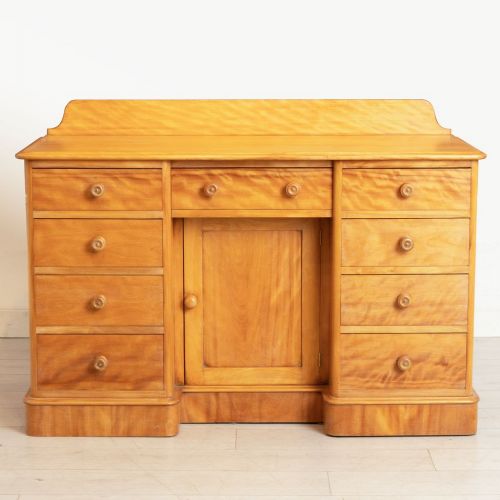

Blonde Wood Pedestal Table
A blonde wood pedestal table brings bright, figured grain and a central column base to a room, offering both practical surface space and distinct period character.
Blonde Wood Pedestal Table
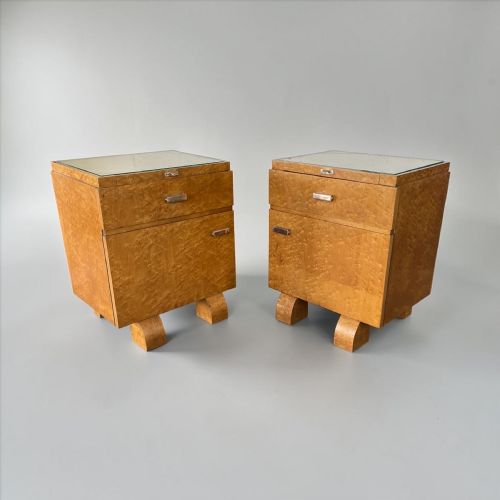
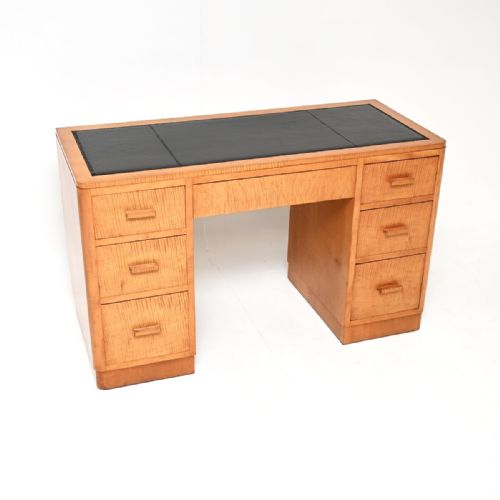
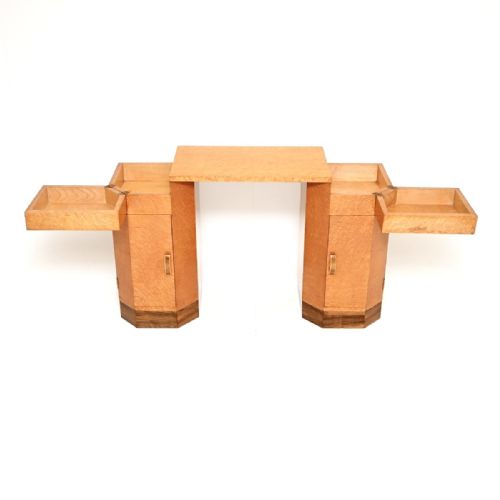
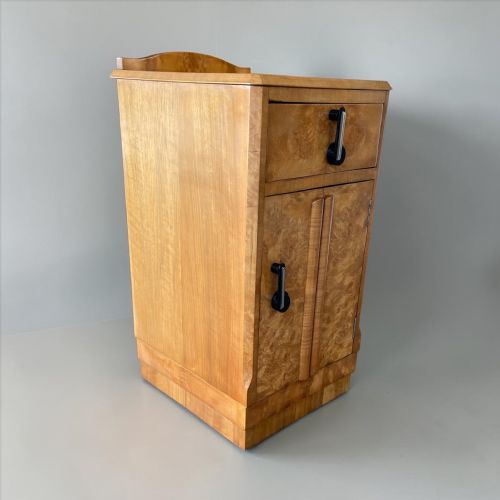
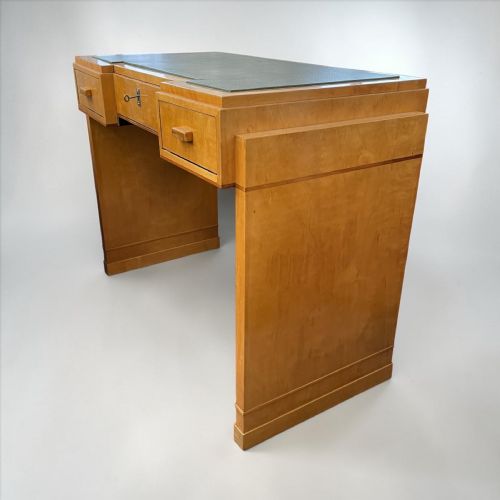
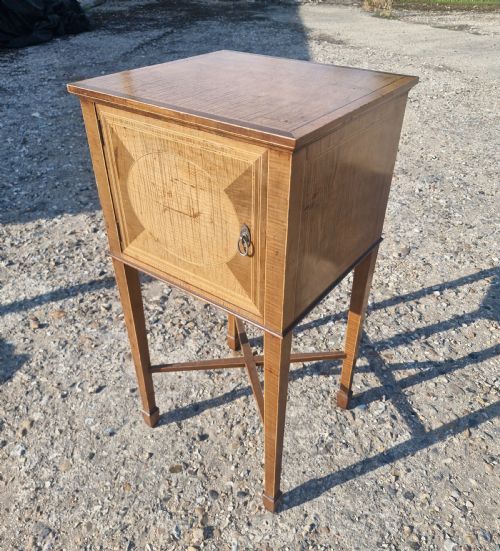
The inventory on this page spans several forms beyond basic tables, including desks, dressing tables, bedside cabinets, and occasional pieces. Many share the characteristic central support column or pedestal base paired with pale, highly figured wood grains.
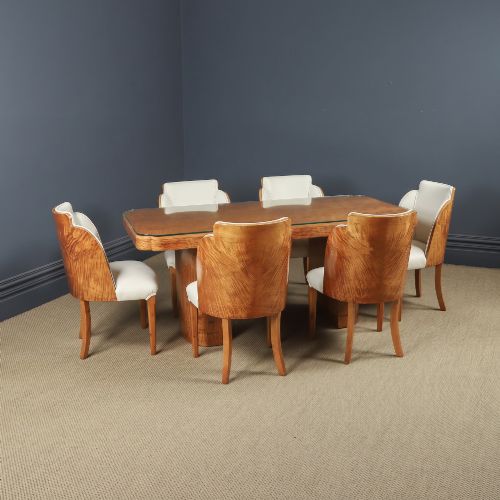
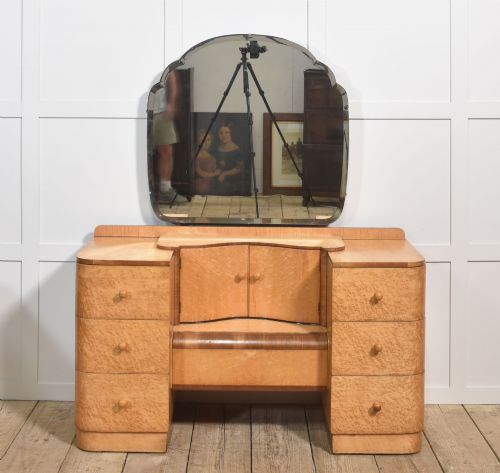
Nineteenth-century examples frequently showcase Swedish birch or Victorian satin birch, while the 1930s brings modernist Art Deco interpretations in birds eye maple and satin birch. Each period applies these light timbers to create functional surfaces supported by central pillars or pedestals.
How they were made
Cabinet makers utilised blonde timbers such as birch, satin birch, birds eye maple, and satinwood, often selecting veneers to highlight the natural figuring of the grain. These woods were applied to solid carcases or frames, sometimes supplemented by brass fittings, leather inserts, and glass.
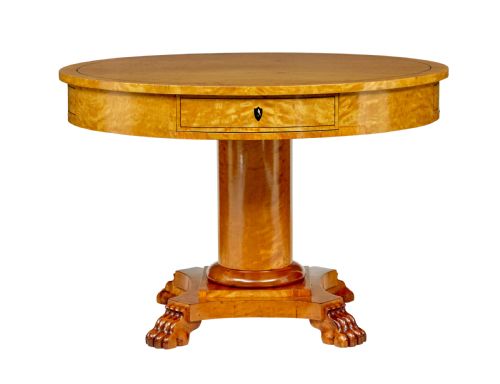
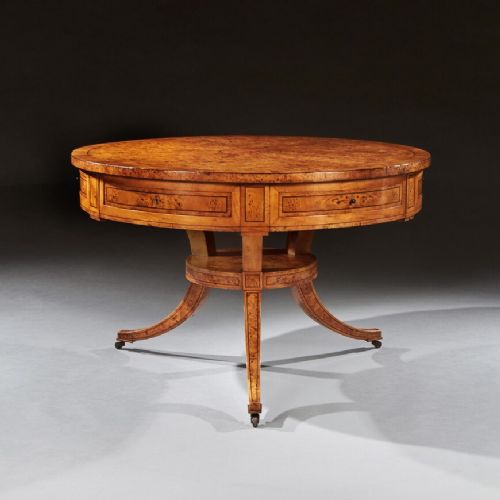
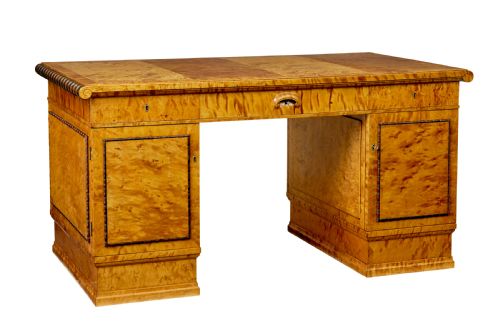
Construction techniques combine traditional joinery with curved veneering, particularly visible in nineteenth-century drum tables and twentieth-century Art Deco pedestal desks. Radially veneered tops and circular or oval centre tables demonstrate precise cutting and matching of light wood veneers around a central pedestal.
The listings feature blonde wood pieces spanning the nineteenth and twentieth centuries, using birch, maple, satinwood, and ash.
What varies in quality
The standard of a blonde wood pedestal table rests upon the selection and matching of the timber veneer. Pieces featuring heavily figured birds eye maple or burr birch display superior visual depth compared to plain-grained equivalents.
Construction precision defines the upper tier of these pieces, seen in the seamless wrapping of veneers around curved pedestals and drawers. Maker attribution, such as work stamped by established firms, further distinguishes exceptional examples from standard production.
Morant And Co London·Heal And Son·Harry And Lou Epstein·Jackson And Graham
The Blonde Wood Pedestal Table Glossary
- Birds Eye Maple
- A figure in maple wood where the grain resembles small, swirling eyes caused by depressions in the growing tree's annual rings. It appears frequently on Art Deco dressing tables and bedside cabinets.
- Pedestal Desk
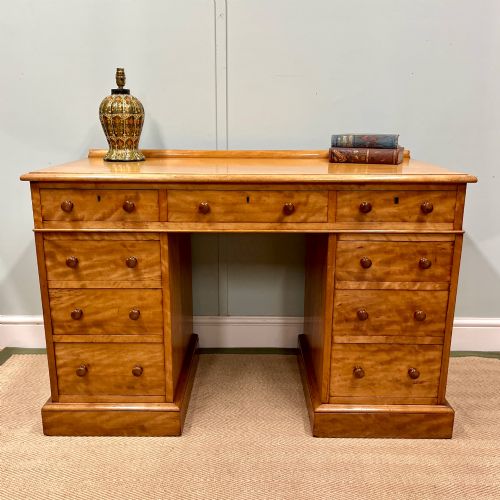
- A flat-topped writing desk supported by two pedestals of drawers or cupboards, or a single central pillar construction. Versions in satin birch and maple date from the nineteenth and twentieth centuries.
- Satin Birch
- A pale, lustrous hardwood with a natural golden sheen and fine grain, native to northern Europe. Cabinet makers in Sweden and Britain utilised it extensively for nineteenth-century tables and desks.
- Biedermeier
- A Central European style from the nineteenth century focusing on clean lines and utilitariantism without excessive ornamentation. Blonde wood furniture from this period relies on the natural beauty of birch and maple grain.
- Centre Table
- A freestanding table designed to be viewed from all sides, placed in the middle of a room rather than against a wall. Circular and oval examples in birch and sycamore are typical of nineteenth-century production.
Blonde Wood Pedestal Table: Frequently Asked Questions
How do I clean a satin birch table?
Dust regularly with a soft, dry cloth to prevent surface scratching. Avoid harsh chemical cleaners that can damage the polish on light wood veneers.
Apply a quality beeswax periodically to nourish the timber and maintain its natural lustre. Keep the table away from direct sunlight and heat sources to prevent the blonde wood from darkening or cracking.
What is birds eye maple?
Birds eye maple is a distinct decorative wood figure found predominantly in sugar maple trees. The small, circular dots resemble tiny eyes scattered across the pale timber.
This figuring occurs naturally and is highly prized for cabinet making. Art Deco designers utilised it extensively on dressing tables and bedside cabinets for its striking visual texture.
Are these tables solid wood?
Many pieces combine solid timber frames with wood veneers applied to stable secondary woods. Veneering allowed makers to display dramatic grain patterns, such as birds eye maple or burr birch, across large flat surfaces.
Solid timbers were typically used for structural elements, legs, and mouldings. The use of veneer does not indicate lesser quality; rather, it represents traditional craftsmanship designed to prevent warping.
How do I date a Swedish birch table?
Dating relies on stylistic clues, construction methods, and the specific tone of the birch timber. Nineteenth-century Swedish pieces often feature simpler neoclassical or Biedermeier lines.
Twentieth-century Scandinavian items from the Art Deco period introduce more streamlined, modernist curves and pedestal configurations. Examining the underside and drawer construction helps confirm the era of manufacture.