




Blessed Mother Pendant
A blessed mother pendant is a devotion worn close, prized for its miniature artistry in gold.
Blessed Mother Pendant
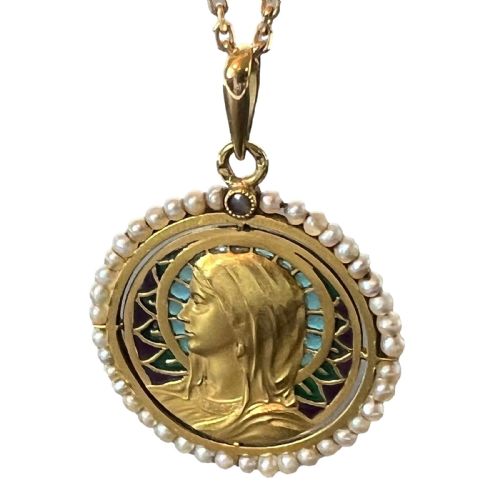
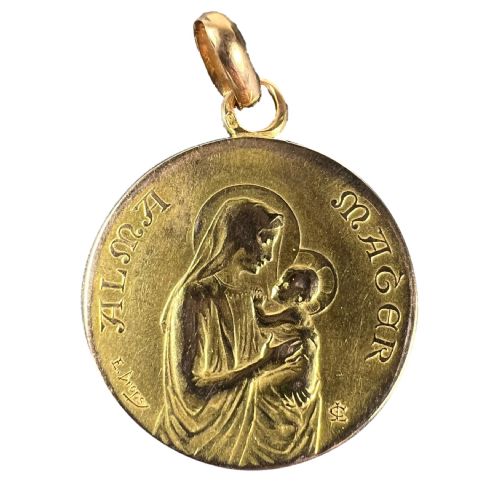
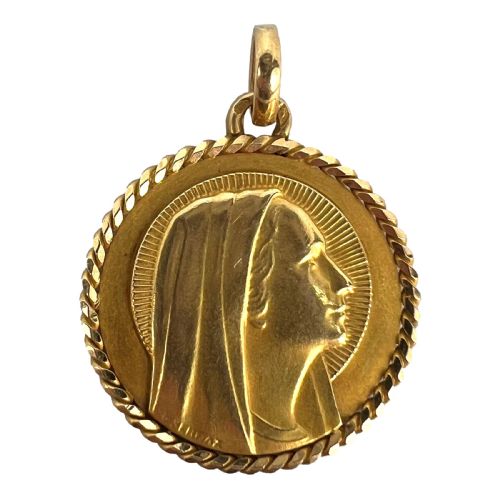
A blessed mother pendant brings together French religious devotion and fine jewellery from the early to mid-twentieth century. These pieces take the form of small medals, charms, and pendants depicting the Virgin Mary, often accompanied by inscriptions such as Ave Maria. Buyers find items originating from the 1910s, 1920s, and 1950s.
The most common versions met on this page are French religious and devotional medals rendered in yellow gold. These items cross categories between pendants and charms, designed to be suspended from a chain or added to a bracelet. Each piece reflects the specific aesthetic of its decade, shifting from elaborate early designs to cleaner mid-century lines.
How they were made
These pendants are constructed entirely from yellow gold, predominantly recorded as 18ct, 18K, and 18kt gold. The metal provides a warm foundation for detailed miniature sculptural work on both obverse and reverse sides. Goldsmiths utilised traditional stamping and casting techniques to achieve high relief depictions of the Virgin Mary.
Surface finish is achieved through a combination of polished highlights and textured or matted backgrounds that make the central figure stand out. The loop or bale is integrated directly into the upper edge or joined securely to ensure daily wear. Every example relies on the ductility of high-carat gold to hold crisp details without brittle fracture.
Blessed Mother Pendant Retail Price Guide 2026
Typical asking prices for blessed mother pendant among the pieces listed under this phrase on Sellingantiques today, from the lower quarter to the upper quarter. They describe what is for sale here now, not the wider market.
Listings span the 1910s to the 1950s, entirely cast in yellow gold across various carats.
What varies in quality
The distinction between standard commercial pieces and the finest work lies in the sharpness of the sculptural relief and the reputation of the medallist. Master artists bring distinct facial expressions and drapery folds to the figure of the Virgin Mary, whereas lesser examples blur these fine contours through repeated casting. Crisp definition in the lettering of inscriptions also marks out superior execution.
Proportion and metal weight dictate the physical substance of the pendant. Heavier gauge 18-carat yellow gold maintains its structural integrity and resists denting over generations of wear. The finesse of the border ornamentation and the clean finish of the reverse side complete the evaluation of quality.
Emile Monier·Pageli Perriat·Emile Dropsy·Serraz·Augis and Mazzoni
The Blessed Mother Pendant Glossary
- Medal
- A flat piece of metal struck with a design, often commemorating a religious figure or event. In this context, it serves as a devotional pendant.
- Obverse
- The front face of the pendant bearing the primary pictorial subject, typically the Virgin Mary. This side receives the most intricate sculptural attention.
- Bale
- The ring or loop attached to the top of the pendant that holds the chain. Its construction and thickness indicate the overall robustness of the piece.
- High relief
- A sculptural technique where figures project boldly from the background. This method creates strong shadows and depth on small gold surfaces.
Blessed Mother Pendant: Frequently Asked Questions
How do I wear a blessed mother pendant?
These pendants suspend easily from a fine yellow gold chain to sit near the collarbone. Their modest scale also permits suspension from a charm bracelet.
Because they feature finished details on both sides, the piece remains attractive even if it flips during movement.
What periods do these pendants come from?
The available pieces span the early to mid-twentieth century, specifically represented by items from the 1910s, 1920s, and 1950s. Each decade brings slight stylistic shifts from Art Nouveau and Art Deco influences towards French mid-century design.
Dates are anchored by hallmarks and documented maker signatures on the gold.
Are these pendants made of solid gold?
The listings consist entirely of 18-carat yellow gold variants, including 18K and 18kt designations. This high gold purity ensures a rich colour and resistance to tarnish over time.
Such material choice reflects the devotional importance placed upon these miniature artworks.
How do I identify the maker?
Maker names appear as signatures or punch marks directly on the surface of the gold medal. Well-known French medallists like Emile Monier and Emile Dropsy signed their miniature works just as a painter signs a canvas.
Examining the rim or background field under magnification reveals these tiny stamps.