
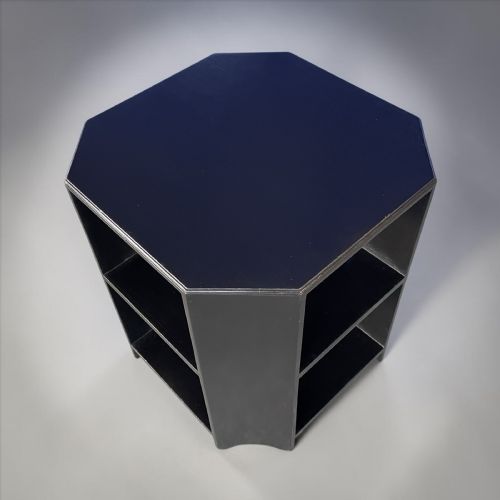
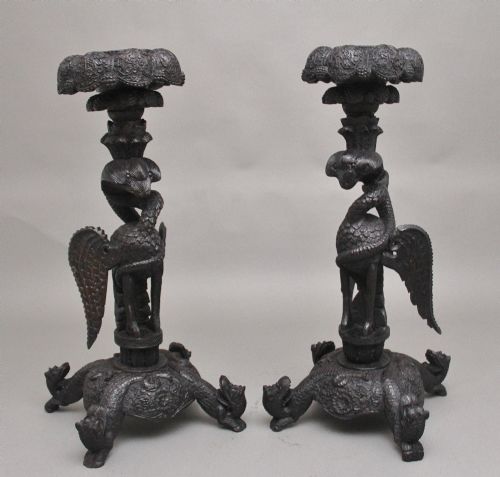
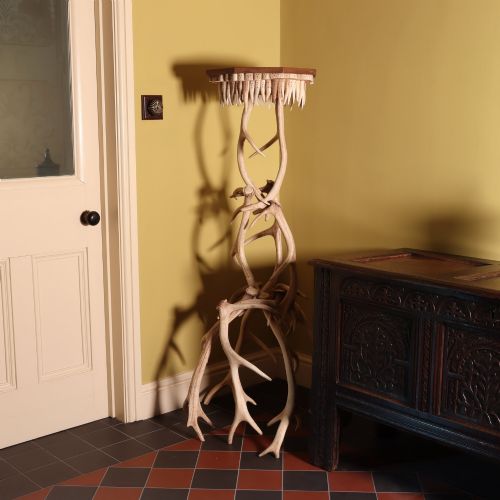


Black Wooden Pedestal
A black wooden pedestal elevates sculpture, plants and lamps through strong silhouette and dark tone, bringing functional height to a room.
Black Wooden Pedestal
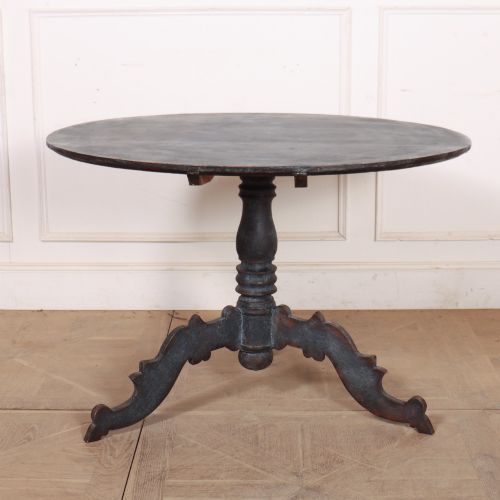
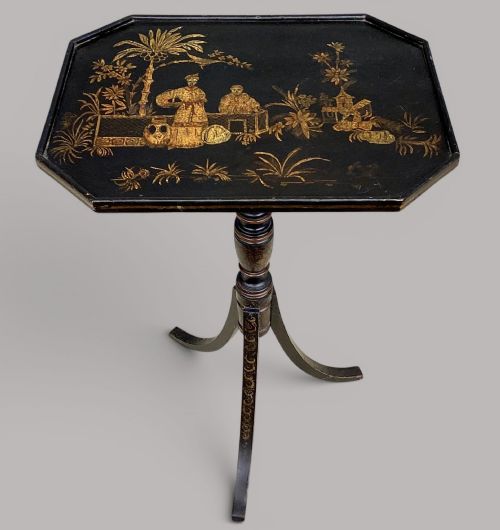
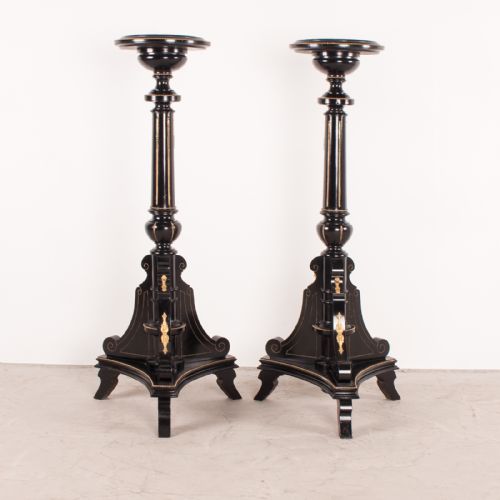
A black wooden pedestal covers a diverse group of nineteenth-century and early twentieth-century display supports, plant stands, torcheres and occasional tables. The selections span Regency, Victorian and Art Deco eras alongside global regional traditions including Anglo-Indian, Chinese, Japanese and Black Forest craftsmanship.
Most examples function as columns, plinths or tripod plant stands designed to showcase decorative objects. Buyers encounter everything from simple ebonised wooden blocks to intricately carved figural supports and lacquered surfaces.
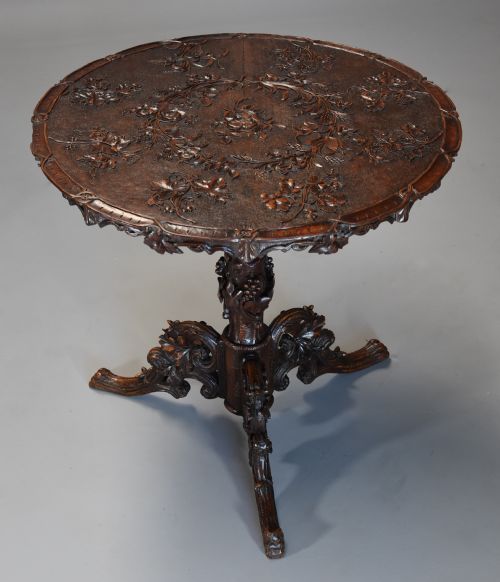
Regional diversity shapes the category heavily, with European Black Forest carving sitting alongside Oriental plant stands and Venetian figures. This creates a wide visual spectrum unified primarily by dark wood and elevated display function.
Materials and Techniques
Construction relies heavily on hardwoods, linden wood, pine and oak shaped through intricate carving or smooth ebonising. Artisans applied dark paint, lacquer and gold leaf to create deep black finishes that contrasted with natural wood grains.
Many items incorporate specialised techniques such as polychrome decoration, parcel gilding and oriental lacquer work. Structural elements range from simple turned columns to complex figural groupings and tripod bases.
Craftsmanship and Detail
Quality rests in the depth and precision of the carving, particularly visible in Black Forest animal motifs or Asian floral reliefs. Crisp edges, stable joints and uniform ebonised or lacquered finishes distinguish superior examples from simpler utilitarian furniture.
The sophistication of the design and the integrity of the materials dictate the standard of each piece. Finer works display thoughtful proportions, balanced weight distribution and harmonious integration of decorative gilding or polychrome highlights.
Liberty of London
The Black Wooden Pedestal Glossary
- Ebonised
- Wood finished with a dark stain or paint to imitate expensive ebony. This technique was particularly popular during the Victorian and Aesthetic Movement periods.
- Torchere
- A tall stand or pedestal originally designed to hold a torch or candle, later adapted for lamps and floral displays. These tall supports often feature slender shafts and tripod bases.
- Jardiniere
- An ornamental pot or stand for plants and flowers. They frequently appear in carved wood and lacquered finishes.
- Plinth
- A heavy base supporting a statue, vase or column. These architectural supports provide a stable foundation for display items.
- Parcel gilt
- Wood or other material partially covered with gold leaf or gold paint. This technique highlights carved details against a black or dark background.
Black Wooden Pedestal: Frequently Asked Questions
What is a black wooden pedestal used for?
These tall stands elevate lamps, sculptures, plants and decorative vases to eye level within a room. They serve as architectural display points that draw the eye upward.
Historically, they filled dark corners or framed doorways, adding functional height and formal presence to interiors.
How do I style a black wooden pedestal at home?
Place a single statement piece like a ceramic vessel, bronze sculpture or trailing plant on top to let the dark finish frame the object. Ensure the height complements nearby furniture.
Keep the surrounding space relatively clear so the sculptural silhouette of the stand remains the focal point.
How do I tell Victorian pieces apart from later ones?
Victorian examples often feature heavier carving, deep ebonised finishes, and influences from the Aesthetic Movement or Black Forest traditions. They tend to prioritize ornate decorative details.
Later pieces from the Art Deco period lean into cleaner geometric lines and simpler forms while retaining dark wooden construction.
Are these pedestals strong enough for heavy items?
Most solid hardwood and oak stands provide sturdy support for standard decorative objects, table lamps and heavy planters. Columnar forms distribute weight evenly down to the base.
Delicate tripod designs or highly intricate figural carvings require more careful placement to maintain balance with heavier loads.