
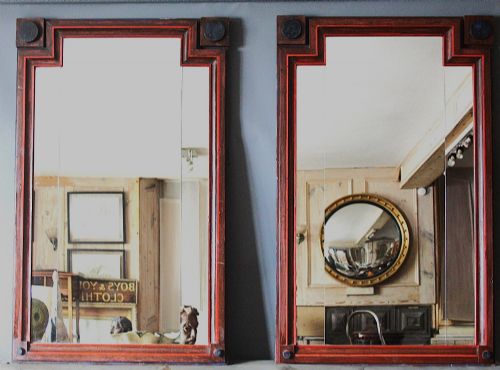


Black Wooden Framed Art
Black wooden framed art brings together centuries of framed prints, silhouettes, and paintings enclosed in dark timber surrounds.
Black Wooden Framed Art
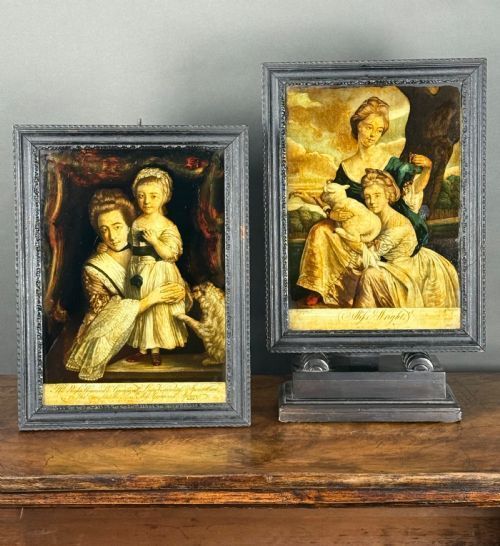
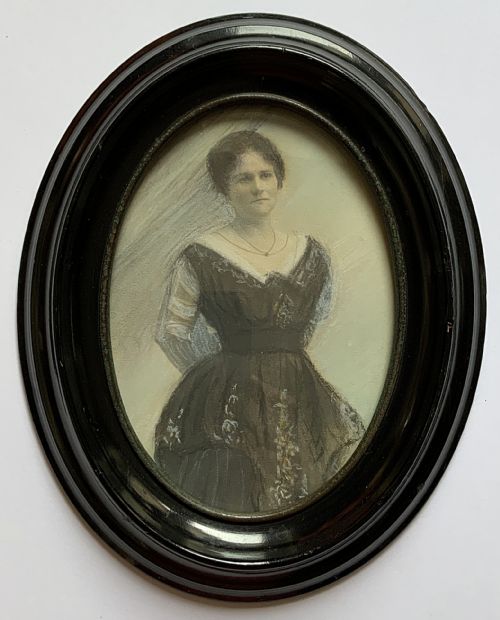
Black wooden framed art encompasses wall pieces ranging from eighteenth-century reverse glass mezzotints and silhouette portraits to mid-century modern prints and decorative panels. You are most likely to encounter nineteenth-century works and Victorian pieces framed in ebonised wood or dark carved timber.
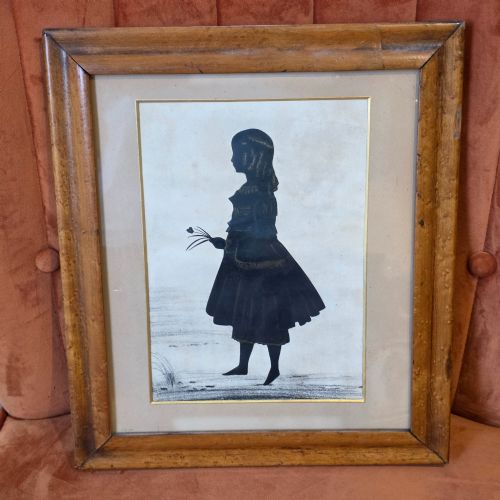
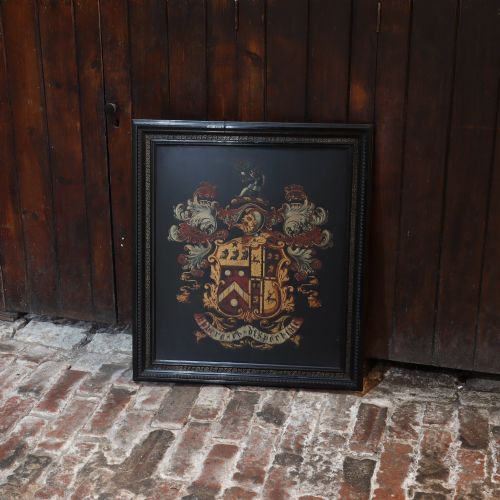
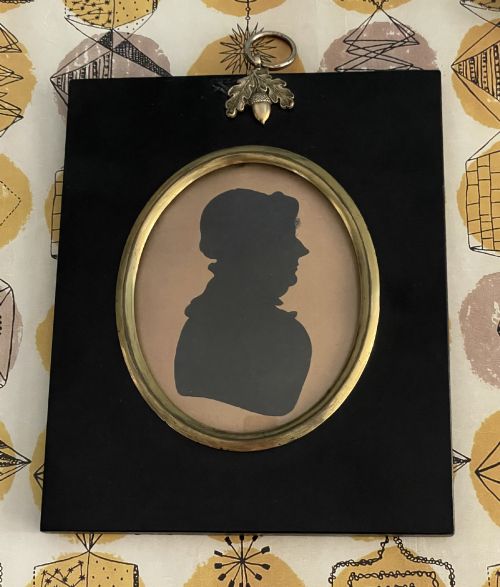
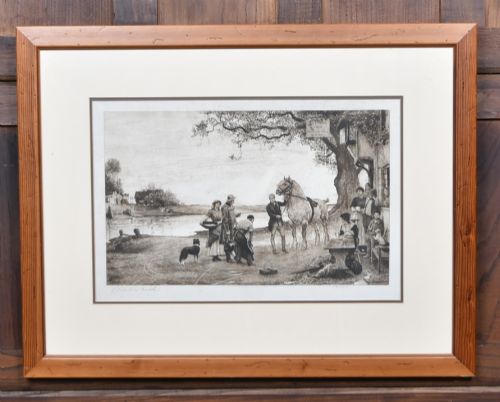
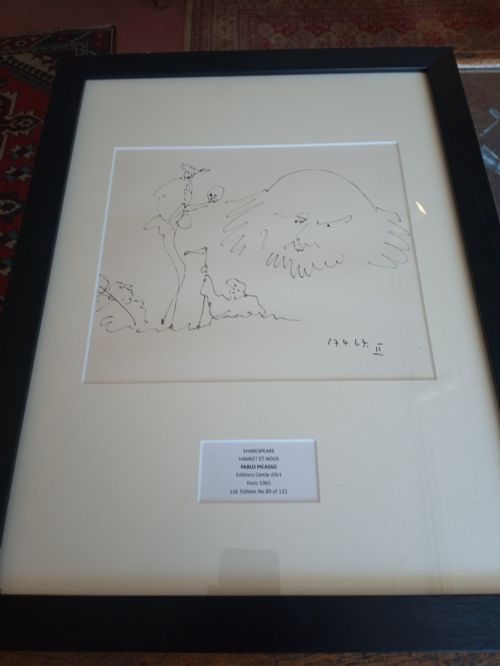
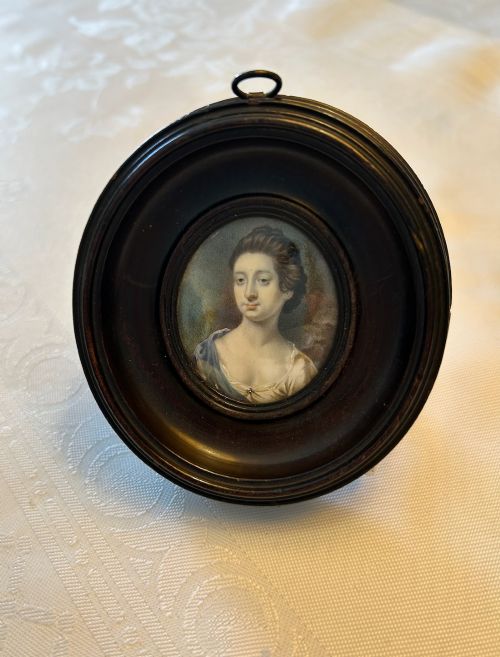
The selection on this page stretches from Georgian folk art and Regency watercolours to later twentieth-century additions, uniting diverse imagery under the banner of black wooden framed art. Formats include oval portrait miniatures, topographical paintings, heraldic panels, and etchings.
Origins span British schools, Chinese Qing style panels, and Japanese roundels, each housed in dark surrounds that throw the focus onto the paper, paint, or glass within.
How they were made
Makers utilised natural timber, applying ebonising techniques to achieve deep black finishes on frames that hold delicate paper works, watercolours, and oils. Glass protects vulnerable surfaces such as cut-paper silhouettes and reverse glass mezzotints.
Intricate detailing relies on hand carving, as seen in Black Forest frames, or careful inlay work involving mother-of-pearl and abalone set into lacquered panels. Prints and etchings utilise paper mounted securely within these rigid wooden perimeters.
A nineteenth-century cut silhouette of a dog proves that human sitters did not have a monopoly on portraiture.
What varies in quality
Quality rests on the crispness of the original artwork, whether that is the fine line of a Regency silhouette, the detail in an eighteenth-century etching, or the precision of hand-painted panels. The joinery and finish of the surrounding wood also dictate the standard of the piece.
The relationship between the artwork and its dark frame determines visual balance, where superior examples feature harmonious proportions and period-appropriate mounting that complements the age of the paper or panel.
James Gillespie·Robert W. Macbeth·Augustin Edouart·James Ferguson·Henry Weigall·Polidoro de Caravaggio
The Black Wooden Framed Art Glossary
- Ebonised wood
- Timber treated with a chemical stain or black finish to imitate expensive ebony. This treatment became popular for framing prints and miniatures during the Victorian period.
- Reverse glass mezzotint
- An image applied directly to the underside of a glass plate so it is viewed through the transparent surface. This technique creates a distinctive glossy finish.
- Plumbago
- A drawing executed in graphite, taking its name from the Latin word for lead ore. These detailed monochrome works appear frequently in eighteenth-century portraiture.
- Aquatint
- A printmaking technique that produces tonal areas resembling watercolour washes. It achieves subtle gradations of light and shade on paper.
Black Wooden Framed Art: Frequently Asked Questions
How do I hang heavy framed panels?
Heavy panels and large framed artworks require secure wall fixings suited to the weight of the timber and glass. Utilise appropriate wall plugs and screws distributed across dual hanging points to ensure stability.
Check the integrity of the original wooden frame and hanging cord before mounting. Ensure the weight rests squarely on sturdy hardware rather than relying on decorative trim.
Can I place these pieces in direct sunlight?
Direct sunlight causes fading on paper, watercolours, and painted surfaces housed within these frames. Position pieces away from windows where ultraviolet rays can degrade pigments over time.
Dark wooden frames themselves suffer from excessive heat fluctuations, which can cause timber to dry out and split. Maintain a stable indoor environment for best preservation.
How do I clean ebonised wood frames?
Dust ebonised wooden frames gently with a dry, soft microfiber cloth to remove surface particles. Avoid liquid cleaners and harsh chemicals that strip the black finish.
Protect the glass or artwork insert by dampening the cloth slightly only if stubborn marks require attention, taking care to keep moisture away from wood joints and paper edges.
What period do ebonised frames belong to?
Ebonised frames appear across multiple centuries, though they feature prominently in nineteenth-century and Victorian presentations. Earlier Georgian pieces also utilised dark frames to contrast with pale paper and silhouettes.
Matching a frame style to the period of the artwork inside requires examining the joinery, backboards, and mounting materials. Subtle differences in timber preparation help distinguish Victorian examples from older work.